

Insuring a holiday home privately through OOM Verzekeringen
In insurance terms a holiday home for your own use is not a second house. The cover depends on how often you are there and on what happens in the months when you are not.
- Several insurers compared objectively
- 9.5 customer rating for a new policy
- AFM licence 12016589
- Personal 072 - 509 24 56, weekdays 9–17
This page in another language: Nederlands
Work out for yourself what it would cost.
Enter your details; you will receive a proposal within one working day.
- We compare the offerings of several insurers
- An adviser checks whether the cover suits your situation
- We arrange the switch, including cancellation
A premium indication, not personal advice. Prefer to talk it through? Call 072 - 509 24 56.
- Independent advice
- Several insurers
- Switching arranged
- Help with claims
In brief
Finass Advies compares several insurers objectively. Within that range, OOM Verzekeringen is used for properties and forms of use that come unstuck on a regular home policy. A holiday home often does: the address is not your main residence, the property stands empty for a large part of the year and the construction is unusual. The choice of insurer follows from those features, not from a product name. The general product is described under holiday home insurance and with insuring a holiday home.
The distinguishing point with private use is the duration of use. Insurers ask how many weeks a year you are there yourself, whether the property is used in winter and whether anyone calls round while you are away. The clauses follow from that answer: an obligation to drain the system, a minimum temperature, a checking frequency and sometimes a restriction of cover during long periods standing empty to fire and storm only. If your actual use differs from what you declared, that is a circumstance within the meaning of Article 7:928 of the Dutch Civil Code and the insurer can rely on Article 7:930 of the Dutch Civil Code.
The second theme is the building itself. Holiday homes are often built in stages, extended with a conservatory or an addition, and stand on light foundations in sandy soil or peat. Damage caused by subsidence, settlement or a construction fault is not an insured peril. The same applies to deferred maintenance. Have the rebuild value assessed including all extensions, and declare any alterations. If you let the property or run several units, a commercial set-up is more appropriate; see the business version.
This page deals with one situation. The full overview is on Compare holiday home and chalet insurance.
Independent, personal, sorted quickly
We compare your holiday home insurance across dozens of insurers, explain where the real differences lie, and arrange the switch from start to finish — without you having to chase it yourself.
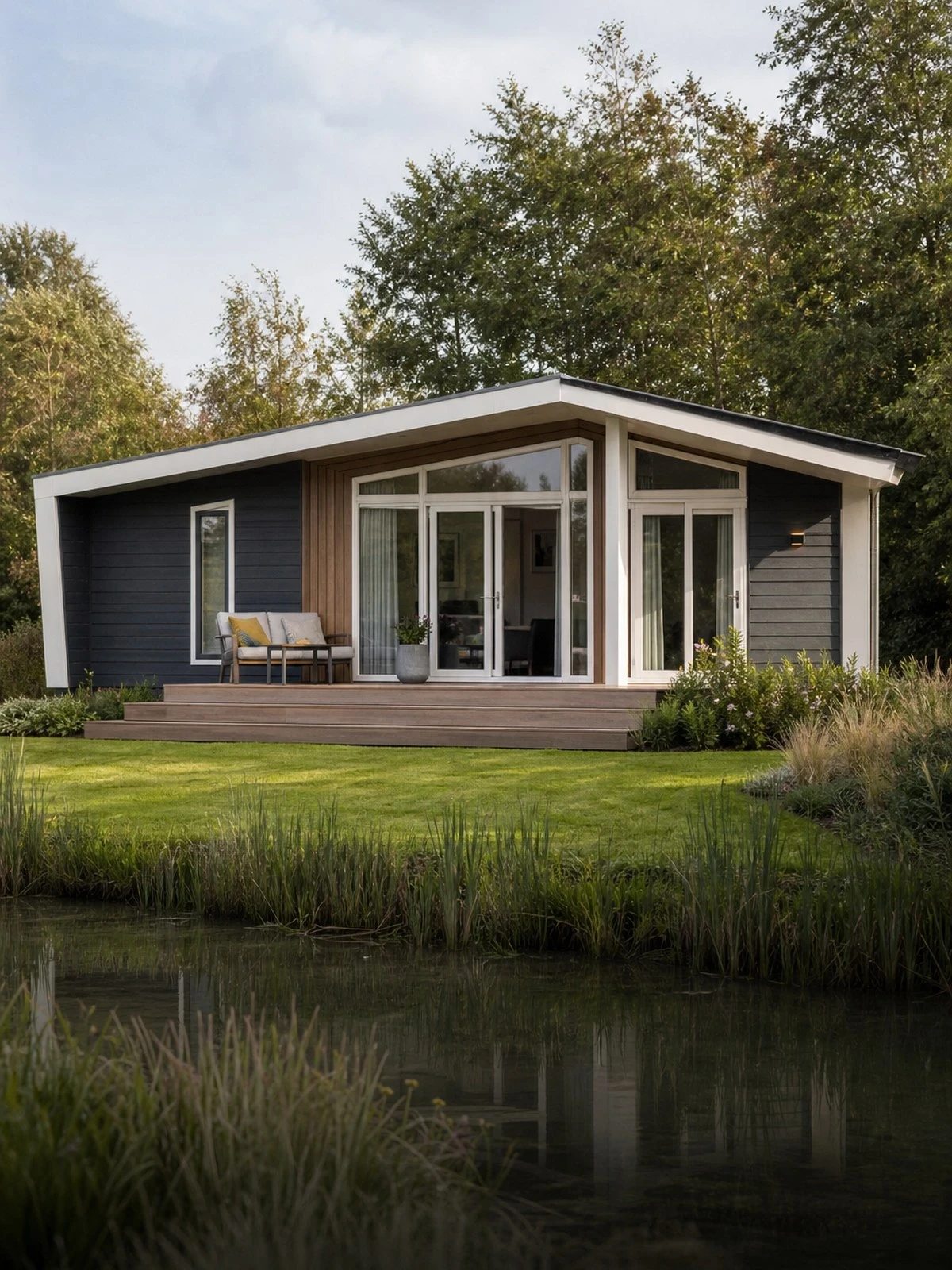 Holiday home insurance
 Compare
 Get covered
Why arrange it through Finass Verzekert?
We look at the terms as well as the premium, and stay your point of contact when there is a claim.
Independent
We are not tied to one insurer and compare on the basis of an objective analysis of several companies.
One fixed adviser
You call or email someone who knows your file. No menu options, no changing call centres.
Switching without hassle
We cancel your old policy and align the start date, so you are never a day without cover.
Help with claims
We report the claim and monitor how it is handled. In urgent cases you can reach us on the emergency line.
What to look out for
Four points that most often lead to a refusal where a holiday home is used by the owner.
The winter shutdown is a condition of cover
If the property is not used outside the season, insurers almost always require the water pipes to be drained and the stopcock closed, or the heating to be kept running at a minimum temperature. If a pipe bursts while that has not been done, the water damage is refused. Record who prepares the property for winter and keep a confirmation or photographs.
What stands outside and what lies beneath
A terrace, shed, decking, bank revetment, jetty and garden landscaping are not an automatic part of the buildings cover. Have them named separately. Underneath, the opposite applies: foundation damage, subsidence and groundwater problems are excluded, even where the crack in the wall only becomes visible years later.
Break-ins in the closed season
An empty property in a quiet area is a target. Theft cover requires traces of forced entry and insurers set requirements for locks and fastenings. Do not leave expensive equipment behind, because sub-limits or an exclusion while you are away apply to it. Also tell us if you leave a key with a caretaker or neighbours.
Liability does not come out of this policy
If a visitor is injured by a defective staircase, decking or gutter, you as owner are liable under Article 6:174 of the Dutch Civil Code. Buildings insurance pays for your own loss, not for someone else's. Check whether your personal liability insurance expressly covers the second address. That is not the case in all policy conditions.
What does your premium depend on?
- Construction type and year of construction: including later extensions and the roof covering
- Rebuild value: the basis for the payout in the event of total loss
- Number of weeks of your own use: and whether the property is used in winter
- Location: a managed park, an open plot or by the water
- Heating: a wood burner or open fire changes the fire risk
- Contents covered as well: with its own sum insured and its own theft conditions
Insurers weigh these details differently. That is where your saving is.
What is covered
| Situation | Basic | Extended |
|---|---|---|
| A lightning strike damages the chalet's electrics | Yes | Yes |
| A tree blown over from the neighbouring plot falls on the roof | Yes | Yes |
| A marten nests in the roof boarding and pulls the insulation loose | No | Provided that |
| The timber extension from the nineties turns out to have rotted away | No | No |
| Your grandchild knocks in the conservatory window | No | Provided that |
| A fire starts because the wood burner had insufficient draught | Yes | Yes |
With a holiday home, the difference between a sudden event and a creeping process determines almost every outcome.
Frequently asked questions
This is what people ask us most.
Can I use my ordinary home insurance for this?
No. Home insurance assumes permanent occupation and day-to-day supervision. A holiday home differs from that in use, construction and location. If you nevertheless take out an ordinary policy, the declaration is incorrect and the insurer can rely on Article 7:930 of the Dutch Civil Code when you claim. A policy written for recreational use contains the clauses that go with this risk.
I let friends use it for a weekend. Is that letting?
Free use by family or acquaintances is usually allowed, but as soon as payment is involved, including through a platform, it is letting. That changes the circle of users and must be declared. Damage caused by tenants and theft without signs of forced entry are often excluded where the property is let, and liability towards paying guests falls outside personal cover.
Are the contents of the holiday home included?
Only if a separate section with its own sum insured has been arranged for them. Fixed parts such as the kitchen, the bathroom and the floor belong to the building; furniture, appliances, bicycles and garden furniture do not. Sub-limits apply to valuables, and sometimes an exclusion while you are away. Keep a list with photographs and purchase receipts.
The property is by the water. What should I watch out for?
Two things. Bank revetment, jetty, decking and shoreline works are seldom included and must be named specifically on the policy schedule. In addition, every policy has a limit on water damage: the failure or overtopping of a primary flood defence stays outside the cover, as does earthquake. If the property lies outside the dykes or on a flood plain, have it confirmed in writing which water damage is included.
Every situation is different. For these situations we have a separate page.
- Holiday home insuranceThe main page
- Insuring a second home through HienfeldAbroad, standing empty, local requirements
- Insuring a holiday home through Turien & CoPark rules, construction type, clause sheet
- Insuring a holiday homeStanding empty, letting, abroad
- Insuring holiday homes for business use through OOM VerzekeringenLetting, guest damage, loss of turnover
- A mortgage for a second homeBox 3, part-time occupation, letting
- Chalet insuranceHoliday home, pitch, standing empty
- Buildings insurance (opstalverzekering) for a second homeStanding empty, frost, declaring