

Insuring a holiday home through Hiscox
With a holiday home of unusual construction or with expensive furnishings, the discussion after a claim is about value. A valuation prevents that discussion, provided it is current.
- Several insurers compared objectively
- 9.5 customer rating for a new policy
- AFM licence 12016589
- Personal 072 - 509 24 56, weekdays 9–17
This page in another language: Nederlands
Work out for yourself what it would cost.
Enter your details; you will receive a proposal within one working day.
- We compare the offerings of several insurers
- An adviser checks whether the cover suits your situation
- We arrange the switch, including cancellation
A premium indication, not personal advice. Prefer to talk it through? Call 072 - 509 24 56.
- Independent advice
- Several insurers
- Switching arranged
- Help with claims
In brief
Finass Advies compares several insurers objectively. Within that range, Hiscox is used for property that does not fit an average: a holiday home with unusual architecture, a thatched roof, a historic building, or a house containing art, design and equipment far exceeding the usual contents limits. The choice follows from what cover you need, not from the brand name.
The distinguishing point is the basis of value. For an ordinary house a rebuild value calculator works. For a property with craftsmanship, thick walls, a listed roof structure or thatch, such a calculator produces a figure that has nothing to do with the actual rebuilding costs. A a valuation by an expert fixes the value in advance. Without that, the insurer only establishes the value after the loss, and Article 7:960 of the Dutch Civil Code provides that you must not end up in a clearly better position than you would have been in without the loss. A valuation does have a period of validity; once it expires, the binding effect falls away and you are back where you started.
The second point is the fit-out. There is often more in a holiday home than people think: paintings, an instrument, an outdoor kitchen, audio equipment, bicycles and watersports gear. On standard contents cover these are subject to sub-limits and sometimes to an exclusion while the owner is away. Have valuables listed separately on the policy, with a description and proof of value. How that works for main residences is explained under exclusive home contents insurance and the exclusive buildings insurance; for more on this provider's role, see insurance through Hiscox.
This page deals with one situation. The full overview is on Compare holiday home and chalet insurance.
Independent, personal, sorted quickly
We compare your holiday home insurance across dozens of insurers, explain where the real differences lie, and arrange the switch from start to finish — without you having to chase it yourself.
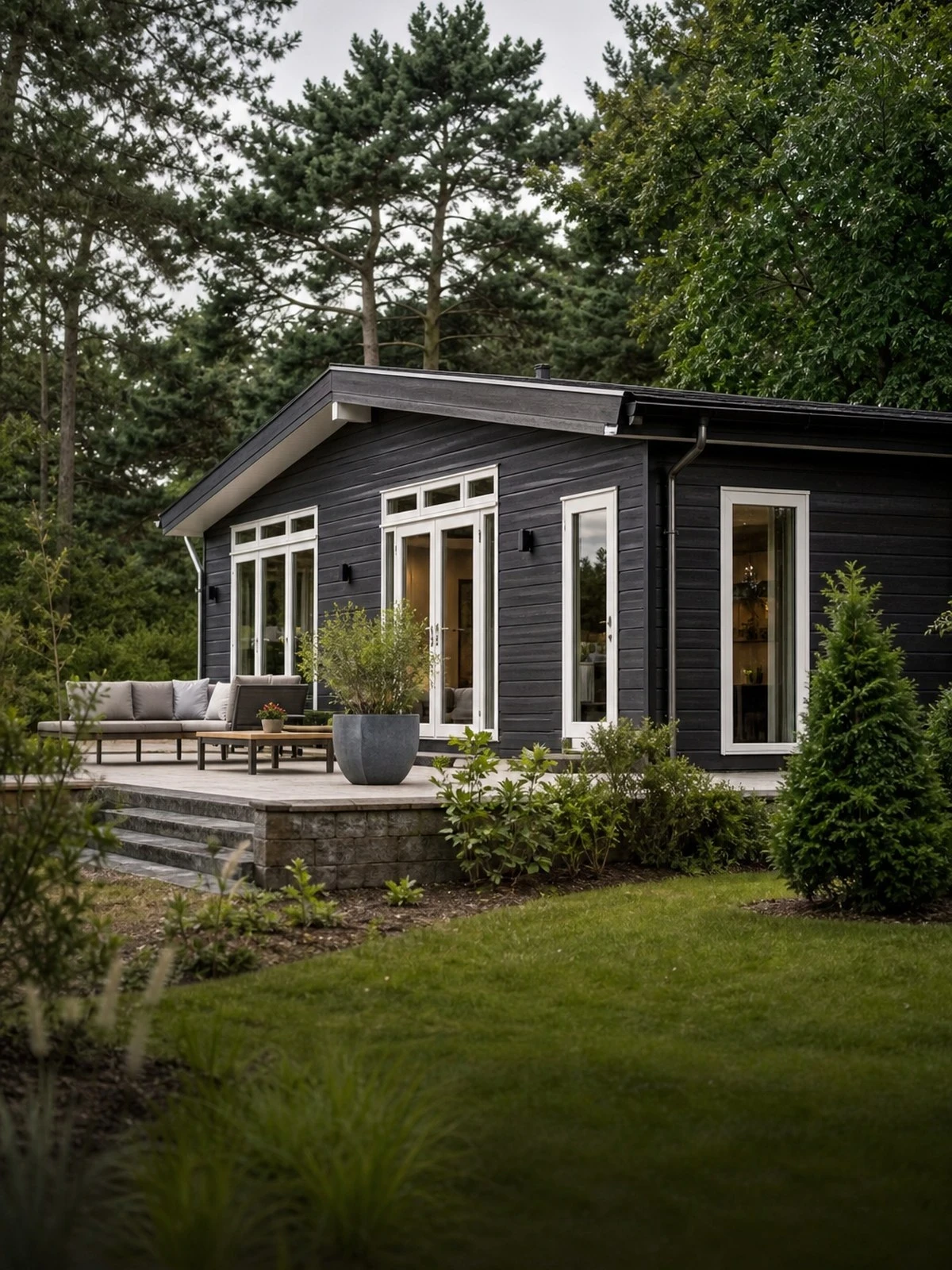 Holiday home insurance
 Compare
 Get covered
Why arrange it through Finass Verzekert?
We look at the terms as well as the premium, and stay your point of contact when there is a claim.
Independent
We are not tied to one insurer and compare on the basis of an objective analysis of several companies.
One fixed adviser
You call or email someone who knows your file. No menu options, no changing call centres.
Switching without hassle
We cancel your old policy and align the start date, so you are never a day without cover.
Help with claims
We report the claim and monitor how it is handled. In urgent cases you can reach us on the emergency line.
What to look out for
Four points that determine whether the payout will match what the property actually costs.
Keep the valuation valid
A valuation report fixes the value as at the date of the survey. If you renovate, add an extension, or building costs rise sharply, the recorded value falls behind. Put the expiry date of the valuation in your diary and have it revalued in good time. An expired valuation means the insurer values the loss itself again, with underinsurance as a real consequence.
Comprehensive cover is not all-embracing
Even wide cover has fixed exclusions. Wear, inherent defect, construction faults, gradual effects and deferred maintenance remain outside the cover, as do vermin and mould. With a thatched roof or timber construction there are also separate requirements about the distance from open fire and about the condition of the roof. If these are not met, a fire claim will be refused.
Letting is usually an exclusion
Policies for high-value private property assume own use. If you let the house, even occasionally through a platform, the circle of users changes and that is a circumstance to be declared. Concealing it affects your payout. For regular letting, a commercial set-up is more appropriate; see buildings insurance for a leisure business.
Supervision while you are away
A holiday home is empty for a large part of the year. Insurers attach requirements to that: burglar-resistant locks and fastenings, sometimes a monitored alarm, and a restriction of cover during long periods standing empty. Theft without signs of forced entry is a classic ground for refusal, certainly where cleaners or caretakers have a key or a code.
What does your premium depend on?
- Valued amount or rebuild value: the basis chosen determines the payout
- Construction type and roof covering: thatch, timber or a listed structure counts for more
- Type of cover: comprehensive cover or a defined list of perils
- Value of the fittings: and whether valuables are listed separately
- Location: standing alone in open country or on a managed site
- Security: locks and fastenings, alarm and supervision while you are away
Insurers weigh these details differently. That is where your saving is.
What is covered
| Situation | Extended | Comprehensive |
|---|---|---|
| A winter storm blows part of the thatched roof away | Yes | Yes |
| The dishwasher leaks unnoticed and the oak floor warps | Provided that | Yes |
| While vacuuming, your child knocks a designer lamp off the cupboard | No | Yes |
| A guest spills a glass of red wine over the sofa | No | Yes |
| While laying a terrace, the gardener hits a pipe under the garden | No | Provided that |
| A marten nests in the roof insulation and gnaws through the wiring | No | No |
Art, instruments and watersports gear only count for their true value once they are described separately.
Frequently asked questions
This is what people ask us most.
What does a valuation give me?
Certainty about the amount. With a valued policy the value is fixed in advance and the discussion about underinsurance falls away, as long as the report is valid and was drawn up by an expert. Without a valuation, the value is only established after the loss and the principle in Article 7:960 of the Dutch Civil Code applies, that you must not be clearly better off as a result. With a property built by craftsmen, that difference is large.
Is art in the holiday home included?
Only within the sub-limit for valuables, and that is usually low compared with what is hanging there. Have works listed separately on the policy with a description, provenance and proof of value. If you take works back and forth between two homes, declare the transport as well; damage in transit falls outside the buildings and contents cover at both addresses.
My house has a thatched roof. What does that mean?
A thatched roof increases the fire risk and leads to separate conditions: requirements for the chimney and the flue, for the distance from fire baskets and barbecues, and for the condition and age of the thatch. If you do not meet them, fire damage can be refused. Have the roof inspected periodically and keep the reports with your policy documents.
What if there has been a leak while I was away?
Sudden water damage from a pipe is usually covered, but the consequential damage from water running for weeks is not always. Insurers then rely on the provision that you must mitigate the loss and on the exclusion for gradual effects such as mould and wet rot. A periodic check by a caretaker and a water detector reduce that risk considerably.
Every situation is different. For these situations we have a separate page.
- Holiday home insuranceThe main page
- Insuring a holiday home privately through OOM VerzekeringenOwn use, winter shutdown, foundation risk
- Insuring a second home through HienfeldAbroad, standing empty, local requirements
- Insuring a holiday homeStanding empty, letting, abroad
- Insuring holiday homes for business use through OOM VerzekeringenLetting, guest damage, loss of turnover
- A mortgage for a second homeBox 3, part-time occupation, letting
- Buildings insurance (opstalverzekering) for a second homeStanding empty, frost, declaring