

A mortgage for a second home
A second home is financed differently and insured differently from the house you live in. The difference lies in the months when nobody is there and in whether it is let out.
- Several insurers compared objectively
- 9.5 customer rating for a new policy
- AFM licence 12016589
- Personal 072 - 509 24 56, weekdays 9–17
This page in another language: Nederlands
- We compare the offerings of several insurers
- An adviser checks whether the cover suits your situation
- We arrange the switch, including cancellation
A premium indication, not personal advice. Prefer to talk it through? Call 072 - 509 24 56.
- Independent advice
- Several insurers
- Switching arranged
- Help with claims
In brief
For tax purposes a second home is not your own home: the debt falls in box 3 and the interest is not deductible. Lenders therefore apply different standards and usually require more of your own money. We do not arrange the finance ourselves. We refer you on for that. See mortgage. What we do is insure the property on the right basis; see buildings insurance for a holiday home.
The cover question turns on absence. A house that stands empty for months carries a higher risk of break-in, frost damage and water damage that is only discovered weeks later. Insurers translate that into a clause: drain the pipes in winter, keep the heating at a minimum setting, arrange periodic checks by a caretaker or neighbour, and sometimes a maximum number of consecutive weeks the property may be unoccupied. Those provisions are binding, not advice.
If you let the property in the weeks you are not there, that is a different capacity. Holiday letting brings wear and tear, damage by guests and liability towards those guests. Declare it expressly. If the property is abroad, local rules also apply and sometimes a compulsory local policy; see holiday home insurance.
This page deals with one situation. The full overview is on Mortgages: we refer you on.
Please note: borrowing money costs money. Finass Advies B.V. holds a licence for non-life insurance and does not act as an intermediary for credit or mortgages. This page is informative. For an application we refer you to a provider with a licence for consumer credit or mortgage credit. Every licensed provider consults the BKR (the Dutch credit register) for credit of € 250 or more with a term of longer than one month.
Independent, personal, sorted quickly
We compare your holiday home insurance across dozens of insurers, explain where the real differences lie, and arrange the switch from start to finish — without you having to chase it yourself.
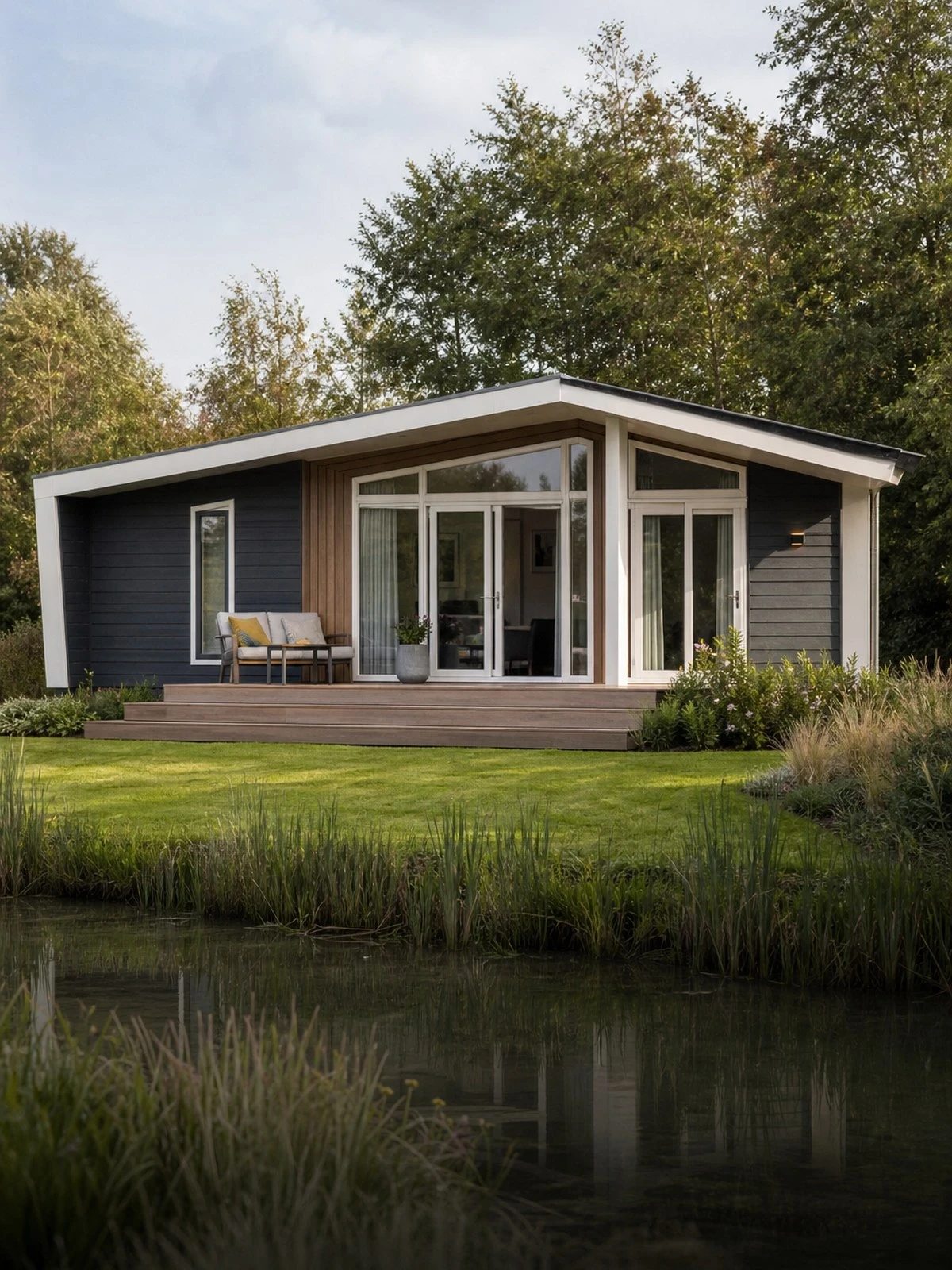 Holiday home insurance
 Compare
 Get covered
Why arrange it through Finass Verzekert?
We look at the terms as well as the premium, and stay your point of contact when there is a claim.
Independent
We are not tied to one insurer and compare on the basis of an objective analysis of several companies.
One fixed adviser
You call or email someone who knows your file. No menu options, no changing call centres.
Switching without hassle
We cancel your old policy and align the start date, so you are never a day without cover.
Help with claims
We report the claim and monitor how it is handled. In urgent cases you can reach us on the emergency line.
Where cover on a second home stops
Four provisions that lead to a refusal more often with part-time occupation than with an ordinary home.
Frost and water damage while you are away
If a pipe bursts while you are not there, the insurer checks whether the frost clause was complied with. If the heating was off and the pipes had not been drained, the damage is excluded. The same applies to a leak that runs on for weeks: the damage is then partly the result of the absence of supervision. Agree a checking arrangement and keep a record of the visits.
Burglary without signs of forced entry
Theft is paid for where there is demonstrable forced entry. At a holiday home where a key is held by the caretaker or the cleaner or kept in a key safe, those signs are often missing. Insurers exclude theft without signs of forced entry. Limit the number of key holders, use a recorded key management system and do not leave valuables behind between two stays.
Letting to guests is a different policy
Damage by tenants, consequential damage from a party, or liability towards a guest who falls down the stairs falls outside a policy written for own use. On liability, the owner's liability under Article 6:174 of the Dutch Civil Code is added to that. If you let regularly, that calls for letting cover and liability cover for the property.
Permanent occupation and the zoning plan
If the holiday home is lived in permanently while the zoning plan does not allow it, you have two problems at once: enforcement by the local authority and a policy based on recreational use. Insurers accept the risk on the basis of the use declared. Different use that has not been declared falls under Article 7:928 of the Dutch Civil Code and can lead to refusal when you claim.
What does your premium depend on?
- Type of home: a brick house, a chalet or a static caravan differ considerably
- Number of weeks of occupation per year: the longer it is unoccupied, the higher the risk
- Let out or not: holiday letting is a separate capacity
- Location: a park, detached, by the water or abroad
- Security and supervision: an alarm, park management and periodic checks all count
- Rebuild value and contents value: the sums insured determine the basis for the premium
Insurers weigh these details differently. That is where your saving is.
What is arranged
| Situation | At Finass Verzekert | With the provider |
|---|---|---|
| You see which lenders finance a second home for own use | Yes | No |
| It is checked whether letting to third parties fits within the conditions | Yes | Provided that |
| The equity in your first home is counted as your contribution | Provided that | Yes |
| The application, the income assessment and the binding offer are taken care of | No | Yes |
| The buildings and contents insurance for the second home is arranged | Yes | No |
| You receive a calculation of what the property in box 3 does to your tax return | No | No |
A second home falls outside the own-home tax rules. So reckon on different tax treatment from your main home.
Frequently asked questions
This is what people ask us most.
Can I extend my ordinary home policy to the second home?
Usually not. A buildings and contents policy is tied to one risk address and to permanent occupation. A second home needs a separate policy, with provisions about unoccupied periods and sometimes a higher excess. With a property abroad there is also the question of which law applies and whether local insurance is compulsory.
What happens if I let the property without declaring it?
Then the situation differs from the one stated in the application. Under Article 7:930 of the Dutch Civil Code the insurer can reduce the payout in proportion to the premium it would have charged had you declared correctly, or refuse it altogether if it would not have accepted the risk at all. With letting through a platform, that is moreover easy to prove.
Are the contents of the second home included?
Only if a separate section has been arranged for them. The contents cover on your main home applies away from that address at most temporarily and to a limited extent. For a holiday home there is separate contents cover, often with a lower limit for audiovisual equipment and jewellery and with a requirement that such items are not left behind while you are away.
Am I liable if a guest is injured?
If it is due to a defect in the building, such as a loose handrail or a sunken terrace, you as owner bear the strict liability under Article 6:174 of the Dutch Civil Code, even without fault. An ordinary personal liability insurance usually does not cover that where the property is let, because it is then no longer a purely private risk. Arrange separate cover for it.
Every situation is different. For these situations we have a separate page.
- Holiday home insuranceThe main page
- Insuring a holiday homeStanding empty, letting, abroad
- Insuring a holiday home privately through OOM VerzekeringenOwn use, winter shutdown, foundation risk
- Buildings insurance (opstalverzekering) for a second homeStanding empty, frost, declaring
- Insuring a second home through HienfeldAbroad, standing empty, local requirements
- Insuring a second home: buildings, contents and liabilityLimited occupation, standing empty, frost damage
- Insuring a holiday homeStanding empty, letting, park conditions
- Releasing equity from your homeIncrease, refurbishment, adjusting cover