

Basic cover
- Fire & lightning strike
- Storm & precipitation
- Explosion & induction & implosion
- Smoke & soot damage
What really damages a holiday home is seldom a burglar: it is frost, storm and water in the months when nobody is there.
This page in another language: Nederlands
Work out for yourself what it would cost.
Enter your details; you will receive a proposal within one working day.
A premium indication, not personal advice. Prefer to talk it through? Call 072 - 509 24 56.
We request the holiday home insurance (recreatiewoningverzekering) from NH1816 and set it alongside the rest of the market. The acceptance discussion starts with the construction type: a masonry house with a hard roof covering, a timber frame house, a chalet on a steel chassis and a house with a thatched roof are four different risks. What you declare here determines whether an insurer takes the property on, on what conditions and with which clauses.
The second point is the time the property stands empty. A holiday home is by definition not permanently occupied, and most losses arise precisely during that period: a burst water pipe running for days, a roof tile or roof covering coming loose in a storm, a fallen tree. Because nobody sees it, the damage by the time it is discovered is almost always greater than the incident itself.
Insurers translate that into concrete conditions: drain the pipes or keep the heating at a minimum setting, and have the property checked during the winter period. If you do not comply with such a clause, the damage is excluded, even if the rest of the policy is in order. We pick out those provisions when comparing. See also holiday home and chalet insurance.
We compare your holiday home insurance across dozens of insurers, explain where the real differences lie, and arrange the switch from start to finish — without you having to chase it yourself.
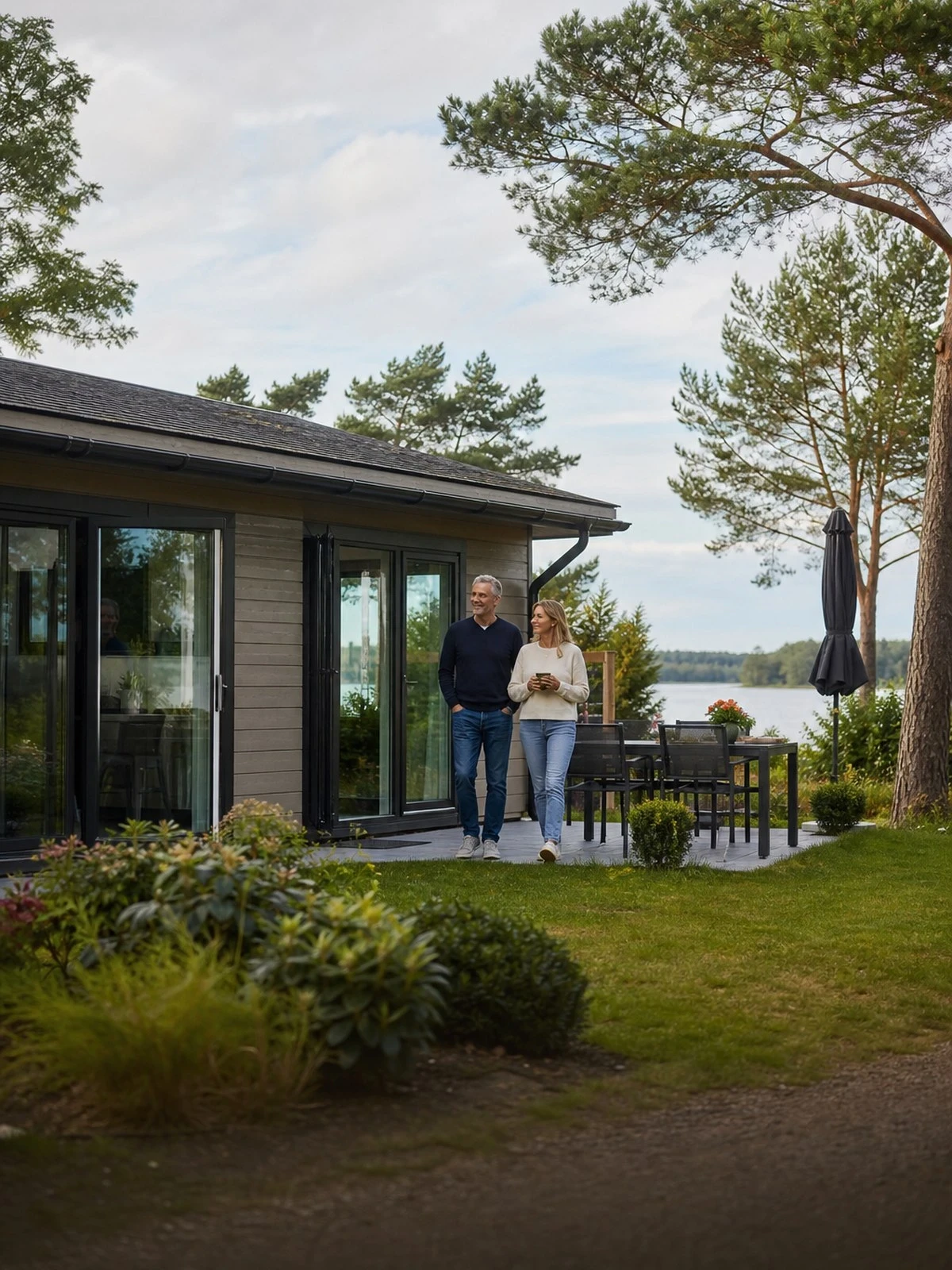 Holiday home insurance
 Compare
 Get covered
The structure of the cover in three parts, with an overview per situation below.
The basic cover insures the core of your holiday home insurance. We set out what NH1816 and other insurers offer within it.
As well as the basic cover, also protection against damage to your holiday home from external causes you cannot prevent.
The most complete cover. We compare NH1816's extended version with the market.
What is covered
| Situation | Standard | With extension |
|---|---|---|
| Fire, smoke and lightning strike | Yes | Yes |
| Storm from force 7 upwards | Yes | Yes |
| Water damage from a burst pipe | Yes | Yes |
| Glass breakage | Provided it is declared | Yes |
| Groundwater coming through the floor | No | No |
| Wear and deferred maintenance | No | No |
What we do
| What we do | At Finass | Direct with NH1816 |
|---|---|---|
| Comparison across several insurers | Yes | No |
| Advice based on your own situation | Yes | Sometimes |
| One point of contact for claims | Yes | Sometimes |
| Cancellation with your current insurer arranged | Yes | No |
| We determine whether NH1816 is the best choice | Yes | No |
| Advice fees for you as a customer | No | No |
This overview concerns our service, not the cover. What is actually covered is set out in the policy conditions and on the insurer's insurance card (verzekeringskaart); you receive both before you take out cover.
Insurers weigh these details differently. That is where your saving is.
We look at the terms as well as the premium, and stay your point of contact when there is a claim.
We are not tied to one insurer and compare on the basis of an objective analysis of several companies.
You call or email someone who knows your file. No menu options, no changing call centres.
We cancel your old policy and align the start date, so you are never a day without cover.
We report the claim and monitor how it is handled. In urgent cases you can reach us on the emergency line.
Customers rate our service on four aspects: personal service, service delivery, availability and the outcome. The reviews are collected and published by NH1816 and come from customers who have actually taken out a policy with Finass Advies B.V. or reported a claim.
Four points that make the difference between a policy that pays out and one that does not.
State the structure and the wall and roof coverings exactly, including a steel chassis under a chalet. Timber and thatch count for more because of the fire risk, certainly where the houses on a park stand close together. If the declaration is not correct, that affects the duty of disclosure under Article 7:928 of the Dutch Civil Code and the insurer can reduce the payout on a fire claim under Article 7:930 of the Dutch Civil Code. If in doubt, supply photographs and a building drawing.
Frost damage to water pipes and central heating systems is one of the most common losses in this segment and at the same time the most frequently refused. Policies usually require you to drain the system or to leave the heating at a frost-free setting. If you cannot show that you did so, the damage falls outside the cover. Record the draining with a date and a photograph of the meter reading. It costs nothing and saves the argument.
Verandas, canopies, terraces, stores, fences and garden landscaping are by no means always covered by the buildings section and often have a separate, limited sum. The same applies to clearance costs after a storm or a fallen tree. When you apply, go through the outbuildings and site features and have what you want covered written in, because the standard wording assumes the main building only.
If the property stands empty for a long unbroken period, many policy conditions restrict cover for theft, vandalism and water damage or withdraw it altogether. A renovation or a period without utility connections can also trigger that clause. Agree how often the property is checked and report any damage discovered immediately: Article 7:941 of the Dutch Civil Code obliges you to report as soon as you know of it, and reporting late costs you cover.
This is what people ask us most.
Not an insurmountable problem, but it is an acceptance question. Timber and thatch count for more because of the fire risk, certainly where houses on a park stand close together. Insurers then apply additional requirements, for example for the chimney, the maintenance of the roof and the distance to neighbouring properties. So declare the structure in full and supply photographs; an incorrect declaration affects the cover in the event of fire.
Only if you complied with the frost clause. Most policies require the system to be drained or the heating to be left at a frost-free setting during the period you are not there. If you cannot show that, the damage is excluded. So note the date of draining and take a photograph, so that you have something to fall back on afterwards.
Not automatically. Outbuildings, canopies, terraces, fences and garden landscaping are often dealt with separately in the conditions and carry a limited sum, or fall outside it altogether. Clearance costs after a storm are usually capped as well. Go through these items one by one when you apply and have it recorded what is and is not included, with a realistic amount alongside.
An unoccupancy clause may take effect which restricts or withdraws cover for theft, vandalism and water damage. How long that period may last differs by insurer. So agree in advance how often the property is checked and record who does it. If you discover damage, report it immediately; Article 7:941 of the Dutch Civil Code requires you to report as soon as you are aware of it.
Every situation is different. For these situations we have a separate page.
Request a quote without obligation. We will look at which insurer best matches your activities and your risk.
Prefer to call? 072 - 509 24 56, weekdays 09:00–17:00.
Claim on the road? Emergency line 06 - 55 20 40 72.
Finass Verzekert is a trading name of Finass Advies B.V. We advise on and arrange non-life insurance on the basis of an objective analysis of several insurers, and receive commission for this from the insurer, which is included in the premium. You pay no separate advice fee. Before you take out cover, we establish your wishes and needs.
You will find our licence, KvK and Kifid details and our complaints procedure at the foot of every page.
This page was compiled by Finass Verzekert (LinkedIn). Last updated on .
The information on this page is general in nature and is not personal advice.
Maandag- Vrijdag: 09:00- 17:00
We use cookies and similar technologies to improve your experience on our website.