

NH1816's buildings insurance (opstalverzekering)
NH1816 is an insurer that works exclusively through brokers. Finass assesses whether your property falls within its acceptance criteria and whether this home cover suits your situation.
- Several insurers compared objectively
- 9.5 customer rating for a new policy
- AFM licence 12016589
- Personal 072 - 509 24 56, weekdays 9–17
This page in another language: Nederlands
Work out for yourself what it would cost.
Enter your details; you will receive a proposal within one working day.
- We compare the offerings of several insurers
- An adviser checks whether the cover suits your situation
- We arrange the switch, including cancellation
A premium indication, not personal advice. Prefer to talk it through? Call 072 - 509 24 56.
- Independent advice
- Several insurers
- Switching arranged
- Help with claims
In brief
We act as a broker for NH1816's home cover and assess it alongside the products of more than thirty other companies. What makes this insurer interesting within a comparison is the breadth of its household range: besides the home, a holiday home, a static caravan, the home contents and the liability can also be placed with the same company. In a claim affecting several policies, that saves a discussion between two insurers.
The buildings cover pays for damage to the building caused by, among other things, fire, explosion, lightning strike, storm, theft with damage from forced entry and water from pipes. The assessment starts, however, with the acceptance: the year of construction, the structure, the roof covering and the location determine whether the property falls within the standard framework. A property with thatch, a lot of timber or an unusual designated use calls for a targeted application with the right information, not a standard form.
Pay attention to the storm provision. Policies have a wind force threshold below which there is no storm, and often a separate excess higher than the standard one. Damage to loose awnings, aerials, fences and carports is regularly excluded or capped. Compare that provision before you choose on premium.
This page deals with one situation. The full overview is on Compare buildings insurance (opstalverzekering).
Independent, personal, sorted quickly
We compare your buildings insurance across dozens of insurers, explain where the real differences lie, and arrange the switch from start to finish — without you having to chase it yourself.
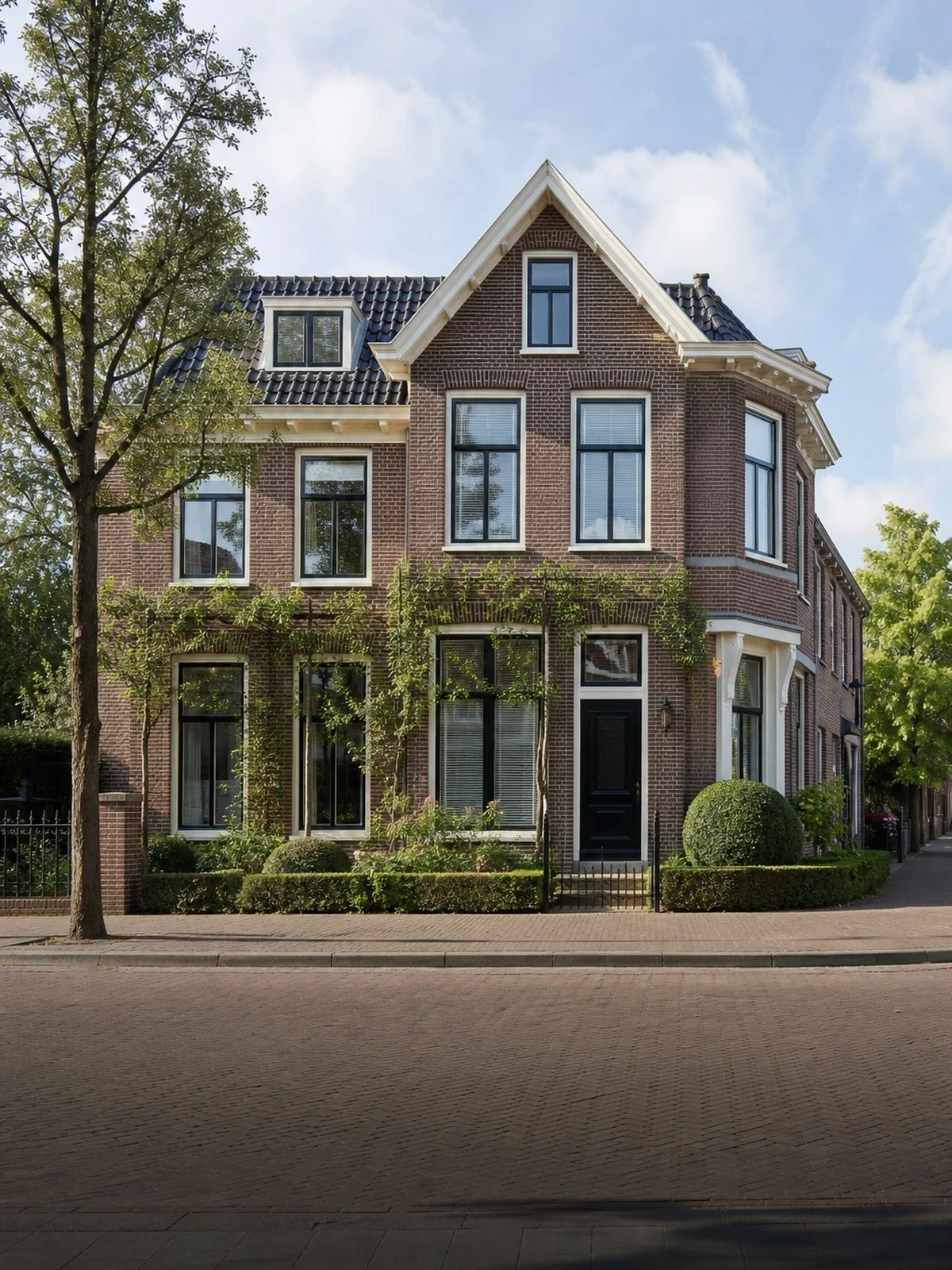 Buildings insurance
 Compare
 Get covered
Why arrange it through Finass Verzekert?
We look at the terms as well as the premium, and stay your point of contact when there is a claim.
Independent
We are not tied to one insurer and compare on the basis of an objective analysis of several companies.
One fixed adviser
You call or email someone who knows your file. No menu options, no changing call centres.
Switching without hassle
We cancel your old policy and align the start date, so you are never a day without cover.
Help with claims
We report the claim and monitor how it is handled. In urgent cases you can reach us on the emergency line.
What to look out for
Four points that are decisive both on application and on a claim.
Declare the type of construction precisely
The facade, floor structure and roof covering determine the rating group and acceptance. A thatched roof, timber cladding or a partly timber floor structure must be stated expressly. If it emerges after a fire that the type of construction declared was wrong, Articles 7:928 and 7:930 of the Dutch Civil Code on the duty of disclosure come into play.
A second home or holiday home is not an ordinary home
A property that is not permanently occupied has longer periods without supervision, with frost and water damage as a result. There is a separate form of cover for that, with its own conditions on supervision, heating and letting. See insuring a holiday home and buildings insurance for a second home.
What falls outside the cover
Excluded are, among others damage to foundations and subsidence, groundwater and flooding from primary flood defences, gradual effects of damp, damage caused by vermin and defects arising from deferred maintenance. Damage caused intentionally or through recklessness falls under Article 7:952 of the Dutch Civil Code never covered.
Report a claim and limit its extent
Article 7:941 of the Dutch Civil Code requires you to report a claim as soon as you are reasonably aware of it and to cooperate in limiting it. With a leak that means: turn off the stopcock, take photographs and only then repair. Costs you incur to prevent worse are usually eligible for payment as costs of mitigating the loss.
What does your premium depend on?
- Rebuild value: based on volume, finish and type of construction
- Roof covering: tiles, bitumen or thatch lead to different rates
- Year of manufacture: decisive for the wiring, pipework and foundations
- Nature of the occupation: permanently occupied, second home or holiday use
- Excess: and the different amount for storm damage
- Prevention: certified locks and fittings, smoke alarms, lightning protection
Insurers weigh these details differently. That is where your saving is.
What is covered
| Situation | Extended | Comprehensive |
|---|---|---|
| While doing DIY you drop a heavy drill through the washbasin | No | Yes |
| A pipe behind the wall leaks and the plaster has to come off to reach it | Yes | Yes |
| A tree from your own garden blows over and damages the dormer window | Yes | Yes |
| Soot damage to the ceiling from a poorly drawing wood burner | No | Provided that |
| The heating pipe in the unheated garage freezes and splits | Provided that | Provided that |
| Mould behind the bathroom wall that has been there unnoticed for years | No | No |
All-risks mainly adds the accidents of your own that founder under extended cover on the requirement of a sudden event.
Frequently asked questions
This is what people ask us most.
Can I take out this insurance direct?
This company works through brokers, so the application and claims support run through your adviser. In practice that means your property details are checked against the acceptance criteria in advance and, on a claim, your adviser conducts the discussion with the insurer. We compare that policy with what other companies offer.
Is a shed or garage on my plot included?
Attached outbuildings usually fall under the buildings cover if their value has been included in the sum insured. Free-standing structures often are not, certainly not if they are largely of timber or if business items are kept in them. So declare outbuildings separately on your application, including the area and type of construction.
When is there a storm?
Policies apply a wind force threshold. If the measured wind force stays below it, there is no storm damage within the meaning of the conditions and the damage is assessed on another basis or not covered. On top of that, a higher excess often applies to storm. That makes the storm provision one of the most important points of comparison between providers.
What if my home is empty for a while?
Report it. Vacancy raises the risk of vandalism, squatting and water damage that is only discovered late. Insurers then usually restrict cover to a short list of events and set requirements for securing the property and periodic inspection. Unreported vacancy is one of the most common reasons why a claim is refused.
Every situation is different. For these situations we have a separate page.
- Compare buildings insurance (opstalverzekering)The main page
- Comparing buildings insurance (opstalverzekering) by policy sectionBasis of valuation, storm, foundations
- Comparing buildings insurance (opstalverzekering) on more than a test scoreTest score, conditions, your property
- De Vereende's buildings insurance (opstalverzekering)Unusual risks, vacancy, clauses
- Buildings insurance (opstalverzekering) through a.s.r.Rebuild value, underinsurance, gradual damage
- Taking out buildings insurance (opstalverzekering) for your VvEValuation, index, increase in risk
- Contents and buildings: which damage belongs on which policy?Permanently attached, sub-limits, overlap