

Vehicle
- Collision and theft
- Fire, storm and hail
- Often a replacement-value-as-new arrangement
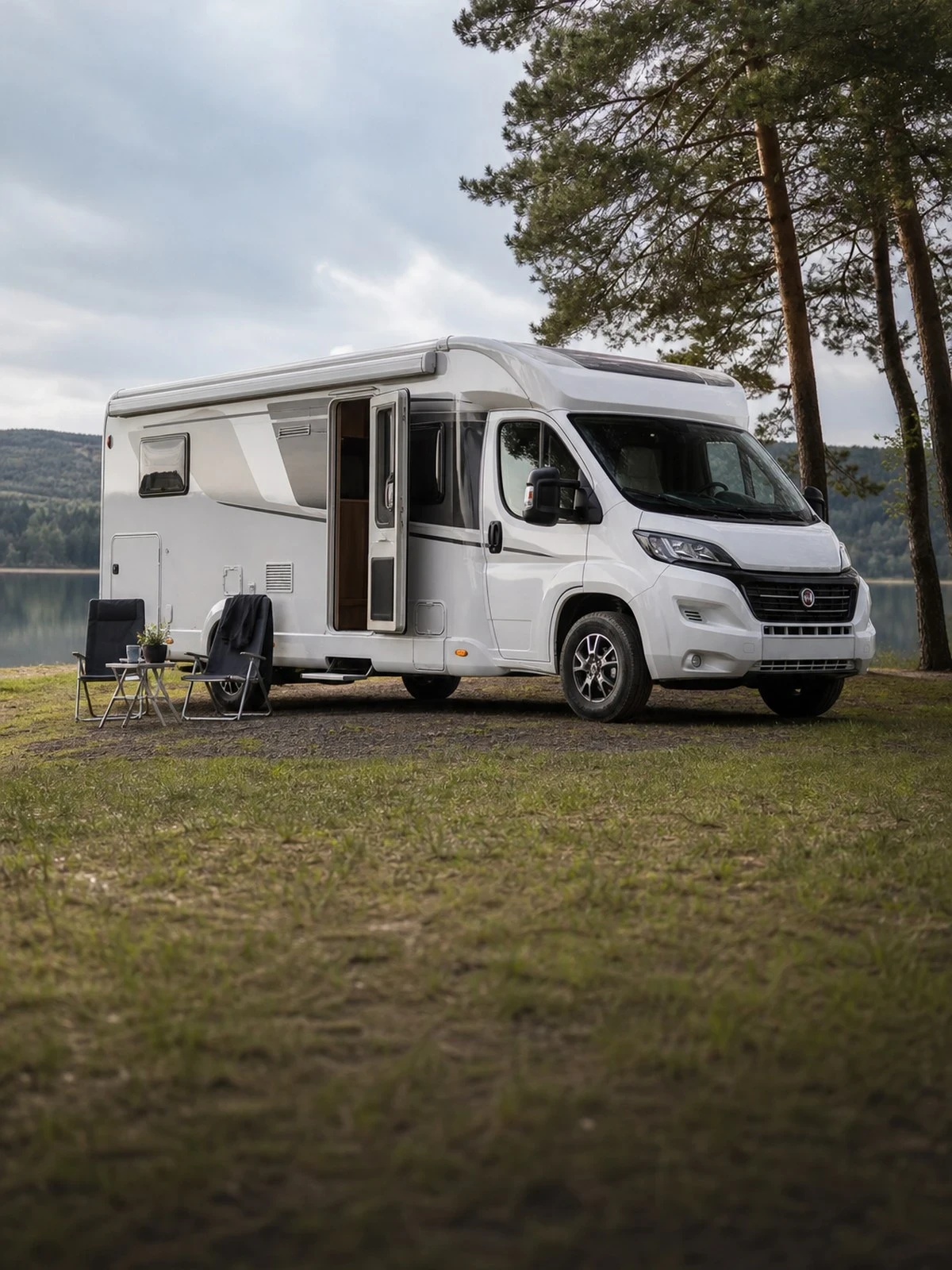
For many owners a Knaus stands outside for most of the year, which makes the storage place on your policy not an administrative detail but a condition of cover.
This page in another language: Nederlands
Work out for yourself what it would cost.
Enter your details; you will receive a proposal within one working day.
A premium indication, not personal advice. Prefer to talk it through? Call 072 - 509 24 56.
Most camper van damage happens when nobody is in it. A camper van is driven little and stands still for long periods, and it is in those months that hail, storm, falling branches, fire and theft occur. Where the vehicle stands then determines not only the rate but also whether the insurer accepts the application.
The storage place you declare is therefore stated on the policy schedule. If the camper van moves to another address, from a locked site to the public road or from a shed to a driveway, the risk changes. Report that immediately; under Articles 7:928 and 7:930 of the Dutch Civil Code the insurer may adjust the payout where the actual situation differs from what was declared.
Hail damage and storm damage are covered from third-party, fire and theft upwards. What is not covered is chafing damage from a poorly fitting cover, damage from freezing after the water system was not drained, and damp entering slowly. See also storage insurance and the motorhome insurance.
We compare your motorhome insurance across dozens of insurers, explain where the real differences lie, and arrange the switch from start to finish — without you having to chase it yourself.
 Motorhome insurance
 Compare
 Get covered
The structure of the cover in three parts, with an overview per situation below.
Third-party liability is compulsory. Also, third-party, fire and theft or comprehensive cover.
Everything you take with you and fit to it.
Breakdown and repatriation of the motorhome and its occupants.
What is covered
| Situation | Third-party liability | Third-party, fire and theft | Comprehensive |
|---|---|---|---|
| Collision with another vehicle | Yes | Yes | Yes |
| Theft of the motorhome | No | Yes | Yes |
| Hail damage during storage | No | Yes | Yes |
| Damage you cause yourself on the campsite | No | No | Yes |
| Contents and accessories | No | Sometimes | Sometimes |
| Frost damage from not draining down | No | No | No |
This overview is general in nature and is not personal advice. What is actually covered, including exclusions, limits and the excess, is set out in the policy conditions and the insurance card (verzekeringskaart) of the insurer; you receive both before you take out cover. Taking out cover without advice? Then read what execution only means for you.
Insurers weigh these details differently. That is where your saving is.
We look at the terms as well as the premium, and stay your point of contact when there is a claim.
We are not tied to one insurer and compare on the basis of an objective analysis of several companies.
You call or email someone who knows your file. No menu options, no changing call centres.
We cancel your old policy and align the start date, so you are never a day without cover.
We report the claim and monitor how it is handled. In urgent cases you can reach us on the emergency line.
Customers rate our service on four aspects: personal service, service delivery, availability and the outcome. The reviews are collected and published by NH1816 and come from customers who have actually taken out a policy with Finass Advies B.V. or reported a claim.
Four points that make the difference between a policy that pays out and one that does not.
The policy schedule states where the camper van stands out of season: in a shed, under a canopy, on your own land or on the public road. That detail determines the premium and, with some insurers, acceptance. If the address or the nature of the place changes, that is a change of risk that you have to report. If it emerges after a theft that the vehicle was standing elsewhere, the insurer can reduce or refuse the payout.
Policy conditions usually define a storm as wind of at least force seven. If a branch falls on the roof or an awning is blown over at that strength, that is storm damage and covered from third-party, fire and theft upwards. If the same branch falls on a windless day, there is no storm and no cover; at most you can hold the owner of the tree liable under Article 6:162 of the Dutch Civil Code. Keep the weather report for that day.
For as long as a vehicle can be taken onto the public road, the insurance obligation in Article 2 WAM applies. If you suspend the registration with the RDW (the Dutch vehicle authority), that obligation lapses for the duration of the suspension. The camper van may then not stand on the public road or be driven. The fire, storm and theft risks remain, so keep own-damage cover in place and report the suspension to your insurer.
A camper van cover protects against dirt and sun, but in the wind it chafes over the paintwork and the body. Those chafed patches arise gradually and do not count as sudden damage from outside; they are therefore excluded. A tightly fitting cover also traps damp against the panels. Use a breathable cover that stays clear of the surface, or choose a covered place instead of a tarpaulin.
Add up what is really in it: crockery, pans, bedding, clothing, bicycles on the carrier, a TV and the awning. In a well-equipped motorhome that adds up to several thousand euros. You insure that separately; the vehicle's own-damage cover does nothing with it.
Draining the water or keeping a minimum temperature is a condition on almost every policy. Burst pipes and a boiler ruined by frost are not sudden damage from outside but the result of an omission, and are not paid for.
This is what people ask us most.
Yes. The storage place is stated on the policy schedule and, on camper van policies, is a condition of cover rather than background information. A move from a shed to a driveway or from your own land to the public road increases the risk of theft, storm and fire damage. Report the change immediately; if it emerges afterwards that the vehicle was standing elsewhere, the payout can be reduced.
It is from third-party, fire and theft upwards. Hail is one of the most common causes of damage to stationary camper vans, and on an overcab model it hits a large roof area. Repair is laborious because the panels have to be worked over large areas. Do check whether your policy applies a different excess for hail damage. That happens regularly.
The conditions usually apply a lower limit of force seven. If a branch falls on the roof or the awning is blown over at that strength, there is cover from third-party, fire and theft upwards. If the same branch falls when there is no wind, there is no storm damage; at most you can then hold the owner of the tree liable under Article 6:162 of the Dutch Civil Code.
You can suspend the registration with the RDW. The obligation under Article 2 WAM then lapses and the vehicle may not stand on the public road or be driven. It is better to keep own-damage cover in place, because fire, storm, hail and theft are exactly what hit a stationary camper van. Report the suspension to your insurer.
Every situation is different. For these situations we have a separate page.
Request a quote without obligation. We will look at which insurer best matches your activities and your risk.
Prefer to call? 072 - 509 24 56, weekdays 09:00–17:00.
Claim on the road? Emergency line 06 - 55 20 40 72.
Finass Verzekert is a trading name of Finass Advies B.V. We advise on and arrange non-life insurance on the basis of an objective analysis of several insurers, and receive commission for this from the insurer, which is included in the premium. You pay no separate advice fee. Before you take out cover, we establish your wishes and needs.
You will find our licence, KvK and Kifid details and our complaints procedure at the foot of every page.
This page was compiled by Finass Verzekert (LinkedIn). Last updated on .
The information on this page is general in nature and is not personal advice.
Maandag- Vrijdag: 09:00- 17:00
We use cookies and similar technologies to improve your experience on our website.