

Glass insurance through Klaverblad
A glass policy is built on what you declare: how many square metres, which type of glazing and at what height. If that declaration is wrong, you only find out at the first claim.
- Several insurers compared objectively
- 9.5 customer rating for a new policy
- AFM licence 12016589
- Personal 072 - 509 24 56, weekdays 9–17
This page in another language: Nederlands
Work out for yourself what it would cost.
Enter your details; you will receive a proposal within one working day.
- We compare the offerings of several insurers
- An adviser checks whether the cover suits your activities
- We arrange the switch, including cancellation
A premium indication, not personal advice. Prefer to talk it through? Call 072 - 509 24 56.
- Independent advice
- Several insurers
- Switching arranged
- Help with claims
In brief
Klaverblad is one of the insurers with which Finass can place commercial glass cover. What this insurer does in the commercial segment is set out at Klaverblad. The general explanation of the product is on compare glass insurance; we compare several insurers objectively and choose on the basis of your cover requirements.
The administrative side of this policy matters more than it seems. Glass insurance is set on the area and type of glass declared. Anyone who replaces a facade with a larger frontage during conversion work and fails to report it is uninsured for the excess area or faces a proportionate reduction. Where incorrect information was given when the insurance was taken out, Articles 7:928 and 7:930 of the Dutch Civil Code about the duty of disclosure.
The second point to note is the accessibility. With a frontage at ground level, replacement is straightforward. With glazing on the third floor or above a courtyard, the cost of a cherry picker, scaffolding or a crane is added. Those costs weigh heavily in a glass claim and are not automatically paid everywhere. Report the height and accessibility of every glazed area, including roof lights and atrium glazing.
This page deals with one situation. The full overview is on Compare commercial buildings insurance.
Independent, personal, sorted quickly
We compare your commercial buildings insurance across dozens of insurers, explain where the real differences lie, and arrange the switch from start to finish — without you having to chase it yourself.
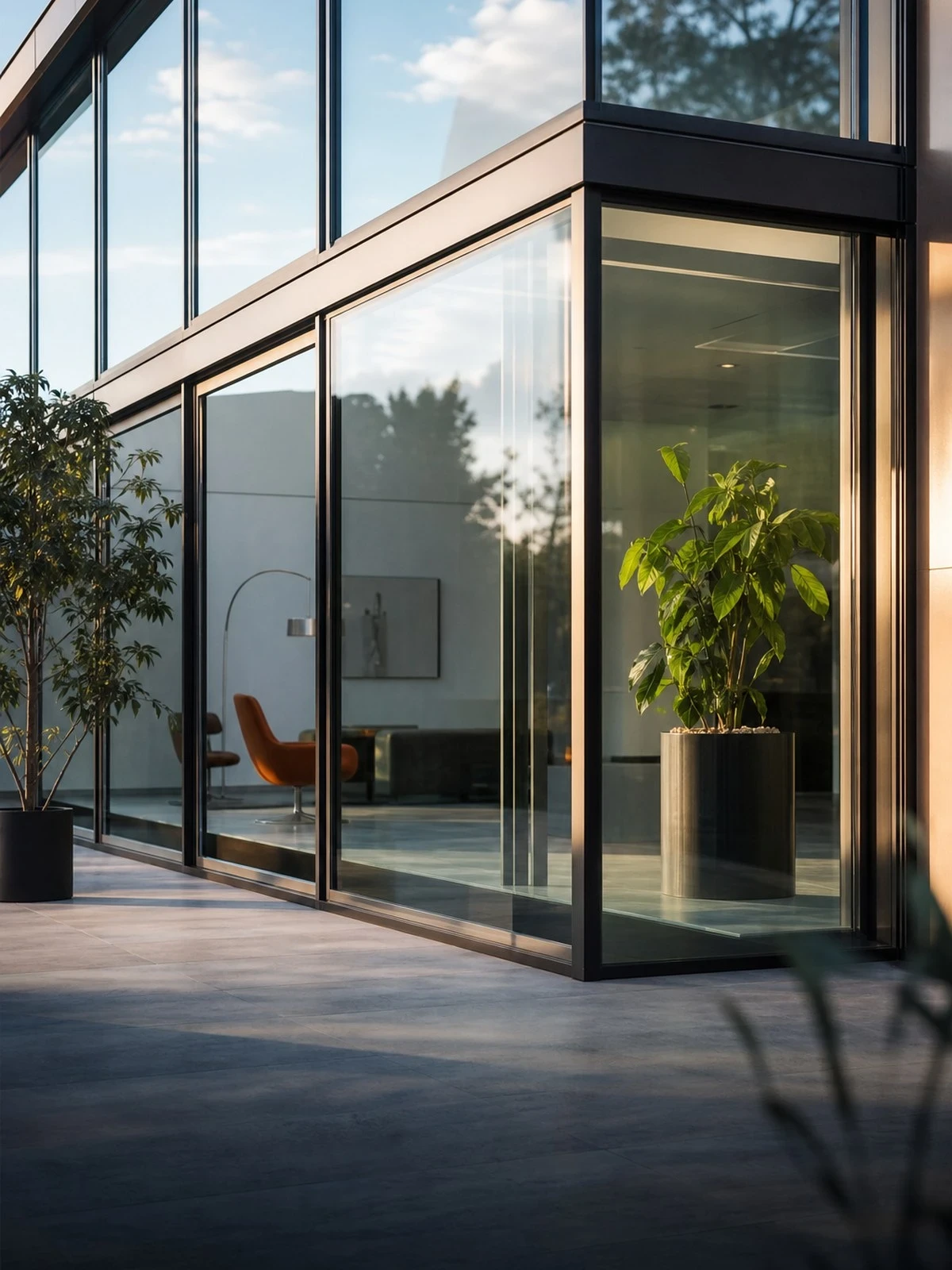 Commercial buildings insurance
 Compare
 Get covered
Why arrange it through Finass Verzekert?
We look at the terms as well as the premium, and stay your point of contact when there is a claim.
Independent
We are not tied to one insurer and compare on the basis of an objective analysis of several companies.
One fixed adviser
You call or email someone who knows your file. No menu options, no changing call centres.
Switching without hassle
We cancel your old policy and align the start date, so you are never a day without cover.
Help with claims
We report the claim and monitor how it is handled. In urgent cases you can reach us on the emergency line.
What to look out for
Four points that make the difference on commercial glass cover between a smooth settlement and a dispute.
The declaration must stay current
Conversion work, an extension, a new entrance or blocking up an old frontage changes the insured area. Report that change as soon as the work is finished. If it emerges at claim stage that there is structurally more glass than declared, the insurer can reduce payment in the ratio between what was declared and what is actually there.
Height, crane costs and temporary closures
Replacing a large pane often calls for equipment and for closing off a pavement or parking bay. Check whether additional costs for access equipment fall within the cover and whether a limit has been set. If your frontage is on a busy street, report as well that a permit may be needed for the closure. That lead time determines how long you are left with emergency boarding.
One event, several policies
If a car goes into the frontage, it is not only the glass that is destroyed but also the frame, sometimes the floor and the contents. The glass goes through this policy, the rest through the buildings and business contents insurance. If there is a driver at fault, your insurer recovers the loss under Article 6:162 of the Dutch Civil Code; so always note the registration number and the driver's details.
What falls outside the cover
Not covered are: scratches and damage without breaking through, breakage during installation, conversion work or moving, breakage in premises that have stood empty for longer than the policy permits, glass in greenhouses and growing spaces, and glazing that was already damaged at the outset. Damage from earthquake, flood and civil commotion also stays outside the cover, as does deliberately caused breakage under Article 7:952 of the Dutch Civil Code.
What does your premium depend on?
- Number and area of the panes: declared per glazed area, not per building
- Height and accessibility: determines the cost of replacement
- Type of glazing: single, insulating, laminated or toughened glass
- Public function of the building: shop, hospitality or office behind a closed facade
- Ancillary items covered as well: roof lights, sanitary ware, lettering and emergency boarding
- Excess: often per glazed area rather than per event
Insurers weigh these details differently. That is where your saving is.
What is covered
| Situation | Glass cover | Buildings or business contents policy |
|---|---|---|
| A car goes into the shop frontage and also damages the frame and the floor | Yes | Yes |
| A crack running across the shop window makes it unusable without any glass falling out | Yes | No |
| A cherry picker is needed to replace a pane on the third floor | Provided that | No |
| A weld spatter burns into the glass of the workshop door | No | No |
| The glass partition between two offices is broken while a desk is being moved | No | Provided that |
| The pane breaks while the contractor is installing the new frontage | No | No |
Glass cover concerns glazing that closes the building to the outside; internal glazing and mirrors belong with the contents.
Frequently asked questions
This is what people ask us most.
Is a crack covered where the pane has not fallen apart?
A crack running across the pane so that it loses its function counts as breakage with most insurers and is paid for. A scratch, a damaged coating or a spatter burnt in during grinding or welding is not breakage and falls outside the cover. If in doubt, have the pane photographed and assessed before you order a replacement yourself.
There is more glass in the building than was declared at the time. What happens?
The insurer may reduce payment in proportion to what was declared. If the discrepancy arose because incorrect information was given when the insurance was taken out, Articles 7:928 and 7:930 of the Dutch Civil Code apply and the consequences can be more serious. So always report conversion work, even if the premium rises as a result.
Does glass insurance pay if a third party smashes the pane?
Yes. Glass cover does not look at the cause, so you are paid and the insurer itself recovers from the party at fault under Article 6:162 of the Dutch Civil Code. Do report criminal damage to the police and secure witness details and any footage. Without an identifiable culprit the payment still stands, but the claim counts towards your claims history.
Does the cover apply to glass in an internal wall?
Usually not. Most policies cover glass that closes the building to the outside. Glass partitions, display cases and mirrors inside fall under the contents and must be included there separately. If your premises have a lot of internal glazing, have it recorded when you apply which glass sits on which policy.
Every situation is different. For these situations we have a separate page.
- Buildings insurance (opstalverzekering) and commercial buildings insurance (gebouwenverzekering): the same or not?The main page
- Glass insurance: types of glass and equivalent repairLease, shop windows, emergency boarding
- Glass insurance for a VvECommon glass, private windows, emergency boarding
- Glass insurance for businessesShop window, lease, emergency boarding
- Compare glass insuranceLease, glass area, emergency boarding
- Glass insurance for propertyBreakage, facade and roof, let property
- Glass insurance for offices, flats and homes that are letLetting, common glass, breakage