

Environmental liability for your own site through Chubb
Contamination on your own site affects no third party, and that is precisely why a liability policy does not pay. The clean-up is still for your account.
- Several insurers compared objectively
- 9.5 customer rating for a new policy
- AFM licence 12016589
- Personal 072 - 509 24 56, weekdays 9–17
This page in another language: Nederlands
Work out for yourself what it would cost.
Enter your details; you will receive a proposal within one working day.
- We compare the offerings of several insurers
- An adviser checks whether the cover suits your activities
- We arrange the switch, including cancellation
A premium indication, not personal advice. Prefer to talk it through? Call 072 - 509 24 56.
- Independent advice
- Several insurers
- Switching arranged
- Help with claims
In brief
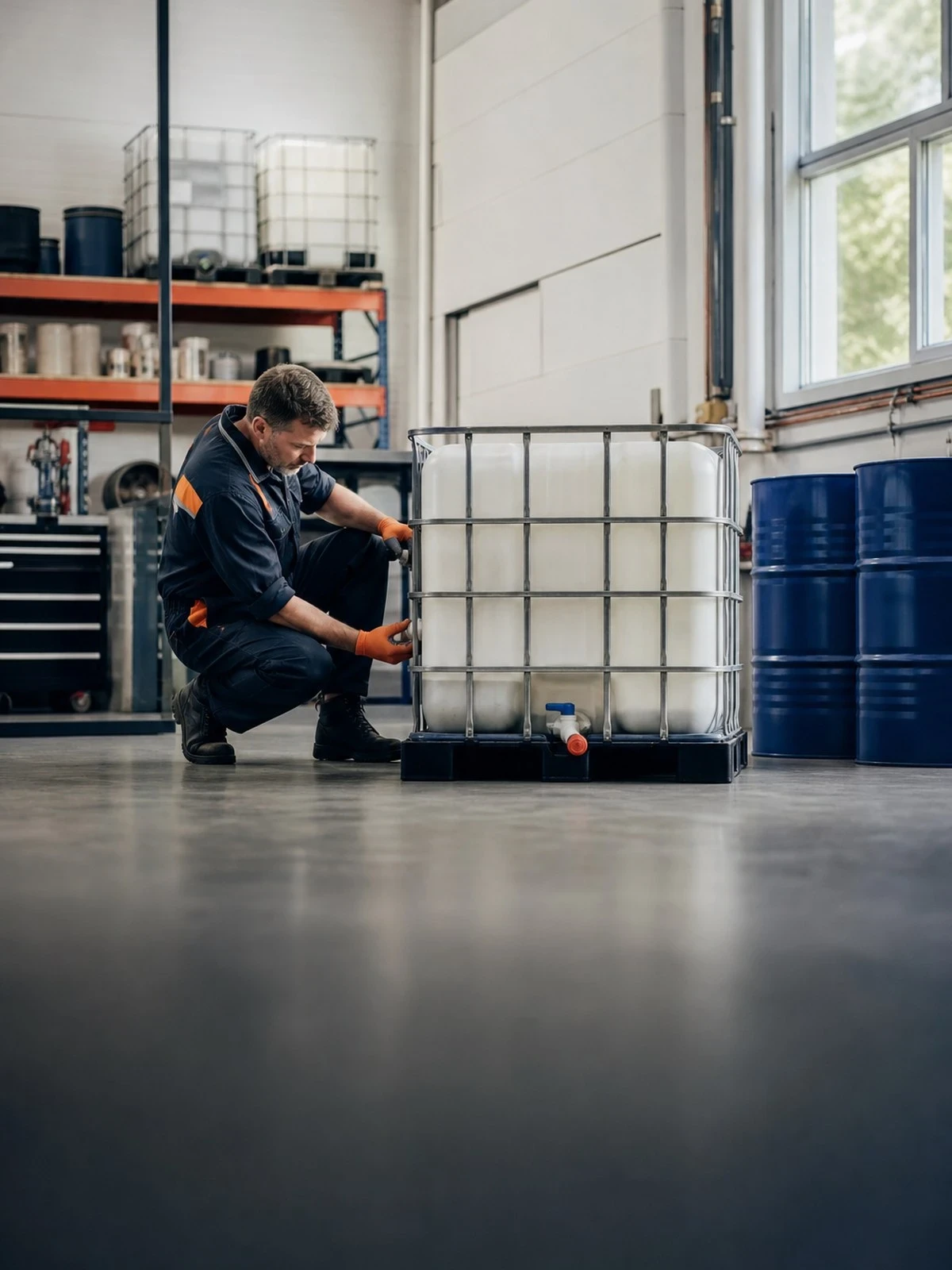
This cover is about what happens on your own site: an underground or above-ground tank that leaks, a cracked floor letting lubricating oil seep into the soil, an IBC that topples over on unpaved ground, or contaminated firefighting water that runs into the sewer and the ditch after a fire. That last one is one of the largest items: the fire itself is insured, but the water used to put it out carries soot, plastic residues and firefighting foam down into the soil.
The reason this calls for a separate policy is a legal one. A liability insurance pays out when you have to compensate the loss of a third party. If you contaminate your own land there is no third party and therefore no liability. You bear the clean-up costs yourself. As soon as the contamination migrates to the neighbours' plot, liability does arise, often without any fault on your part. If you own the building, Article 6:174 of the Dutch Civil Code on defective structures also comes into play.
If you rent your business premises, the discussion shifts. The owner will approach you under the lease and under Article 6:162 of the Dutch Civil Code, while the authorities focus on whoever caused the contamination. So record what the soil quality was when you moved in. Without that baseline measurement it is impossible later to separate what is yours from what was already there. If you also work at clients' sites, see environmental liability for work at third-party sites.
This page deals with one situation. The full overview is on Compare personal liability insurance (AVP).
Independent, personal, sorted quickly
We compare your environmental damage insurance across dozens of insurers, explain where the real differences lie, and arrange the switch from start to finish — without you having to chase it yourself.
 Environmental damage insurance
 Compare
 Get covered
Why arrange it through Finass Verzekert?
We look at the terms as well as the premium, and stay your point of contact when there is a claim.
Independent
We are not tied to one insurer and compare on the basis of an objective analysis of several companies.
One fixed adviser
You call or email someone who knows your file. No menu options, no changing call centres.
Switching without hassle
We cancel your old policy and align the start date, so you are never a day without cover.
Help with claims
We report the claim and monitor how it is handled. In urgent cases you can reach us on the emergency line.
What to look out for
Four situations in which the bill for your own site turns out higher than expected.
Tanks, pipework and the distinction between sudden and gradual
A tank that cracks produces a sudden emission. A coupling that drips for years does not. Many policies cover only the first, unless gradual pollution is expressly included. Inspection reports, leak detection and a liquid-tight floor are not only prevention, they are also your evidence that the emission was sudden.
Migration to neighbours and surface water
As soon as groundwater carries the contamination along, third parties suffer loss: a garden that has to be dug up, crop damage, fish deaths or a neighbouring business brought to a standstill. That is liability, and for hazardous substances the strict liability of Article 6:175 of the Dutch Civil Codeapplies. Acting carefully is no defence there.
Standstill during the clean-up
During a clean-up there are fences, drilling rigs and sometimes sheet piling on your site. Loss of turnover from that standstill is not a clean-up cost and is not included as standard. Assess this together with your business interruption insurance, because an environmental exclusion often applies there too.
What no version includes
Excluded are the historical contamination that was already there at inception, asbestos in your own buildings, and administrative fines and penalty payments. Replacing the leaking tank or pipe itself also stays with you: that is maintenance. Deliberate discharge or deliberately turning a blind eye to a known leak falls under Article 7:952 of the Dutch Civil Code.
What does your premium depend on?
- Number and area of the sites: each site is assessed separately
- Storage of liquids: tank volume, underground or above ground, and inspection status
- Soil type and water table: sandy soil spreads faster than clay
- Proximity of water and housing: determines the scale of any clean-up
- Owner or tenant: determines who you approach and who can approach you
- Baseline soil survey: a recent survey lowers both the premium and the argument
Insurers weigh these details differently. That is where your saving is.
What is covered
| Situation | AVB | Environmental damage |
|---|---|---|
| Lubricating oil seeping into your own soil through a cracked workshop floor | No | Yes |
| An overturned IBC of coolant on the unpaved part of your yard | No | Yes |
| Contaminated firefighting water running into the sewer and the ditch after a fire | No | Provided that |
| Crop damage at the neighbouring business because the groundwater carried the pollution along | Yes | Yes |
| Reinstating the soil beneath premises you rent, after a claim from the landlord | Provided that | Yes |
| Relaying the liquid-tight floor once the clean-up is finished | No | No |
As long as there is no third party making a claim against you, there is no liability either, and only environmental cover pays for the clean-up.
Frequently asked questions
This is what people ask us most.
My own land is contaminated. Who pays for that?
In principle you do, unless you have cover that pays clean-up costs on your own site. A liability policy does not come into play here, because there is no third party making a claim against you. This is exactly the gap that environmental damage insurance, or first-party environmental cover, exists to fill. Check that your policy names your own sites and not only third-party loss.
Is contaminated firefighting water after a fire covered?
That depends on the conditions. The fire damage itself falls under your fire or buildings insurance, but clearing firefighting residues from soil, sewer and surface water is environmental damage. Some environmental policies name firefighting water expressly, others bring it in through the sudden emission section. Ask about this specifically; for businesses storing plastics or chemicals it is often the largest item.
I rent my business premises. Do I need this cover?
Yes, usually. The landlord will approach you to reinstate the soil beneath the property let, and the environmental agency focuses on whoever caused it. Your position as tenant does not remove that obligation. Have a soil survey carried out at the start of the tenancy, so that you can show what contamination was already present before you were there.
When do I have to report an incident?
As soon as you can reasonably be aware of it. Article 7:941 of the Dutch Civil Code obliges you to notify in good time and also to co-operate and to mitigate the loss. With soil contamination there is in addition the duty to notify the authorities. Do not wait until the extent is clear: late notification can entitle the insurer to reduce the payment if it has been prejudiced as a result.
Every situation is different. For these situations we have a separate page.
- Compare environmental damage insuranceThe main page
- Environmental damage: soil contamination and clean-up costsSoil, firefighting water, clean-up
- Environmental damage insurance for real estateClean-up, your own site, third-party site
- Environmental damage insurance for propertyClean-up costs, tenants, baseline situation