

The building
- Walls, roof, floors and foundations
- Fitted kitchen, bathroom and installations
- Shed, garage and boundary fence
- Solar panels, provided they are declared and insured
Buildings insurance is the insurance of the building itself. It pays for damage to walls, the roof, installations and everything else permanently attached to the house.
This page in another language: Nederlands
Work out for yourself what it would cost.
Enter your details; you will receive a proposal within one working day.
A premium indication, not personal advice. Prefer to talk it through? Call 072 - 509 24 56.
Buildings insurance, also called home insurance, covers the building: walls, floors, roof, foundations, window frames, the fitted kitchen and bathroom, the central heating system and the electrical installation. The shed, garage, boundary fencing and paving on the same plot are usually included as well. Your possessions are not included; you insure those with a home contents insurance.
The policy works with the rebuild value and not with the WOZ value or the sale price. The rebuild value is what it costs to build a similar property again on the same site to the requirements now in force, excluding the land. With older, large or unusual properties that value is often above the WOZ value. If you establish the sum with the insurer's valuation tool or address scan and complete it truthfully, the policy usually gives guarantee against underinsurance.
The insurance is not compulsory by law, but almost every mortgage lender requires it and records that in the mortgage deed. With a flat, the VvE insures the whole building collectively. You then do not take out buildings insurance yourself. Important: buildings insurance is not a maintenance contract. Settlement, pile rot, poor maintenance and structural faults are excluded everywhere.
We compare your buildings insurance across dozens of insurers, explain where the real differences lie, and arrange the switch from start to finish — without you having to chase it yourself.
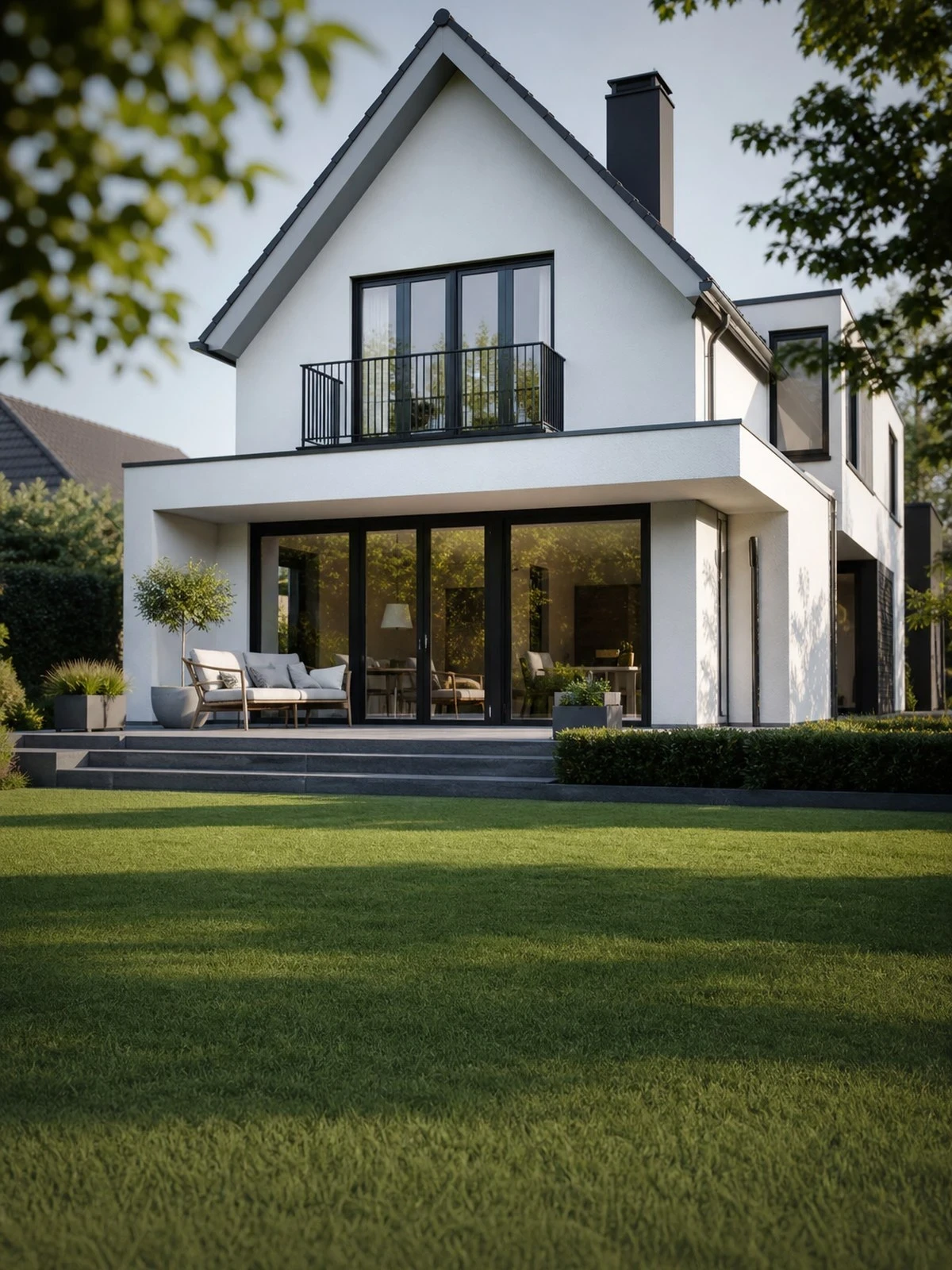 Buildings insurance
 Compare
 Get covered
Three elements determine the policy: what is insured, for what amount and against which events.
Everything permanently attached to the house, plus usually the outbuildings.
The sum insured is the rebuild value, not the WOZ value (the Dutch property valuation) or the market price.
Extended cover applies to named events, comprehensive cover also to sudden accidents of your own.
What is covered
| Situation | Extended | Comprehensive |
|---|---|---|
| Fire, lightning and explosion damage to the building | Yes | Yes |
| Storm and hail damage to the roof and facade | Yes | Yes |
| Burglary damage to doors and frames | Yes | Yes |
| Damaging a pipe or a tiled floor yourself while doing DIY | No | Yes |
| Breakage of glass in windows and doors | Provided that | Provided that |
| Subsidence, pile rot and wood rot from deferred maintenance | No | No |
What is actually covered, including exclusions, limits and the excess, is set out in the policy conditions and the insurance card (verzekeringskaart) that you receive before you take out cover.
Insurers weigh these details differently. That is where your saving is.
We look at the terms as well as the premium, and stay your point of contact when there is a claim.
We are not tied to one insurer and compare on the basis of an objective analysis of several companies.
You call or email someone who knows your file. No menu options, no changing call centres.
We cancel your old policy and align the start date, so you are never a day without cover.
We report the claim and monitor how it is handled. In urgent cases you can reach us on the emergency line.
Customers rate our service on four aspects: personal service, service delivery, availability and the outcome. The reviews are collected and published by NH1816 and come from customers who have actually taken out a policy with Finass Advies B.V. or reported a claim.
These elements determine whether the policy does what you expect of it when you claim.
The WOZ value is a valuation of the market value including the land, intended for taxation. The rebuild value is a building calculation: materials, labour, demolition and clearance costs to build the same property again. With a pre-war house, a listed building or a thatched roof, the rebuild value is regularly higher than the WOZ value. If you insure on the WOZ value, you insure an amount that has nothing to do with rebuilding.
If the sum insured is too low, the insurer pays proportionately less than your loss: even for a small leak. With guarantee against underinsurance that does not arise, as long as you completed the valuation tool truthfully and report changes. With listed and unusual properties, a valuation under Article 7:960 of the Dutch Civil Code the value for a fixed period; within that term the insurer cannot rely on a lower value.
Excluded are, among others subsidence, foundation damage and pile rot, damage caused by deferred maintenance, wear, design and material faults, and damage caused by vermin, woodworm, mould and slowly penetrating damp. Groundwater penetrating the floor or a wall and flooding after the failure of a primary flood defence also remain outside the ordinary cover. Damage caused deliberately or recklessly is excluded under Article 7:952 of the Dutch Civil Code.
The owner of the property takes out the buildings insurance. Where the property is let, that is the landlord. The tenant insures only their own contents and tenant's interest. With a flat, the VvE insures the building collectively, with the deed of division determining under Article 5:112 of the Dutch Civil Code what falls under what. Report changes to the property in advance: the duty of disclosure under Article 7:928 of the Dutch Civil Code applies when the policy is taken out, and a breach can reduce the payout or cause it to lapse (Article 7:930 of the Dutch Civil Code).
This is what people ask us most.
Not by law. Almost every mortgage lender does set it as a condition and records that in the mortgage deed, because the property serves as security. Without financing the insurance remains voluntary, but the risk then lies entirely with you: a burnt-out home has to be rebuilt from your own resources while the mortgage continues.
None. Home insurance, buildings insurance and building insurance are different names for the same cover: damage to the building. Insurers choose which term they use. What you do have to watch is the difference from home contents insurance: that covers your possessions and works with replacement value as new instead of rebuild value.
Then the owners' association insures the whole building with one buildings policy. You do not take one out yourself. Do check whether the VvE's sum insured and excesses are adequate, and whether features you installed yourself, such as a new kitchen, are covered. For your own possessions you take out home contents insurance.
No. The policy covers sudden and unforeseen events, not gradual deterioration. Rot, roof covering leaking at the end of its life, corroding pipes and mould caused by poor ventilation are at your expense. The insurer can also refuse damage arising from that poor maintenance. Maintenance is and remains the owner's job.
Yes, and preferably in advance. An extension, dormer window, converted loft or new installation raises the rebuild value; if the sum insured stays where it is, underinsurance arises. The risk during the work itself is also often arranged differently: with a long vacancy or large-scale works the cover can be restricted. Ask for written confirmation before the work starts.
Every situation is different. For these situations we have a separate page.
Request a quote without obligation. We check the rebuild value and compare premiums and conditions.
Prefer to call? 072 - 509 24 56, weekdays 09:00–17:00.
Claim on the road? Emergency line 06 - 55 20 40 72.
Finass Verzekert is a trading name of Finass Advies B.V. We advise on and arrange non-life insurance on the basis of an objective analysis of several insurers, and receive commission for this from the insurer, which is included in the premium. You pay no separate advice fee. Before you take out cover, we establish your wishes and needs.
You will find our licence, KvK and Kifid details and our complaints procedure at the foot of every page.
This page was compiled by Finass Verzekert (LinkedIn). Last updated on .
The information on this page is general in nature and is not personal advice.
Maandag- Vrijdag: 09:00- 17:00
We use cookies and similar technologies to improve your experience on our website.