

Value and construction type
- Rebuild value from a tool or a valuation
- Masonry, timber or mixed construction
- Tiles, bitumen or thatch
- Year of construction and state of maintenance
The premium for buildings insurance is not a fixed amount but a calculation. Below you can read which details the insurer takes into account and why two comparable homes still work out differently.
This page in another language: Nederlands
Work out for yourself what it would cost.
Enter your details; you will receive a proposal within one working day.
A premium indication, not personal advice. Prefer to talk it through? Call 072 - 509 24 56.
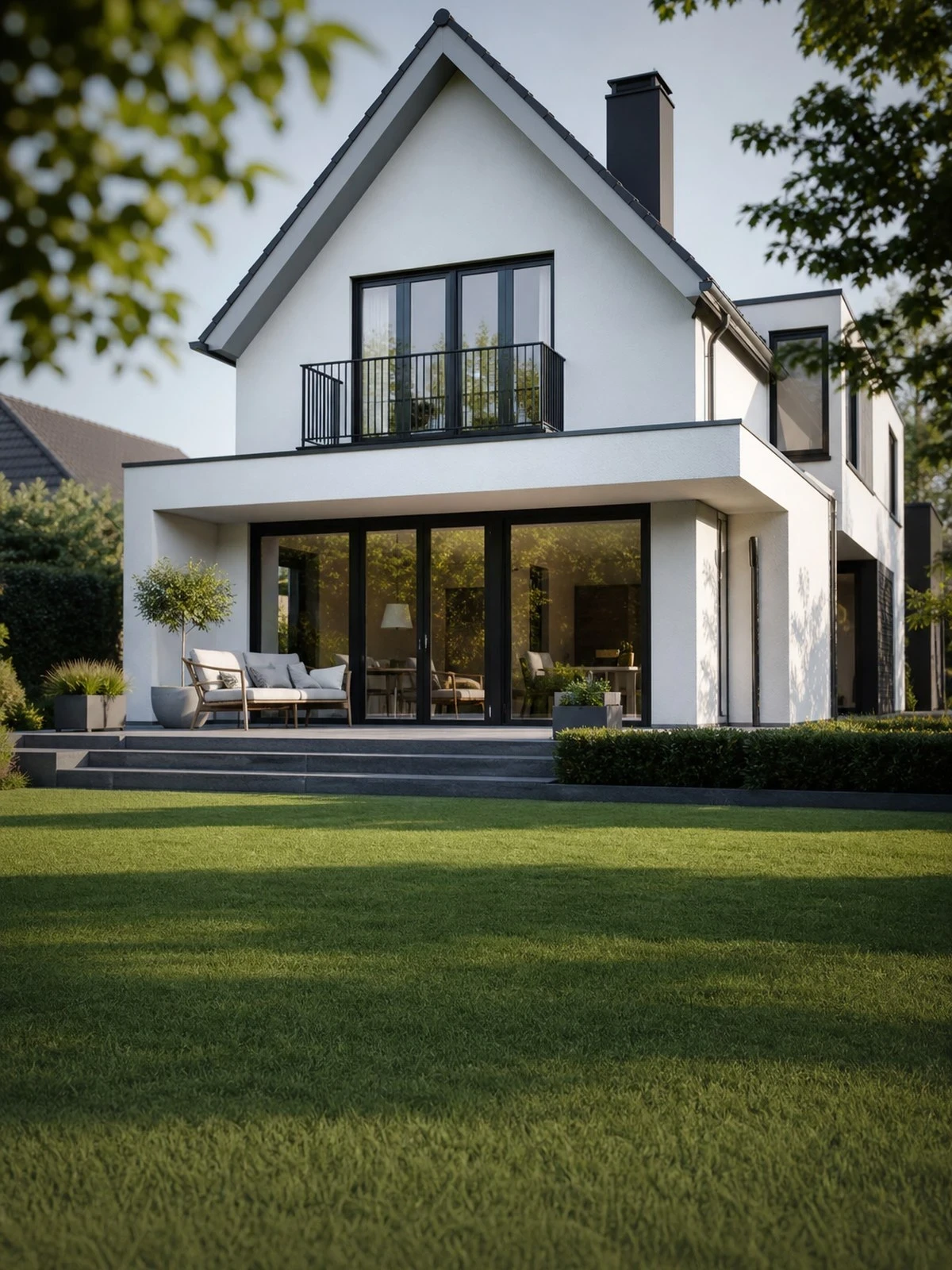
Almost every insurer starts from the same figure: the rebuild value of the property. A rate per thousand is applied to it, and that rate is then adjusted on the basis of the construction type, roof covering, year of construction, use and postcode area. A timber house or a thatched roof counts more heavily than masonry with tiles, and an area with a lot of burglary or storm damage counts differently from a quiet municipality.
Then come the choices you make yourself. comprehensive cover costs more premium than extended cover, because unnamed causes such as a mishap of your own while working on the house are included as well. A higher excess brings the premium down, but shifts small claims to you. Extensions for glass, solar panels or outbuildings count separately.
What is the same for everyone: every non-life insurance premium is subject to 21% insurance premium tax. It is included in the amount on your policy schedule and is not a cost of the insurer. When comparing, check whether an amount quoted already includes that tax and the policy charges. See also what buildings insurance costs.
We compare your buildings insurance across dozens of insurers, explain where the real differences lie, and arrange the switch from start to finish — without you having to chase it yourself.
 Buildings insurance
 Compare
 Get covered
The premium breaks down into three blocks: the property itself, its surroundings and your own choices.
The rebuild value and the way the property is built weigh most heavily.
Where the property stands and how it is used determines the risk of damage.
What you switch on or off in the policy is the factor you can adjust yourself.
What is covered
| Situation | Increases the premium | Lowers the premium |
|---|---|---|
| A higher rebuild value or annual indexation | Yes | No |
| A thatched roof or timber construction | Yes | No |
| Moving from extended to comprehensive cover | Yes | No |
| Choosing a higher voluntary excess | No | Yes |
| Bundling policies into one package | No | Provided that |
| Letting, vacancy or a business at home | Yes | No |
What is actually covered, including exclusions, limits and the excess, is set out in the policy conditions and the insurance card (verzekeringskaart) that you receive before you take out cover.
Insurers weigh these details differently. That is where your saving is.
We look at the terms as well as the premium, and stay your point of contact when there is a claim.
We are not tied to one insurer and compare on the basis of an objective analysis of several companies.
You call or email someone who knows your file. No menu options, no changing call centres.
We cancel your old policy and align the start date, so you are never a day without cover.
We report the claim and monitor how it is handled. In urgent cases you can reach us on the emergency line.
Customers rate our service on four aspects: personal service, service delivery, availability and the outcome. The reviews are collected and published by NH1816 and come from customers who have actually taken out a policy with Finass Advies B.V. or reported a claim.
Where the amount on your policy schedule comes from and what you get for it.
The insurer works with the rebuild value: what it costs to build a similar property again on the same site, excluding the land. The WOZ value and the sale price say something about the market and the location and are unsuitable as a sum insured. You establish the rebuild value with a rebuild value calculator, an address scan or a valuation report. If you enter too low a figure, you see a low premium that falls short when you claim.
Building costs, material prices and wages rise, and insurers index the sum insured accordingly each year. A higher sum automatically means a higher premium, even where nothing about your home has changed. That is not a rate increase but an adjustment of the cover to the actual rebuilding costs. If you switch off the indexation, the premium falls, but in time underinsurance.
Some risks are excluded by every insurer and therefore keep the price down. Not covered are, among other things, subsidence, foundation damage and pile rot, damage caused by deferred maintenance, wear and tear and construction or material faults, and damage caused by vermin, woodworm, mould and slowly penetrating damp. Flooding caused by the failure of a primary flood defence also falls outside the cover, and intent or recklessness is excluded under Article 7:952 of the Dutch Civil Code.
On taking out the policy, the duty of disclosure applies under Article 7:928 of the Dutch Civil Code. The details of the construction type, roof covering, use and previous claims have to be correct; incorrect information can reduce or void the payout under Article 7:930 of the Dutch Civil Code. With unusual properties, a valuation under Article 7:960 of the Dutch Civil Code fixes the value for a set period, which makes the premium higher but the payout predictable.
This is what people ask us most.
Because the premium turns on more than the address. The rebuild value can differ through the volume, an extension and the finish, and the form of cover, the excess, the extensions chosen and the number of previous claims all count as well. Insurers also calculate differently: the same house produces a different rate with two companies.
It makes a difference, but how much varies by insurer. More important is whether the amount suits you: you then bear small claims yourself and in practice stop reporting them. Also note that some policies have a separate, higher excess for storm or hail damage. That is separate from the amount you choose yourself.
Yes. Thatch increases the fire risk and not every insurer accepts it. Those that do often set requirements for the chimney, lightning protection, the electrical installation or a fire detection system. The same logic applies to listed buildings: rebuilding takes longer and costs more because of material and permit requirements, which raises the sum insured and therefore the premium.
An extension, dormer window or addition raises the rebuild value and with it the premium. Report the work, even while it is still under way: during the building period, restrictive conditions often apply to theft and water damage. If you do not report the change, the sum insured is too low and underinsurance arises at exactly the moment you need the cover.
Non-life insurance is subject to 21% insurance premium tax. Insurers usually show the amount including that tax and including policy charges, but not every comparison site does so in the same way. When setting quotes side by side, check that both amounts are on the same basis, otherwise you are unintentionally comparing a gross with a net premium.
Every situation is different. For these situations we have a separate page.
Request a quote without obligation. We check the rebuild value and compare premiums and conditions.
Prefer to call? 072 - 509 24 56, weekdays 09:00–17:00.
Claim on the road? Emergency line 06 - 55 20 40 72.
Finass Verzekert is a trading name of Finass Advies B.V. We advise on and arrange non-life insurance on the basis of an objective analysis of several insurers, and receive commission for this from the insurer, which is included in the premium. You pay no separate advice fee. Before you take out cover, we establish your wishes and needs.
You will find our licence, KvK and Kifid details and our complaints procedure at the foot of every page.
This page was compiled by Finass Verzekert (LinkedIn). Last updated on .
The information on this page is general in nature and is not personal advice.
Maandag- Vrijdag: 09:00- 17:00
We use cookies and similar technologies to improve your experience on our website.