

Guarantee against underinsurance
- A rebuild value calculator or address scan
- Annual indexation of the sum insured
- Valuation of unusual properties
- Without a guarantee you carry the risk
There is no buildings insurance (opstalverzekering) that is the best for every home. What does exist is a policy that suits your property, your use of it and your reserves. Below are the points on which you can judge that.
This page in another language: Nederlands
Work out for yourself what it would cost.
Enter your details; you will receive a proposal within one working day.
A premium indication, not personal advice. Prefer to talk it through? Call 072 - 509 24 56.
Comparison sites usually set buildings policies side by side on premium, while the difference rarely lies in the premium. It lies in the sum insured, the guarantee against underinsurance, the form of cover and the exclusions. A policy that puts price first but gives no guarantee places the valuation risk with you, and on a large claim that weighs more heavily than the difference in premium.
So start with the property. A home with a thatched roof, listed status, a houseboat or a converted farmhouse does not suit every insurer. Some do not accept this type of property and others set requirements for the chimney, lightning protection, wiring or fire detection. For these properties, a valuation report is usually used instead of a rebuild value calculator.
Then assess the form of cover. An extended cover names the insured events; comprehensive cover also covers unnamed causes such as drilling through a pipe. All-risks costs more, but does not remove any exclusions. Also look at the excess, including the separate amount some policies apply to storm damage. See also how the premium is made up.
We compare your buildings insurance across dozens of insurers, explain where the real differences lie, and arrange the switch from start to finish — without you having to chase it yourself.
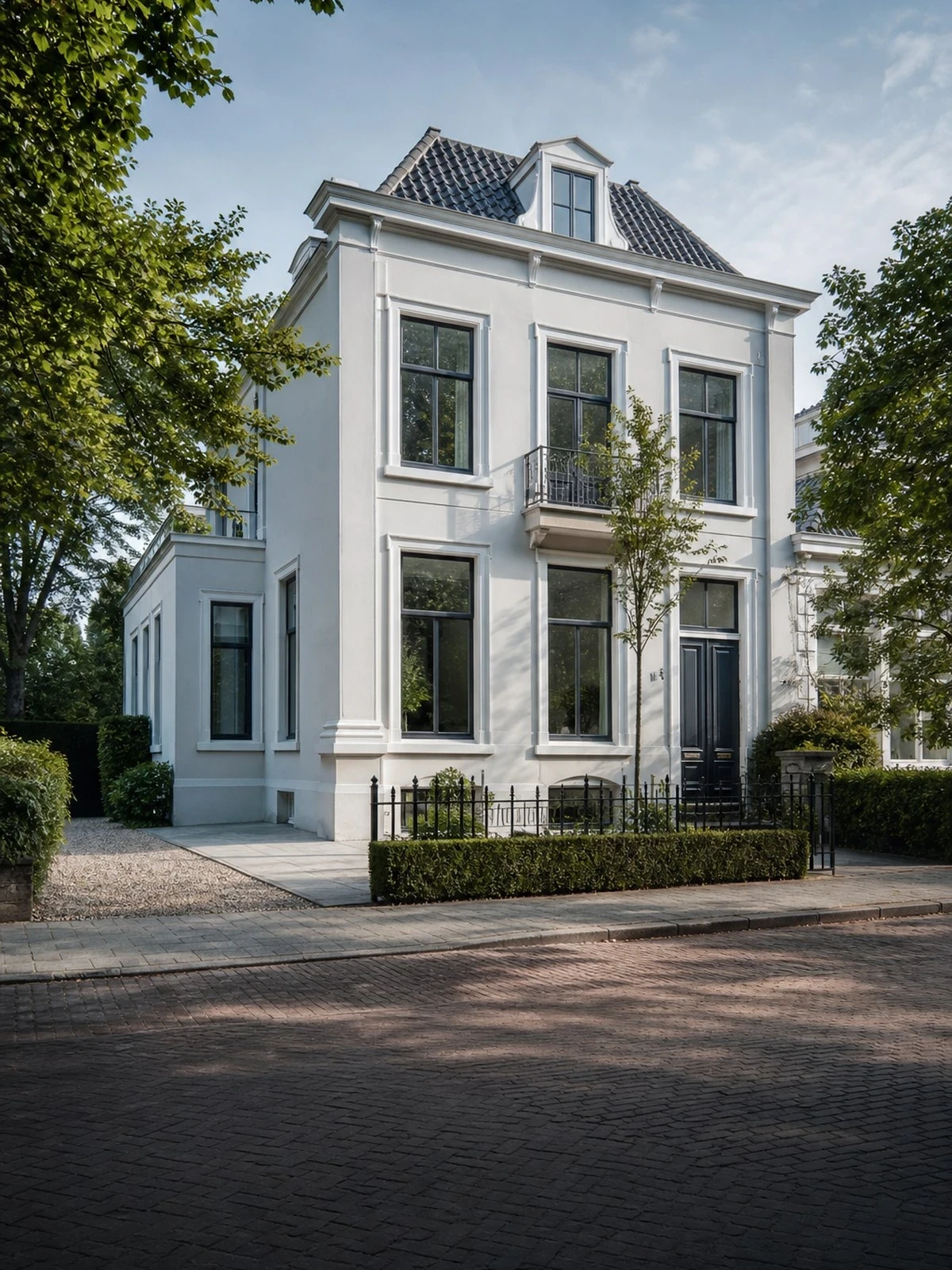 Buildings insurance
 Compare
 Get covered
Three criteria that weigh more heavily than the difference in premium between providers.
Who carries the risk if the sum insured later turns out to be too low?
Not every insurer accepts every type of home or roof covering.
What the policy covers and what you bear yourself determines its worth when you claim.
What is covered
| Situation | Extended | Comprehensive |
|---|---|---|
| Fire, storm and water damage to the building | Yes | Yes |
| Burglary damage to doors, frames and locks | Yes | Yes |
| Drilling through a pipe or another mishap of your own | No | Yes |
| Glass breakage and solar panels | Provided that | Provided that |
| Thatched roof or listed building accepted | Provided that | Provided that |
| Subsidence, foundation damage and pile rot | No | No |
What is actually covered, including exclusions, limits and the excess, is set out in the policy conditions and the insurance card (verzekeringskaart) that you receive before you take out cover.
Insurers weigh these details differently. That is where your saving is.
We look at the terms as well as the premium, and stay your point of contact when there is a claim.
We are not tied to one insurer and compare on the basis of an objective analysis of several companies.
You call or email someone who knows your file. No menu options, no changing call centres.
We cancel your old policy and align the start date, so you are never a day without cover.
We report the claim and monitor how it is handled. In urgent cases you can reach us on the emergency line.
Customers rate our service on four aspects: personal service, service delivery, availability and the outcome. The reviews are collected and published by NH1816 and come from customers who have actually taken out a policy with Finass Advies B.V. or reported a claim.
Providers diverge on these elements. On the rest they closely resemble one another.
One insurer has you complete the rebuild value calculator, another runs an address scan based on land registry and building data, and for unusual properties a valuation is requested. That difference determines whether you get a guarantee against underinsurance. With a valuation under Article 7:960 of the Dutch Civil Code the value is fixed for a set period and within that period the insurer cannot invoke underinsurance.
With one policy, outbuildings, boundary fencing, garden landscaping, glass and solar panels are included within the sum insured; with another they are separate extensions with their own limit. The same applies to the costs of clearance, emergency measures and temporary accommodation elsewhere. Two policies with the same premium can differ considerably on this point, and you only notice it in a claim that makes the property uninhabitable.
No insurer covers subsidence, foundation damage or pile rot. The same applies to deferred maintenance, wear, rust, wood rot and construction or material defects and for damage caused by vermin, woodworm, mould and slowly penetrating damp. Groundwater and flooding caused by the failure of a primary flood defence also remain outside cover. Intent and recklessness are excluded under Article 7:952 of the Dutch Civil Code.
A good policy becomes worthless if the declaration is wrong. On taking out the policy, the duty of disclosure under Article 7:928 of the Dutch Civil Codeapplies: you must fully declare the type of construction, the roof covering, the use, any letting and previous claims. If that is not correct, the payment can be reduced or refused (Article 7:930 of the Dutch Civil Code). If anything changes, report it; report a claim as soon as reasonably possible (Article 7:941 of the Dutch Civil Code).
This is what people ask us most.
No. The insurer that works out well for a new-build home with a tiled roof is often not the one that will accept a thatched farmhouse. Which policy is best follows from the type of property, its use, the form of cover you want and the excess you can bear. So compare on conditions first and only then on premium.
Not always. All-risks also covers sudden and unforeseen damage without a named cause, such as drilling through a pipe or putting a ladder through a window. That is useful if you do a lot of DIY or use the property intensively. If you do not, you are mainly paying extra premium. The exclusions are identical in both forms, so all-risks does not solve subsidence or maintenance.
The insurer undertakes not to invoke underinsurance, even if the sum insured later turns out to be too low. The condition is that you completed the rebuild value calculator fully and correctly or used the insurer's address scan, and that you report later refurbishments. Without that guarantee, the insurer pays proportionately where there is a shortfall.
First look at what is causing the increase. Usually it is indexation of the sum insured because building costs have risen. That is not a deterioration but an adjustment of the cover. If you switch indexation off, underinsurance will arise in time. If switching does pay off, check that the new policy has the same guarantee, form of cover and extensions.
For a listed building, thatched roof, houseboat, converted farmhouse or villa, the choice of insurers is smaller and a valuation report is used. Insurers more often set requirements in advance, for example for the chimney, the lightning protection, the electrical installation or fire detection. Always declare the unusual character of the property on your application: it is information the insurer asks about.
Every situation is different. For these situations we have a separate page.
Request a quote without obligation. We compare the conditions, the guarantee and the premium from several insurers.
Prefer to call? 072 - 509 24 56, weekdays 09:00–17:00.
Claim on the road? Emergency line 06 - 55 20 40 72.
Finass Verzekert is a trading name of Finass Advies B.V. We advise on and arrange non-life insurance on the basis of an objective analysis of several insurers, and receive commission for this from the insurer, which is included in the premium. You pay no separate advice fee. Before you take out cover, we establish your wishes and needs.
You will find our licence, KvK and Kifid details and our complaints procedure at the foot of every page.
This page was compiled by Finass Verzekert (LinkedIn). Last updated on .
The information on this page is general in nature and is not personal advice.
Maandag- Vrijdag: 09:00- 17:00
We use cookies and similar technologies to improve your experience on our website.