

Damage to property and personal injury
- Injury to third parties
- Damage to other people's property
- Also during visits to clients' sites
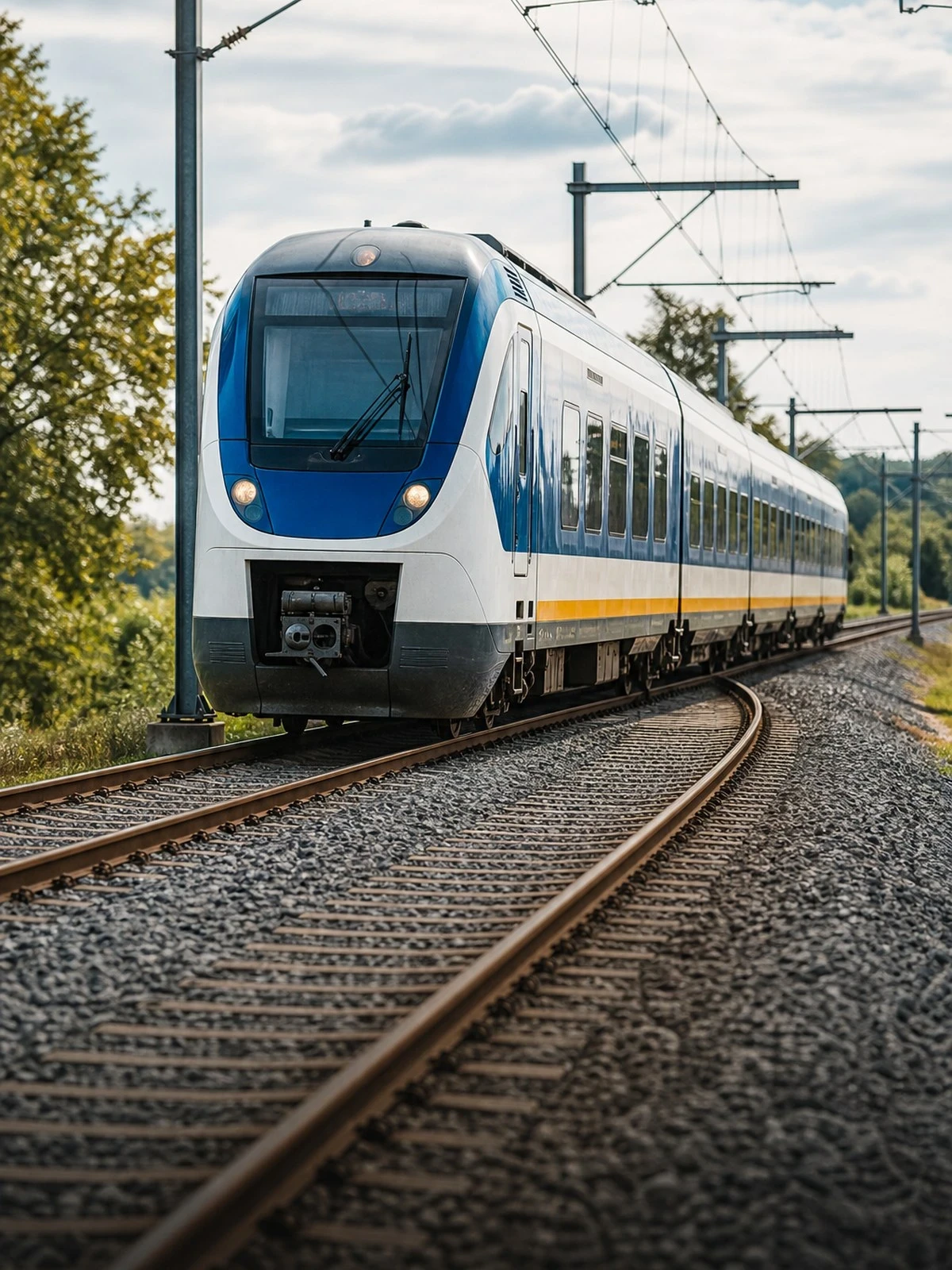
In railway work the damaged cable is the smallest part of the bill. The bill is in the hours when no train ran.
This page in another language: Nederlands
Work out for yourself what it would cost.
Enter your details; you will receive a proposal within one working day.
A premium indication, not personal advice. Prefer to talk it through? Call 072 - 509 24 56.
A damaged cable duct, an overhead line struck or a track not released on time costs little physically. What follows is of a different order: cancelled timetables, replacement transport, compensation to passengers and claims from operators who cannot deploy their rolling stock and staff. That consequential loss bears no relation to the contract price of the work.
In law that is an awkward point. Delay losses suffered by an operator are often pure financial loss: nothing of theirs is damaged and nobody is injured. Many public and employers' liability policies only pay such losses where they arise from covered property damage. So have it established expressly how your policy deals with delay and stoppage losses suffered by third parties.
Also, certification is not a quality mark here but a condition of cover. Working without valid safety certification, outside the established procedures or without release from the infrastructure manager can cost you cover, however carefully the work was otherwise carried out.
We compare your personal liability insurance (AVP) across dozens of insurers, explain where the real differences lie, and arrange the switch from start to finish — without you having to chase it yourself.
 Personal liability insurance (AVP)
 Compare
 Get covered
The structure of the cover in three parts, with an overview per situation below.
Damage to other people's property and injury to other people.
Accidents at work and occupational illnesses.
What is excluded as standard.
What is covered
| Situation | AVB | Another policy |
|---|---|---|
| Injury to a visitor or customer | Yes | No |
| Damage to a client's property | Sometimes | No |
| An accident at work involving an employee | Yes | No |
| Injury to staff in traffic | No | Yes |
| Damage to property in your care | No | Sometimes |
| Pure financial loss caused by a professional error | No | Yes |
This overview is general in nature and is not personal advice. What is actually covered, including exclusions, limits and the excess, is set out in the policy conditions and the insurance card (verzekeringskaart) of the insurer; you receive both before you take out cover. Taking out cover without advice? Then read what execution only means for you.
Insurers weigh these details differently. That is where your saving is.
We look at the terms as well as the premium, and stay your point of contact when there is a claim.
We are not tied to one insurer and compare on the basis of an objective analysis of several companies.
You call or email someone who knows your file. No menu options, no changing call centres.
We cancel your old policy and align the start date, so you are never a day without cover.
We report the claim and monitor how it is handled. In urgent cases you can reach us on the emergency line.
Customers rate our service on four aspects: personal service, service delivery, availability and the outcome. The reviews are collected and published by NH1816 and come from customers who have actually taken out a policy with Finass Advies B.V. or reported a claim.
Four points that make the difference between a policy that pays out and one that does not.
Work on the track takes place in a tightly defined window. If you overrun, the track still has to be released or train services are cancelled. The penalties and claims that follow are contractual in nature and usually fall outside liability cover. So plan with a margin, record delays caused by third parties in writing at once and report deviations at the moment they arise.
Signalling, data and power cables lie close together alongside the track. A single instance of damage can take out a signalling section. Request the location data before work starts, have trial trenches dug where the drawing is unclear, and keep the excavation notification, the drawings and the release. A contractor who dug without current location data has virtually no defence when a claim comes.
If you engage a specialist party for welding, surveying or transport, you remain answerable to the infrastructure manager. Article 6:171 of the Dutch Civil Code makes the party engaging them liable for mistakes by non-subordinates it has engaged. Check the certification of the company and of the individuals before every deployment, record the supervision in the work plan and ask for the insurance certificate stating the sum insured.
Contractual penalties and deductions set out in the specification are not liability in law and stay outside the cover. Damage to the work you carry out yourself belongs with a construction policy and not here. Working without release or outside the safety procedures touches the exclusion for intent and wilful recklessness in Article 7:952 DCC. Your own standing costs for equipment are not paid either.
Damage to property that you have in your care: borrowed, hired, being worked on or held in safekeeping: is not covered by the standard cover. For professions where this is the core of the work, a separate care, custody and control module with its own limit is essential.
Your AVB excludes damage caused with or by motor vehicles. It is precisely there that the Hoge Raad (the Dutch Supreme Court) recognised a separate liability based on the duty to act as a good employer: an employer must arrange proper insurance for employees who take part in traffic for work. A WEGAS insurance policy fills that gap.
This is what people ask us most.
Only where your policy expressly provides for it. Delay losses are often pure financial loss for the operator affected: nothing of theirs is damaged. As standard, liability policies only pay consequential loss arising from covered property damage. Have this point addressed separately in every quotation. It determines whether the policy means anything in this sector.
Then you are working outside the conditions of cover and the insurer can reject a claim, even if the incident had nothing to do with that certificate. Keep a register of validity for each person and each company certification, and block deployment as soon as a date passes. Check that validity for hired-in staff and subcontractors too.
Usually not. A penalty or deduction under the contract is an agreement between you and the client and not liability in law towards a third party. Liability insurance therefore excludes it. Damage you caused to third parties while overrunning can be covered. Assess which penalty clauses you accept when you take on the work.
Article 7:658 DCC imposes a heavy duty of care on you as an employer, and you have to show that you complied with it. In this environment that means demonstrable safety instruction, valid worksite protection, supervision and certified staff. If your employee is hit in traffic to or from the location, good employership under Article 7:611 DCC also comes into play.
Every situation is different. For these situations we have a separate page.
Request a quote without obligation. We will look at which insurer best matches your activities and your risk.
Prefer to call? 072 - 509 24 56, weekdays 09:00–17:00.
Claim on the road? Emergency line 06 - 55 20 40 72.
Finass Verzekert is a trading name of Finass Advies B.V. We advise on and arrange non-life insurance on the basis of an objective analysis of several insurers, and receive commission for this from the insurer, which is included in the premium. You pay no separate advice fee. Before you take out cover, we establish your wishes and needs.
You will find our licence, KvK and Kifid details and our complaints procedure at the foot of every page.
This page was compiled by Finass Verzekert (LinkedIn). Last updated on .
The information on this page is general in nature and is not personal advice.
Maandag- Vrijdag: 09:00- 17:00
We use cookies and similar technologies to improve your experience on our website.