

Buildings
- Fire, storm and water
- Burglary damage
- Outbuildings and swimming pool
For a British holiday home you almost always end up with a local policy under English or Scots law, and the national flood safety net that protects ordinary homes is precisely what does not apply to second homes.
This page in another language: Nederlands
Work out for yourself what it would cost.
Enter your details; you will receive a proposal within one working day.
A premium indication, not personal advice. Prefer to talk it through? Call 072 - 509 24 56.
Since the United Kingdom left the EU, an insurer needs a British authorisation in order to cover a risk located there. When it comes to it your policy therefore moves to the British market: English-language conditions, English, Scots or Northern Irish law and a British disputes route. Access to Kifid is then closed, and the Dutch provisions on the duty of disclosure and notification of claims do not apply.
The UK does have a reinsurance arrangement that keeps flood cover affordable for ordinary homes, but it excludes second homes, let properties and new build after the cut-off date. Your holiday home is therefore assessed on the open market like any other, on the basis of the flood map for the address.
Two other British peculiarities determine acceptance: subsidence on the clay soils in the south and east, and the listed status that applies to many older properties. If your house is elsewhere, also look at Ireland and at the general holiday home insurance.
We compare your buildings insurance across dozens of insurers, explain where the real differences lie, and arrange the switch from start to finish — without you having to chase it yourself.
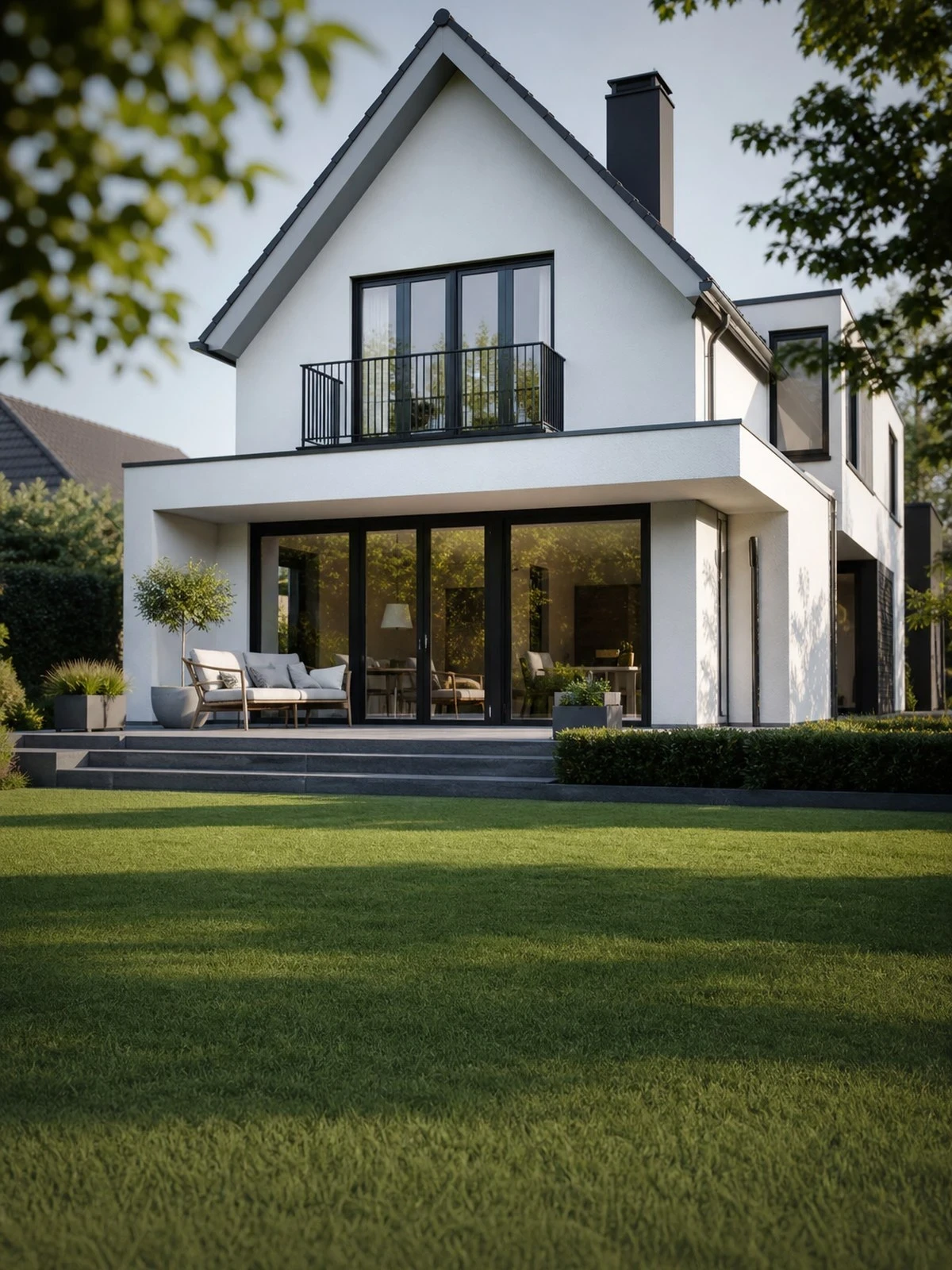 Buildings insurance
 Compare
 Get covered
The structure of the cover in three parts, with an overview per situation below.
The home at rebuild value, based on local building costs.
Furniture and equipment you leave there permanently.
Your liability for the building and towards tenants.
What is covered
| Situation | Covered |
|---|---|
| Fire or storm damage to the home | Yes |
| Water damage while the property is occupied | Yes |
| Water damage during a long period of vacancy | No |
| Damage caused by a tenant | Sometimes |
| Theft of your home contents while the property is let | Sometimes |
| Deferred maintenance and frost damage | No |
This overview is general in nature and is not personal advice. What is actually covered, including exclusions, limits and the excess, is set out in the policy conditions and the insurance card (verzekeringskaart) of the insurer; you receive both before you take out cover. Taking out cover without advice? Then read what execution only means for you.
Insurers weigh these details differently. That is where your saving is.
We look at the terms as well as the premium, and stay your point of contact when there is a claim.
We are not tied to one insurer and compare on the basis of an objective analysis of several companies.
You call or email someone who knows your file. No menu options, no changing call centres.
We cancel your old policy and align the start date, so you are never a day without cover.
We report the claim and monitor how it is handled. In urgent cases you can reach us on the emergency line.
Customers rate our service on four aspects: personal service, service delivery, availability and the outcome. The reviews are collected and published by NH1816 and come from customers who have actually taken out a policy with Finass Advies B.V. or reported a claim.
Four points that make the difference between a policy that pays out and one that does not.
A risk in the UK may only be covered by an insurer with British authorisation. So you usually take out cover locally, under English or Scots law. Expect that the terms cannot be translated one for one: buildings, contents and liability cover slightly different things from the Dutch opstal, inboedel and aansprakelijkheid. Have the conditions compared on substance and establish which disputes body has jurisdiction.
The national reinsurance arrangement keeps flood cover within reach for ordinary homes, but second homes, properties you let and new build after the cut-off date fall outside it. Your holiday home is therefore assessed against the flood map for the address in the normal way. On a river plain or by an estuary that can be decisive; ask for an indicative acceptance before you buy and take it into account in the price.
In the south and east of England clay soil shrinks in dry weather, particularly where large trees stand close to the foundations. The result is cracking in walls and doors and windows that stick. This subsidencecover is normally in the policy, but with a clearly higher excess than the other perils. An earlier claim stays attached to the address and makes new insurance considerably harder.
If the property is listed or lies in a conservation area, repairs must be carried out with prescribed materials and techniques. A sum insured based on ordinary building costs then falls short. A thatched roof is assessed separately, with requirements for the chimney and the sweeping regime. Frost damage in an unheated house, damp penetrating weathered pointing and damage during unreported letting also remain outside cover.
If you let through a platform, say so. Without notification, damage during the letting period falls outside the cover.
For most destinations you can choose. A Dutch policy means Dutch conditions, Dutch law and claims handling in Dutch: worth a great deal in the event of a large claim in a country whose language you do not speak. A local policy sometimes fits regional natural hazards better.
This is what people ask us most.
Often not. Since the departure from the EU, British authorisation is required to insure risks located there, and by no means every Dutch provider has it. You then end up with a local policy with English-language conditions and English or Scots law. We find out which route is still open in your situation and what that means for the conditions.
No. The reinsurance arrangement that keeps flood cover affordable for ordinary homes excludes second homes, let properties and new build after the cut-off date. Your house is therefore assessed against the flood map for the address in the normal way. Ask for an indicative acceptance before you buy, particularly on river plains and by estuaries.
Ground movement that causes cracks in walls and foundations, especially on clay soil in dry weather and where large trees stand close to the house. The cover is normally in the policy, but with a clearly higher excess than the other perils. If a claim has been made at this address before, new insurance becomes noticeably harder.
To the British disputes body named in the policy, not to Kifid. That means correspondence in English and its own time limits within which you must respond. So record the damage in writing from day one, keep photographs and reports, and have a local loss adjuster estimate the repairs before you have anything repaired.
Every situation is different. For these situations we have a separate page.
Request a quote without obligation. We will look at which insurer best matches your activities and your risk.
Prefer to call? 072 - 509 24 56, weekdays 09:00–17:00.
Claim on the road? Emergency line 06 - 55 20 40 72.
Finass Verzekert is a trading name of Finass Advies B.V. We advise on and arrange non-life insurance on the basis of an objective analysis of several insurers, and receive commission for this from the insurer, which is included in the premium. You pay no separate advice fee. Before you take out cover, we establish your wishes and needs.
You will find our licence, KvK and Kifid details and our complaints procedure at the foot of every page.
This page was compiled by Finass Verzekert (LinkedIn). Last updated on .
The information on this page is general in nature and is not personal advice.
Maandag- Vrijdag: 09:00- 17:00
We use cookies and similar technologies to improve your experience on our website.