

Buildings
- Fire, storm and water
- Burglary damage
- Outbuildings and swimming pool
In the Alps, the hazard zone map for your plot and the snow load on the roof determine whether a property is insurable, and whether you as owner are liable for whatever comes off that roof.
This page in another language: Nederlands · Deutsch
Work out for yourself what it would cost.
Enter your details; you will receive a proposal within one working day.
A premium indication, not personal advice. Prefer to talk it through? Call 072 - 509 24 56.
For a property in the mountains, Austrian insurers look first at the hazard zone map drawn up for avalanches, mudflows and torrents. If your plot lies in a zone marked as dangerous, cover for those perils is restricted or not offered at all. These maps are public and can be obtained from the municipality; do that before you buy.
The second theme is snow. Snow load on a flat or slightly pitched roof, on a carport or on a veranda is one of the most common winter losses. And what comes off the roof is a question of liability: a roof avalanche that lands on a car or a passer-by is attributed to the owner. Snow guards are therefore not a luxury but a condition of the policy.
Finally: in Tyrol, Salzburg and Vorarlberg, use as a second home or holiday home requires a permit. Anyone who lets without the right status declares a use other than the actual one. Compare Germanyas well, where snow and water are dealt with differently.
We compare your holiday home insurance across dozens of insurers, explain where the real differences lie, and arrange the switch from start to finish — without you having to chase it yourself.
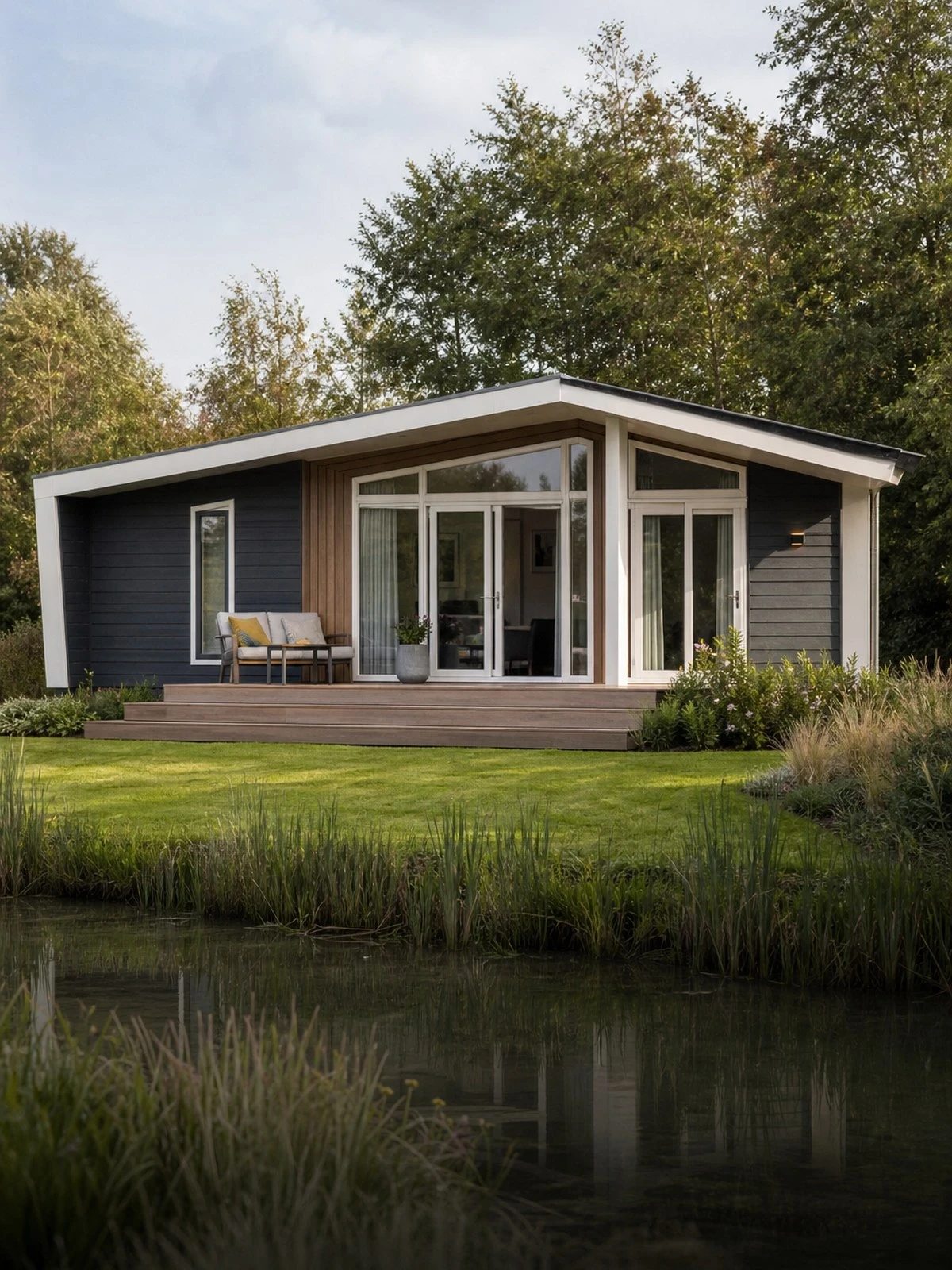 Holiday home insurance
 Compare
 Get covered
The structure of the cover in three parts, with an overview per situation below.
The home at rebuild value, based on local building costs.
Furniture and equipment you leave there permanently.
Your liability for the building and towards tenants.
What is covered
| Situation | Covered |
|---|---|
| Fire or storm damage to the home | Yes |
| Water damage while the property is occupied | Yes |
| Water damage during a long period of vacancy | No |
| Damage caused by a tenant | Sometimes |
| Theft of your home contents while the property is let | Sometimes |
| Deferred maintenance and frost damage | No |
This overview is general in nature and is not personal advice. What is actually covered, including exclusions, limits and the excess, is set out in the policy conditions and the insurance card (verzekeringskaart) of the insurer; you receive both before you take out cover. Taking out cover without advice? Then read what execution only means for you.
Insurers weigh these details differently. That is where your saving is.
We look at the terms as well as the premium, and stay your point of contact when there is a claim.
We are not tied to one insurer and compare on the basis of an objective analysis of several companies.
You call or email someone who knows your file. No menu options, no changing call centres.
We cancel your old policy and align the start date, so you are never a day without cover.
We report the claim and monitor how it is handled. In urgent cases you can reach us on the emergency line.
Customers rate our service on four aspects: personal service, service delivery, availability and the outcome. The reviews are collected and published by NH1816 and come from customers who have actually taken out a policy with Finass Advies B.V. or reported a claim.
Four points that make the difference between a policy that pays out and one that does not.
For Alpine municipalities there are maps on which avalanche paths, mountain streams and mudflow routes are marked. Insurers restrict or refuse a plot in the heaviest designation for precisely those perils. The map is public; ask the municipality for it and attach the extract to your application. Without that evidence the underwriter assesses on the basis of the postcode, and in a mountain valley that almost always works out badly out.
Wet snow weighs far more than fresh powder. Structures that were not designed for it, such as attached verandas, carports and conservatories, give way first. Snow load is normally not in the basic cover but in the additional Elementarschaden cover. Also state whether the roof is cleared in winter. Some insurers make cover conditional on periodic snow clearing during prolonged snowfall.
Snow that slides off a steep roof and lands on a parked car, a terrace or a person is a classic owner's liability. Austria also imposes a duty to clear the pavements and access paths alongside your property. Arrange who does this when you are not there and record the agreement. Under Dutch law this corresponds to the liability of the possessor under Article 6:174 of the Dutch Civil Code.
In several federal states, use as a leisure home requires a permit. If you let without that status, the use declared differs from the actual use. Also excluded are: frost damage in an unheated house whose pipes have not been drained, gradual damp damage from a blocked gutter or an ice dam, and damage to an extension built without a permit or structural calculation. See also Articles 7:928 and 7:930 of the Dutch Civil Code.
If you let through a platform, say so. Without notification, damage during the letting period falls outside the cover.
For most destinations you can choose. A Dutch policy means Dutch conditions, Dutch law and claims handling in Dutch: worth a great deal in the event of a large claim in a country whose language you do not speak. A local policy sometimes fits regional natural hazards better.
This is what people ask us most.
That depends on the hazard zone in which your plot lies. In an avalanche path marked as dangerous, insurers offer that cover on a restricted basis or not at all. Outside those zones, avalanche is normally part of the additional cover for natural perils. Ask the municipality for the zone extract and attach it to your application. That prevents an assessment on postcode alone.
In principle you are, as the owner of the building. A roof avalanche that damages a car or hits someone is attributed to the possessor, even if you are in the Netherlands yourself. Snow guards and having paths and pavements cleared are the usual measures. Check whether your liability cover expressly extends to the Austrian property.
No. Storm and hail are in the basic cover, but snow load belongs to the additional cover for natural perils, along with avalanche, mudflow and flooding. Without that extension, a sagging veranda or carport roof is not covered. Have it stated in the application which outbuildings and extensions are insured.
In several federal states, use as a leisure home or second home requires a permit and there are restrictions on holiday letting. For insurance purposes what counts is that the use declared matches the actual use. If they differ, the duty of disclosure comes into play and a claim may be reduced or refused.
Every situation is different. For these situations we have a separate page.
Request a quote without obligation. We will look at which insurer best matches your activities and your risk.
Prefer to call? 072 - 509 24 56, weekdays 09:00–17:00.
Claim on the road? Emergency line 06 - 55 20 40 72.
Finass Verzekert is a trading name of Finass Advies B.V. We advise on and arrange non-life insurance on the basis of an objective analysis of several insurers, and receive commission for this from the insurer, which is included in the premium. You pay no separate advice fee. Before you take out cover, we establish your wishes and needs.
You will find our licence, KvK and Kifid details and our complaints procedure at the foot of every page.
This page was compiled by Finass Verzekert (LinkedIn). Last updated on .
The information on this page is general in nature and is not personal advice.
Maandag- Vrijdag: 09:00- 17:00
We use cookies and similar technologies to improve your experience on our website.