

Continuous events insurance through De Goudse
If you organise more than a handful of events a year, you do not insure them one by one. A continuous contract works differently, and the duty to notify is the point where things go wrong.
- Several insurers compared objectively
- 9.5 customer rating for a new policy
- AFM licence 12016589
- Personal 072 - 509 24 56, weekdays 9–17
This page in another language: Nederlands
Work out for yourself what it would cost.
Enter your details; you will receive a proposal within one working day.
- We compare the offerings of several insurers
- An adviser checks whether the cover suits your activities
- We arrange the switch, including cancellation
A premium indication, not personal advice. Prefer to talk it through? Call 072 - 509 24 56.
- Independent advice
- Several insurers
- Switching arranged
- Help with claims
In brief
Finass acts as an intermediary for the business range of De Goudse and compares it objectively with more than thirty other insurers. A continuous events insurance policy is an annual contract covering all your events that fit a profile described in advance. That profile consists of a type of event, a maximum number of visitors and a maximum budget per event. As long as you stay within it, you need do nothing. If you go beyond it, that event has to be notified and assessed separately. The main points of this product are set out on the events insurance hub page.
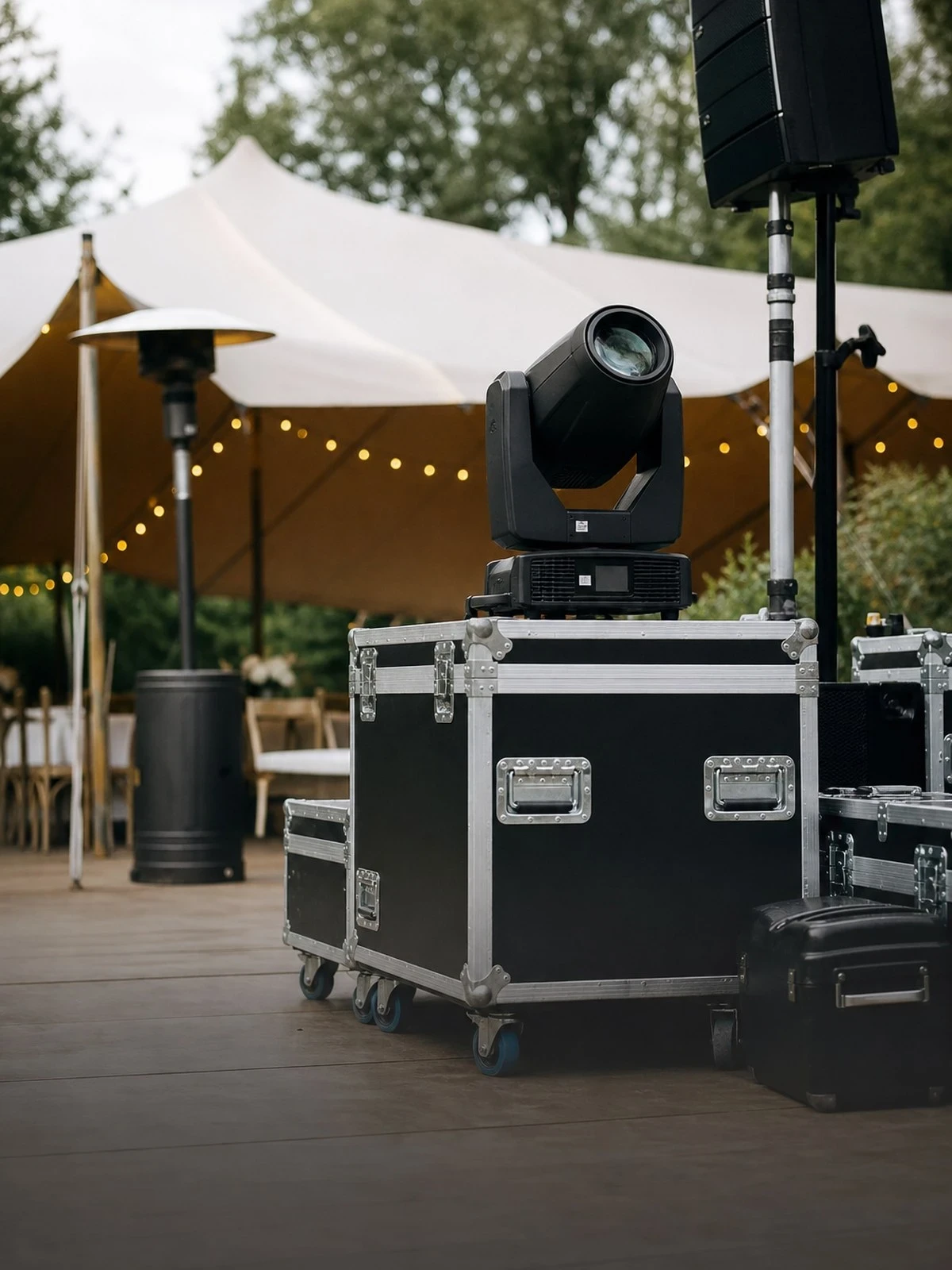
The insurance is divided into separate sections that you choose individually: liability for injury and damage to property during the event, plant and machinery for hired marquees, stages, lighting and sound, accidents for crew and volunteers, and cancellation of the event for the costs you lose if the event does not go ahead. Only that last section regularly leads to argument at claim stage, because people assume cancellation is always covered.
It is not. Cancellation cover works with named perils: a headline act pulling out through demonstrable illness, damage to the venue, or a death in the immediate family. Bad weather falls outside it as standard and can at best be insured for an additional premium, with a weather station, a threshold value and a time window attached. For your liability as the organising business outside the event days, the AVB for an events agency the appropriate product.
This page deals with one situation. The full overview is on Compare events insurance.
Independent, personal, sorted quickly
We compare your event insurance across dozens of insurers, explain where the real differences lie, and arrange the switch from start to finish — without you having to chase it yourself.
 Event insurance
 Compare
 Get covered
Why arrange it through Finass Verzekert?
We look at the terms as well as the premium, and stay your point of contact when there is a claim.
Independent
We are not tied to one insurer and compare on the basis of an objective analysis of several companies.
One fixed adviser
You call or email someone who knows your file. No menu options, no changing call centres.
Switching without hassle
We cancel your old policy and align the start date, so you are never a day without cover.
Help with claims
We report the claim and monitor how it is handled. In urgent cases you can reach us on the emergency line.
What to look out for
Four provisions that are more often decisive under an annual contract than the sum insured.
What is structurally outside the cover
Excluded are, among others damage caused with or by motor vehicles, which under Article 2 of the Dutch Motor Insurance Liability Act (WAM) require their own insurance; fireworks, naked flames and pyrotechnics without a separate agreement and without a certified operator; and cancellation because of government measures, withdrawal of the permit or an epidemic. Fines and penalty payments are not reimbursed either.
The duty to notify is a strict condition
If you organise an event that is larger than the agreed profile, or of a different character — a parade, a sports event with participants, a festival with a night-time programme — it is not automatically included. Notify it in advance. An event that has not been notified is an event that is not insured, and you cannot notify it after the fact.
Participants are not visitors
At a walking event, a running event or a rally the public takes an active part. Insurers treat injury to participants separately and sometimes require a participants clause or separate personal accident cover. Also consider whether you ask participants to sign a waiver; such a declaration does not simply limit your liability under Article 6:162 of the Dutch Civil Code.
Hired equipment and the site
Marquees, stages, lighting and fencing are usually hired in. If that equipment is damaged during your event, you are contractually liable even though you are not the owner. Such property falls under the care, custody and control exclusion in liability cover and therefore belongs in the equipment section, with the borrowed interest stated.
What does your premium depend on?
- Number of events per year: and how they are spread across the season
- Expected number of visitors: the main measure for the liability section
- Type of event: a business trade fair weighs differently from a dance festival
- Inside or outside: outdoor events carry weather and structural risks
- Sections chosen: liability, equipment, personal accident and cancellation
- Budget per event: the basis for the cancellation cover
Insurers weigh these details differently. That is where your saving is.
What is covered
| Situation | Basic | Extended |
|---|---|---|
| A visitor trips over a cable ramp and breaks a wrist | Yes | Yes |
| A volunteer falls while building the stage and is injured | No | Yes |
| Visitors damage the parquet floor of the hired hall | No | Provided that |
| The headline act calls in sick on the morning of the performance with a doctor's certificate | No | Provided that |
| Persistent rain keeps the public away and you make a loss on ticket sales | No | No |
| The cash box with the takings disappears during the take-down | No | No |
A continuous contract only covers the sections you have chosen. The liability section does not automatically answer for everything.
Frequently asked questions
This is what people ask us most.
It rained heavily and we cancelled. Do we get our costs back?
Only with separate weather cover. Without that extension, bad weather is not a named cause and no payment follows. Weather cover also works objectively: a measured threshold applies for rainfall or wind force at a designated weather station within a set time window. Your own judgement that going ahead would have been irresponsible is not decisive.
Do I have to notify every event separately?
No, that is precisely the advantage of a continuous contract: events within the agreed profile are covered automatically. You only notify departures from it in advance, such as a larger number of visitors, a different type of programme or a venue abroad. Do keep proper records; they form the basis for the year-end adjustment of premium.
Are our volunteers insured if they are injured?
The personal accident section is intended for injury to volunteers and pays a fixed sum regardless of fault. In addition, you may be liable as an organisation for the safety of those who work for you; Article 7:658(4) of the Dutch Civil Code extends the employer's duty of care to people carrying out work outside an employment contract. So arrange both sections.
What happens if a visitor falls over a cable ramp?
That is injury and falls under the liability section, provided you are liable. The basis lies in Article 6:162 DCC, and with a defective temporary structure Article 6:174 DCC may also play a part. Report the incident immediately and record the situation with photographs; Article 7:941 DCC obliges you to notify and to cooperate, even if the visitor has not yet submitted a claim.
Every situation is different. For these situations we have a separate page.