

Project cargo insurance through Chubb
When transporting a transformer, a boiler or a complete production line, the risk lies not in the journey but in the lifting, the stowage and the schedule attached to it.
- Several insurers compared objectively
- 9.5 customer rating for a new policy
- AFM licence 12016589
- Personal 072 - 509 24 56, weekdays 9–17
This page in another language: Nederlands
Work out for yourself what it would cost.
Enter your details; you will receive a proposal within one working day.
- We compare the offerings of several insurers
- An adviser checks whether the cover suits your activities
- We arrange the switch, including cancellation
A premium indication, not personal advice. Prefer to talk it through? Call 072 - 509 24 56.
- Independent advice
- Several insurers
- Switching arranged
- Help with claims
In brief
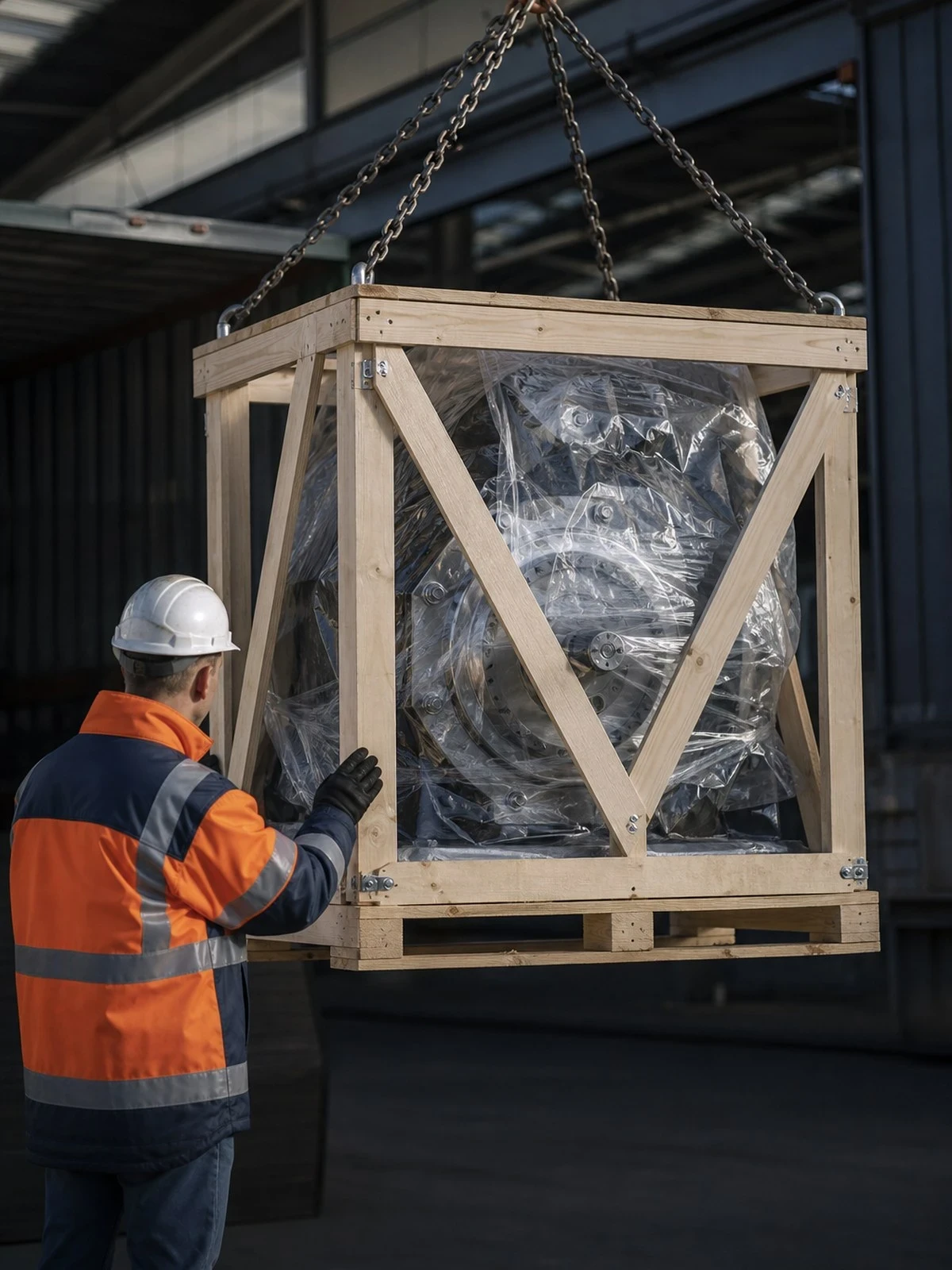
Project cargo is one-off, large and irreplaceable at short notice. A wind turbine segment, a transformer or a reactor vessel has no second example in stock. The loss therefore rarely occurs during the voyage, but during transhipment: lifting, sea fastening, tipping on the quay, a badly calculated lift plan, or an abnormal load striking a bridge in the last few kilometres by road. Corrosion from seawater in a crate that is not airtight is the second classic.
A project policy is a cargo insurance and therefore first-party cover on the goods themselves. That is different from the carrier's liability: under conventions such as the CMR that is limited to a weight-based cap, and precisely with heavy loads of high value per kilo little of it remains. The conditions are usually based on the Institute Cargo Clauses, where version A is the widest and B and C cover named events only. For regular consignments, look at goods in transit insurance.
Two matters that are often forgotten come into play. The first is the transfer of risk: which Incoterm has been agreed, and at what point the risk passes from supplier to buyer. A policy that begins at the port leaves the leg from the factory uninsured. The second is how it ties in with the erection insurance: as soon as the component is unloaded and installed on site, the risk shifts to an erection all risks insurance or a Construction all risks (CAR) insurance. That seam must be watertight.
This page deals with one situation. The full overview is on Compare personal liability insurance (AVP).
The same independent view, whatever insurer
We work with dozens of insurers and choose whichever fits your situation best — not whichever pays us the most. That means advice built around you, not around one brand.
 Insurers
 Independent
 Advice
Why arrange it through Finass Verzekert?
We look at the terms as well as the premium, and stay your point of contact when there is a claim.
Independent
We are not tied to one insurer and compare on the basis of an objective analysis of several companies.
One fixed adviser
You call or email someone who knows your file. No menu options, no changing call centres.
Switching without hassle
We cancel your old policy and align the start date, so you are never a day without cover.
Help with claims
We report the claim and monitor how it is handled. In urgent cases you can reach us on the emergency line.
What to look out for
Four provisions that are more often decisive for project cargo than the conditions chosen.
Packing and stowage are your responsibility
Inadequate or insufficient packing and stowage by or on behalf of the insured is a standard exclusion. Where a crate splits open at sea or a load shifts, that is the surveyor's first question. Have the stowage plan and the sea fastening carried out and confirmed by a specialist firm and keep those documents with the transport file.
Delay is not an insured loss
Loss arising solely from delay is excluded as standard, even where the delay results from an insured event. If your commissioning is pushed back by months as a result, that is only covered if you have taken out separate delay in start-up cover. Contractual penalties under the construction contract are not covered by it.
Inherent defect and design fault
Damage arising from an inherent defect in the goods or from a design or manufacturing fault is excluded. If a weld fails during transport because it was not made to specification, that is a warranty matter with the supplier and not transport damage. Normal wear and diminution in value also stay outside the cover.
The insured value and the duty to disclose
The insured value usually comprises the invoice value, freight, insurance costs and a mark-up. No more than the loss actually suffered is paid: Article 7:960 of the Dutch Civil Code prohibits a payout that produces a profit. Declare the transport, the route and the size in full when taking out cover. An incorrect statement engages Articles 7:928 and 7:930 DCC.
What does your premium depend on?
- Value and dimensions of the cargo: weight and size determine the lifting and transhipment risks
- Route and mode of transport: sea, inland waterway, road or a combination
- Number of transhipment points: every additional lift increases the chance of damage
- Destination: local port infrastructure and road quality count
- Supervision by a surveyor: often a condition of acceptance for heavy loads
- Delay cover included: delay in start-up is a separate section
Insurers weigh these details differently. That is where your saving is.
What is covered
| Situation | Condition A (all risks) | Condition C (named events) |
|---|---|---|
| A transformer comes free from the crane hook and falls onto the quay | Yes | No |
| The vessel runs aground and the cargo is damaged in the process | Yes | Yes |
| A trailer carrying a boiler strikes a bridge in the last few kilometres | Yes | No |
| Theft of a container of turbine components from port storage | Yes | No |
| Strikers damage your cargo in the port of destination | Provided that | Provided that |
| A cast steel housing that corrodes en route through normal weather conditions | No | No |
With project cargo the conditions chosen are rarely the sticking point. The argument is almost always about when cover begins and ends.
Frequently asked questions
This is what people ask us most.
Why is the carrier's liability not enough?
Under the conventions it is limited to an amount per kilo of cargo weight. With project cargo the value per kilo is usually far higher, so full compensation remains out of reach. You also have to prove first that the carrier is liable, and it may rely on force majeure. Marine cargo insurance pays on the basis of the event, without that argument.
When does cover end?
Most transport conditions contain a transit clause: cover ends on delivery at the final destination, or earlier on storage in an intermediate warehouse or after a period has elapsed following discharge. If a component then stands on the building site for weeks before erection begins, that period often falls outside the transport policy and the erection or CAR cover has to take over.
Are war and strikes included?
Not automatically. Transport policies have separate clauses for war and strikes risk, with their own conditions, geographical limits and a short cancellation period. If you sail through a high-risk area, that must be declared and accepted in advance. What that involves is set out on the page about war risks cover.
What should I do if the cargo is damaged?
Report it to the insurer straight away and enter a reservation with the carrier and the terminal within the time limits of the applicable convention. If you fail to do so, the right of recovery lapses. Article 7:941 of the Dutch Civil Code requires you to report in good time and to cooperate. Do not have the consignment unpacked or repaired before a surveyor has inspected the damage, and photograph the condition of the packing and stowage.
Every situation is different. For these situations we have a separate page.
- Why we work with different insurersThe main page
- Engineering insurance through ChubbMachinery breakdown, inherent defect, consequential loss
- CAR cover for self-employed professionals in construction and installationBeing co-insured, recovery, excess
- Transport insurance for self-employed professionalsConsignments, passing of risk, packing
- Insurance for sea shipping, inland shipping and aviationHull, liability, cargo