

Gross profit
- Fixed costs continue
- Profit margin you lose
- Update annually
After a kitchen fire, rebuilding your premises is rarely the problem: the problem is the licensing procedure that runs over it and the guests who are by then booking somewhere else.
This page in another language: Nederlands
Work out for yourself what it would cost.
Enter your details; you will receive a proposal within one working day.
A premium indication, not personal advice. Prefer to talk it through? Call 072 - 509 24 56.
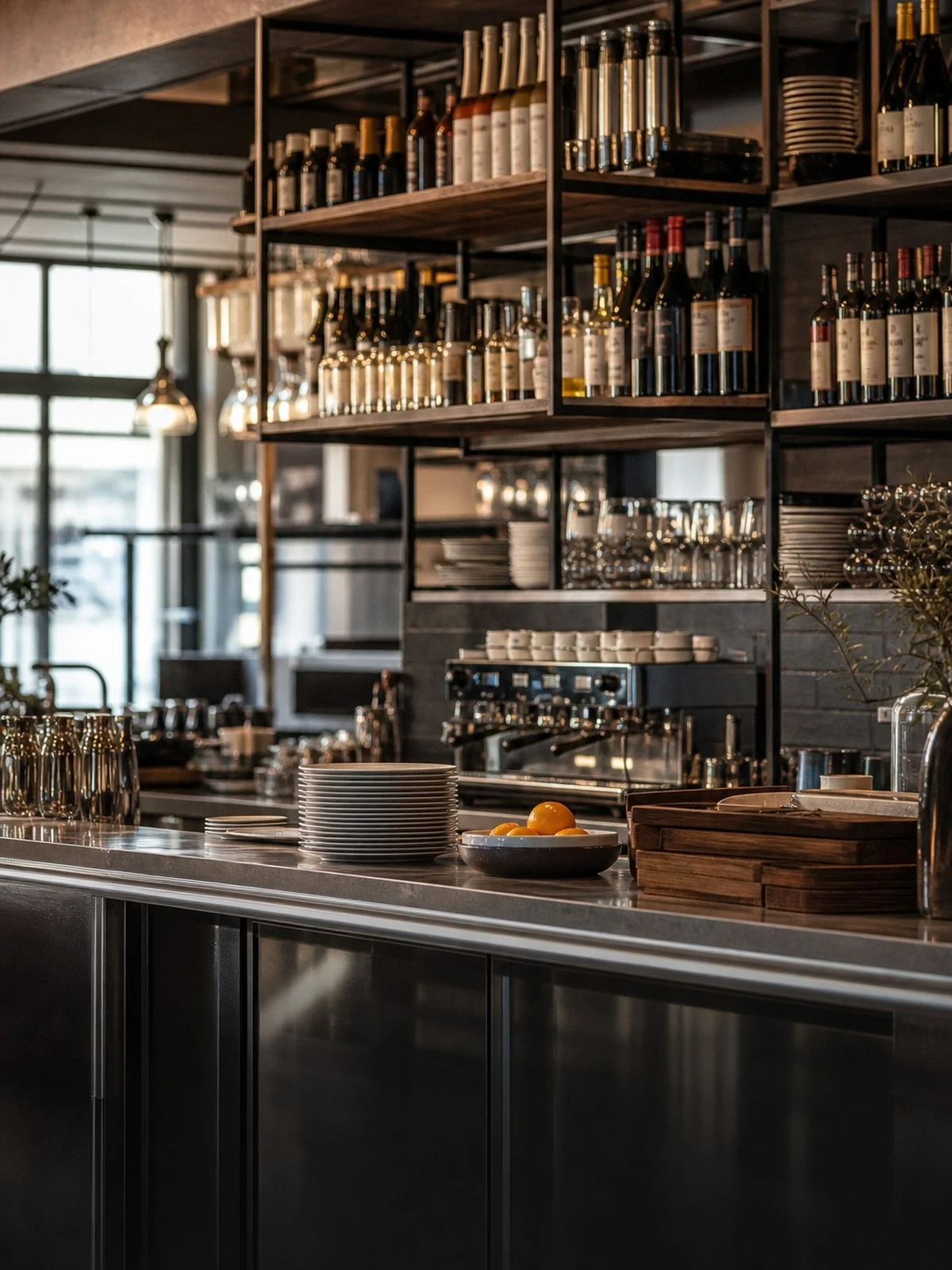
A hospitality business has a high turnover per square metre and a low margin per cover. The gross profit is turnover minus the purchase of drinks and food. What runs on is the rent of a prime location, the lease or brewery arrangements, the pay of permanent kitchen and service staff and the lease instalments on kitchen equipment.
What sets this sector apart is the chain of licences. When rebuilding after a fire you have to go through the environmental permit, and sometimes again through the alcohol licence, the operating licence and the terrace licence. Those procedures do not always run in parallel with the building work and can hold it up.
Hospitality turnover is also turnover built on habit. Guests who eat elsewhere for months do not all come back. So work the indemnity period back from the moment you are at your old level of occupancy again, not from the reopening. The general structure of the cover is on our page about business interruption insurance.
We compare your business interruption insurance across dozens of insurers, explain where the real differences lie, and arrange the switch from start to finish — without you having to chase it yourself.
 Business interruption insurance
 Compare
 Get covered
The structure of the cover in three parts, with an overview per situation below.
Turnover minus the variable costs that move with it.
Calculate back from full turnover, not from the rebuild value.
The additional costs of not standing still.
What is covered
| Situation | Business interruption | Additional costs |
|---|---|---|
| Downtime after a fire at your premises | Yes | Yes |
| Loss of turnover after water damage | Yes | Yes |
| Additional costs to keep going elsewhere | No | Yes |
| Failure of a supplier | Sometimes | Sometimes |
| Digital downtime without physical damage | No | No |
| Loss of turnover due to lower demand | No | No |
This overview is general in nature and is not personal advice. What is actually covered, including exclusions, limits and the excess, is set out in the policy conditions and the insurance card (verzekeringskaart) of the insurer; you receive both before you take out cover. Taking out cover without advice? Then read what execution only means for you.
Insurers weigh these details differently. That is where your saving is.
We look at the terms as well as the premium, and stay your point of contact when there is a claim.
We are not tied to one insurer and compare on the basis of an objective analysis of several companies.
You call or email someone who knows your file. No menu options, no changing call centres.
We cancel your old policy and align the start date, so you are never a day without cover.
We report the claim and monitor how it is handled. In urgent cases you can reach us on the emergency line.
Customers rate our service on four aspects: personal service, service delivery, availability and the outcome. The reviews are collected and published by NH1816 and come from customers who have actually taken out a policy with Finass Advies B.V. or reported a claim.
Four points that make the difference between a policy that pays out and one that does not.
When a kitchen or a function room is rebuilt, further requirements arise: fire compartmentation, grease extraction, ventilation and escape routes. If the layout changes, a new or amended licence follows and sometimes advice from the fire service. That procedure is outside your control. Include it in the indemnity period, because a period that ends while you are still waiting for a decision leaves you carrying the last months yourself.
A beach pavilion that burns down in March and reopens in October misses a whole season. The reopening then falls in the quietest months. Even without a season, a restaurant does not fill up straight away after months of closure. Bookings, regular guests and corporate arrangements have to be built up again. Work the indemnity period back from full turnover and take account of the month in which the damage occurs.
During a long closure, kitchen staff leave for another business; chefs and front-of-house staff are scarce. If you keep them on, that pay is a continuing fixed cost that belongs in full in the insured gross profit. If you let them go, that lengthens the period to full turnover after reopening, because you have to recruit and train again. Discuss in advance which route you choose and calculate the sum accordingly.
Spoilage of stock without a covered material cause is excluded, as are closure by order of the municipality or the NVWA (the Dutch food safety authority), withdrawal of an alcohol licence and penalties. Fewer visitors because of roadworks, a closed shopping street or falling spending gives no right to payment as long as your own premises are undamaged. Failure of your till, booking or payment system likewise falls outside the cover; that belongs with cyber insurance.
This is what people ask us most.
Because the period has to bridge three phases: clearing up and licensing, the actual rebuilding, and then the period in which your guests come back. That last phase in particular is underestimated. A business that reopens after a long closure runs at lower occupancy for the first months. If the indemnity period has run out by then, you carry that loss yourself.
Only where a covered cause underlies it and the goods are on the business contents and goods insurance; spoilage is then a separate section. Business interruption insurance never pays for the stock itself. That policy looks only at the gross profit you lose in the period in which the damage leaves you with less turnover.
No. A closure order, a withdrawn operating or alcohol licence and measures by the NVWA are not material damage to your premises, and that material damage is the condition for cover. The same applies to loss of turnover through roadworks or a closed street. What is covered is interruption following fire, storm or water damage in your own building.
Only where you can genuinely move elsewhere, for example with a temporary kitchen, a food truck or a hired room nearby. In that case you lose little turnover but you incur additional costs, and that policy covers precisely that. If your business is tied to its location and your public to the neighbourhood, moving elsewhere solves nothing and business interruption cover remains necessary.
Every situation is different. For these situations we have a separate page.
Request a quote without obligation. We will look at which insurer best matches your activities and your risk.
Prefer to call? 072 - 509 24 56, weekdays 09:00–17:00.
Claim on the road? Emergency line 06 - 55 20 40 72.
Finass Verzekert is a trading name of Finass Advies B.V. We advise on and arrange non-life insurance on the basis of an objective analysis of several insurers, and receive commission for this from the insurer, which is included in the premium. You pay no separate advice fee. Before you take out cover, we establish your wishes and needs.
You will find our licence, KvK and Kifid details and our complaints procedure at the foot of every page.
This page was compiled by Finass Verzekert (LinkedIn). Last updated on .
The information on this page is general in nature and is not personal advice.
Maandag- Vrijdag: 09:00- 17:00
We use cookies and similar technologies to improve your experience on our website.