

What is buildings insurance (opstalverzekering)?
Buildings insurance insures the building itself: everything permanently attached. What that term covers exactly and on what value claims are paid determine the extent of your cover.
- Several insurers compared objectively
- 9.5 customer rating for a new policy
- AFM licence 12016589
- Personal 072 - 509 24 56, weekdays 9–17
This page in another language: Nederlands
Work out for yourself what it would cost.
Enter your details; you will receive a proposal within one working day.
- We compare the offerings of several insurers
- An adviser checks whether the cover suits your situation
- We arrange the switch, including cancellation
A premium indication, not personal advice. Prefer to talk it through? Call 072 - 509 24 56.
- Independent advice
- Several insurers
- Switching arranged
- Help with claims
In brief
Buildings insurance pays for physical damage to the home and everything attached to it: walls, roof, floors, window frames, the central heating system, the kitchen and the sanitary ware. In law, a structure is a building or work permanently joined to the ground. Anything you would take with you when moving is not included; that is contents and belongs on a home contents insurance.
Like every non-life insurance policy, this one rests on uncertain event. Damage that already existed when you took out the insurance is not insured, however unwelcome that is. And because this is indemnity and not profit, Article 7:960 of the Dutch Civil Code provides that the payment may not put you in a clearly better position. That is why repairs or payments are made on a rebuild value basis and not on the basis of what you once paid for the house.
The insurance is not compulsory, but nor is it entirely voluntary. Almost every mortgage lender requires buildings cover to be in force, because the house is the security for the loan. If you buy a flat, the owners' association usually insures the building collectively and you insure only your owner's interest. How to determine the right sum insured is set out at the level of buildings insurance.
This page deals with one situation. The full overview is on Compare buildings insurance (opstalverzekering).
Independent, personal, sorted quickly
We compare your buildings insurance across dozens of insurers, explain where the real differences lie, and arrange the switch from start to finish — without you having to chase it yourself.
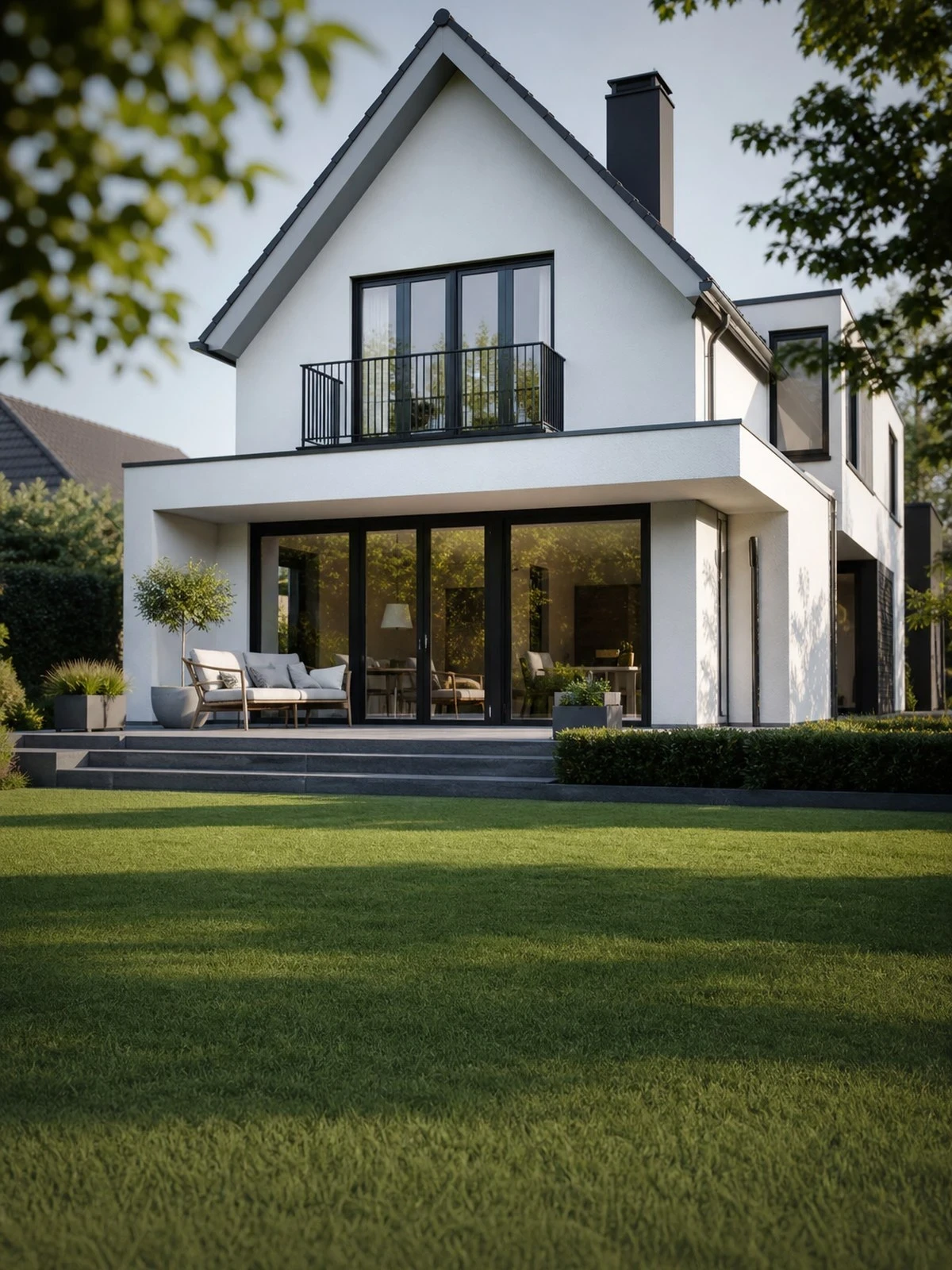 Buildings insurance
 Compare
 Get covered
Why arrange it through Finass Verzekert?
We look at the terms as well as the premium, and stay your point of contact when there is a claim.
Independent
We are not tied to one insurer and compare on the basis of an objective analysis of several companies.
One fixed adviser
You call or email someone who knows your file. No menu options, no changing call centres.
Switching without hassle
We cancel your old policy and align the start date, so you are never a day without cover.
Help with claims
We report the claim and monitor how it is handled. In urgent cases you can reach us on the emergency line.
What the term means exactly
Four features that distinguish buildings insurance from other home policies.
The rebuild value is the yardstick
What is insured is the amount needed to build the house again on the same site and to the same specification. The land does not count, because it is not lost in a fire. As a result the rebuild value is often lower than the market value, but in an expensive building market sometimes higher. A rebuild value tool or a survey records this and usually produces a guarantee against underinsurance.
The line with the contents is fixed
What is attached is buildings, what stands loose is contents. With sun blinds, a fitted cupboard, laminate or a kitchen that can be moved, that line is less sharp than it sounds. Preferably insure both with the same company, so that a claim does not fall between two policies. A classic borderline case is described at water damage: contents or buildings.
Your own maintenance remains your job
The insurance covers sudden, unforeseen events. Damage caused by wear, poor maintenance, vermin, rot and slowly penetrating damp is excluded, as are faults in construction and design. Groundwater entering the cellar and flooding caused by the failure of a primary flood defence also fall outside it.
What you have to report when taking out the policy
The construction type, roof covering, listed status, room letting, a business at home and a long vacancy are all circumstances the insurer wants to know about. Article 7:928 of the Dutch Civil Code imposes that duty of disclosure on you. If the information is incorrect, the insurer can rely on Article 7:930 of the Dutch Civil Code and reduce or refuse the payout.
What does your premium depend on?
- Rebuild value of the home: the basis on which the premium is calculated
- Construction type and roof covering: thatch, timber or a listed building differs from masonry with tiles
- Year of construction and state of maintenance: old pipework and wiring increase the risk
- Use of the home: living there yourself, letting or a practice at home
- Cover chosen: fire and storm, extended or comprehensive
- Excess: a higher excess lowers the premium
Insurers weigh these details differently. That is where your saving is.
What is covered
| Situation | Extended | Comprehensive |
|---|---|---|
| A tree blows over from the neighbours' garden onto your conservatory | Yes | Yes |
| You drill into a water pipe while hanging a kitchen cupboard | No | Yes |
| A tin of paint you knock over the fixed staircase while working on the house | No | Yes |
| Cracks in the walls because the foundations have settled after dry summers | No | No |
| Frost damage to the heating pipe in an unheated extension | Provided that | Provided that |
| Repairs to the roof after burglars forced a roof light | Yes | Yes |
Comprehensive cover mainly adds your own accidents to the building. What is wrong with the building itself remains outside the cover under both forms.
Frequently asked questions
This is what people ask us most.
Is buildings insurance (opstalverzekering) compulsory?
Not by law. When it comes to it the lender sets the insurance as a condition in the mortgage deed, because the home forms the security. Without a policy in force you are in breach towards the bank. If you no longer have a mortgage, the insurance remains sensible: rebuilding a home is the largest unforeseen expense a homeowner can face.
What is the difference from home insurance?
Nothing of significance. Insurers use both names for the same cover on the building. In a commercial context the same policy is called a building or buildings insurance. So do not look at the name but at the conditions: which perils are covered, on what value claims are paid and what exclusions it contains.
I rent my home. Do I need this?
No, the owner insures the building. You do run a risk on what you installed yourself, such as a new kitchen, a bathroom or a parquet floor. That is called tenant's interest and is usually insured on the home contents policy. You are also liable towards the landlord for damage you cause to the property you rent.
As the owner, am I liable if something falls off my house?
Yes, in principle. Article 6:174 of the Dutch Civil Code makes the possessor of a defective structure liable for the damage it causes, even without fault. A roof tile falling on a parked car is the textbook example. That damage does not fall under buildings insurance but under a personal liability insurance.
Every situation is different. For these situations we have a separate page.
- Compare buildings insurance (opstalverzekering)The main page
- Buildings insurance (opstalverzekering): what is it and what does it cover?Rebuild value, building, exclusions
- What does buildings insurance (opstalverzekering) do?Rebuild value, damage to the building, exclusions
- Buildings insurance (opstalverzekering): rebuild value and exclusionsBuilding, rebuild value, mortgage requirement
- The basics of buildings insurance (opstalverzekering)Structure, rebuild value, contents
- Buildings insurance (opstalverzekering) for your own home: what counts as buildings and structures?Rebuild value, outbuildings, excess
- Buildings insurance (opstalverzekering) through a.s.r.Rebuild value, underinsurance, gradual damage
- Is buildings insurance (opstalverzekering) the same as home insurance?Same product, different name ·. What does differ