

Liability
- Damage to third parties
- Employers' liability
- Care, custody and control as an extension
For property there is no legal requirement to insure, but there is a liability in law that does not look at your fault.
This page in another language: Nederlands · Deutsch
The calculator and the quote form below are in Dutch. Prefer to do this in English? Email info@finassverzekert.nl or call 072 - 509 24 56 and we will take it from there.
Work out for yourself what it would cost.
Enter your details; you will receive a proposal within one working day.
A premium indication, not personal advice. Prefer to talk it through? Call 072 - 509 24 56.
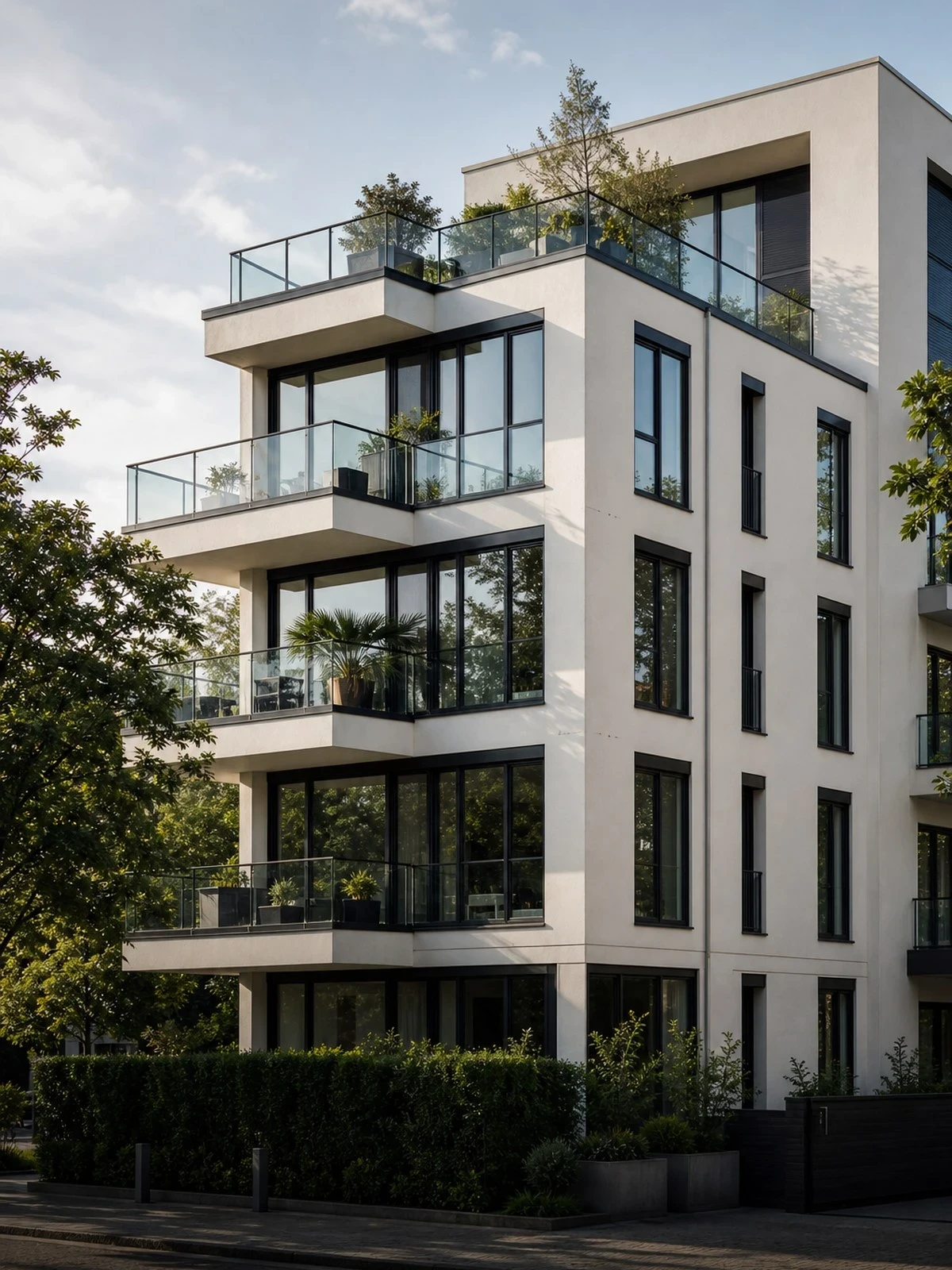
Article 6:174 of the Dutch Civil Code places liability for a defective building with the owner. If a building or structure does not meet the standards that may be expected of it and thereby creates a danger to people or property, you are liable. Whether you knew of the defect, whether it only arose after a storm and whether you had engaged a managing agent make no difference.
Insuring is not compulsory by law. The requirement comes from contracts: mortgage conditions, leases, ground lease provisions, the deed of division regulations or a decision of a meeting of owners. In practice such a provision is just as binding, because failure to comply can lead to the loan being called in or to your being in default towards your tenant.
Note the difference from buildings insurance (opstalverzekering). That pays for damage to your own building caused by fire, storm or water. Liability insurance pays for what happens to others because of your building. Both are needed and neither replaces the other. With a property portfolio we therefore always put them on the table together.
We compare your personal liability insurance (AVP) across dozens of insurers, explain where the real differences lie, and arrange the switch from start to finish — without you having to chase it yourself.
 Personal liability insurance (AVP)
 Compare
 Get covered
The structure of the cover in three parts, with an overview per situation below.
AVB for property damage and injury, BAV for professional errors.
Business contents, goods and lost turnover during downtime.
Sickness absence, accidents and the traffic risk.
What is covered
| Situation | AVB | BAV | Cyber |
|---|---|---|---|
| Injury to a visitor or customer | Yes | No | No |
| Damage to a client's property | Sometimes | No | No |
| Financial loss caused by an advisory or calculation error | No | Yes | No |
| Downtime after a ransomware attack | No | No | Yes |
| Data breach involving personal data | No | Sometimes | Yes |
| Damage to property in your care | No | No | No |
This overview is general in nature and is not personal advice. What is actually covered, including exclusions, limits and the excess, is set out in the policy conditions and the insurance card (verzekeringskaart) of the insurer; you receive both before you take out cover. Taking out cover without advice? Then read what execution only means for you.
Insurers weigh these details differently. That is where your saving is.
We look at the terms as well as the premium, and stay your point of contact when there is a claim.
We are not tied to one insurer and compare on the basis of an objective analysis of several companies.
You call or email someone who knows your file. No menu options, no changing call centres.
We cancel your old policy and align the start date, so you are never a day without cover.
We report the claim and monitor how it is handled. In urgent cases you can reach us on the emergency line.
Customers rate our service on four aspects: personal service, service delivery, availability and the outcome. The reviews are collected and published by NH1816 and come from customers who have actually taken out a policy with Finass Advies B.V. or reported a claim.
Four points that make the difference between a policy that pays out and one that does not.
Article 6:174 of the Dutch Civil Code is a strict liability: there does not have to be any mistake. A roof tile that comes loose, a balcony railing that gives way, a slippery entrance or a blocked rainwater downpipe that floods the neighbouring building makes you liable as the owner. Your defence is limited to the question whether there was in fact a defect. A documented inspection and maintenance regime is therefore your only serious defence.
The liability extends beyond the building itself. A regime of its own applies to pipes and cables, for hazardous substances on your land there is Article 6:175 of the Dutch Civil Code, and for a fallen tree your duty of care as the owner under Article 6:162 of the Dutch Civil Code. With let property there is the added distinction between what the tenant has to maintain and what you have to do yourself.
For property finance, lenders almost invariably require liability cover alongside buildings insurance. Leases for business premises, ground lease conditions and deeds of division also contain such provisions. Check exactly what they say: sometimes a minimum sum insured is named, sometimes a requirement that the lender be noted as an interested party. We have to pass both on when applying.
Damage to the building itself belongs with the buildings insurance, not here. A maintenance backlog you knew about is treated as inevitable damage and rejected. Soil contamination and asbestos are usually excluded or dealt with separately. Loss of rent and loss of enjoyment are pure financial loss and fall outside the liability section. Together, those four are the most common disappointments in this segment.
This is what people ask us most.
Not under the law. It is under contracts: mortgage conditions, leases, ground leases and deeds of division regularly contain that requirement. What the law does require is that you bear the loss arising from a defect in your building. So the insurance is voluntary, the liability it covers is not.
Yes, that is the hallmark of Article 6:174 of the Dutch Civil Code. The owner of a defective building is liable without any fault having to be shown. So the discussion is not about how careful you were but about whether the building met the standards that may be expected of it. Your maintenance records are the only counterweight in that.
No. This insurance only pays for loss suffered by third parties. Fire, storm and water damage to the building itself belongs with the buildings insurance, and consequential loss in the form of lost rent is a separate cover. So a liability policy is not a replacement for your buildings cover, but a separate addition to it.
For the communal parts it is the owners' association as the owner of the building. For the private part it is you. On top of that, a director of the VvE can be held personally liable. That is a different risk with its own cover, see directors' and officers' liability in a VvE.
Every situation is different. For these situations we have a separate page.
Request a quote without obligation. We will look at which insurer best matches your activities and your risk.
Prefer to call? 072 - 509 24 56, weekdays 09:00–17:00.
Claim on the road? Emergency line 06 - 55 20 40 72.
Finass Verzekert is a trading name of Finass Advies B.V. We advise on and arrange non-life insurance on the basis of an objective analysis of several insurers, and receive commission for this from the insurer, which is included in the premium. You pay no separate advice fee. Before you take out cover, we establish your wishes and needs.
You will find our licence, KvK and Kifid details and our complaints procedure at the foot of every page.
This page was compiled by Finass Verzekert (LinkedIn). Last updated on .
The information on this page is general in nature and is not personal advice.
Maandag- Vrijdag: 09:00- 17:00
We use cookies and similar technologies to improve your experience on our website.