

Joint buildings cover
- On a rebuild value basis
- Foundations, roof, facade, lift
- Often with glass cover
- Required under the regulations
With a block of flats, liability lies partly with the association and partly with the individual owner. That boundary determines which policy pays.
This page in another language: Nederlands
Work out for yourself what it would cost.
Enter your details; you will receive a proposal within one working day.
A premium indication, not personal advice. Prefer to talk it through? Call 072 - 509 24 56.
An owners' association manages the communal parts: foundations, roof, facade, stairwell, lift, pipework and grounds. The division regulations, whose legal basis is set out in Article 5:112 of the Dutch Civil Code, almost always require the VvE to take out joint buildings insurance for the whole building. Individual owners therefore do not each insure their own flat, but contribute through the service charges.
The same starting point applies to liability. As owner of the communal building, the VvE is strictly liable under Article 6:174 of the Dutch Civil Code: if a facade panel falls down or a balustrade in the stairwell gives way, the association is liable without anyone having to be at fault. The VvE takes out liability insurance for that. Damage within the private part falls on the owner.
There is also the risk of directors' and officers' liability. Board members are often volunteers, but they can be held personally responsible for improper management, such as a neglected long-term maintenance plan or leaving the building uninsured. If you let your flat, also look at your own position as a landlord: the VvE policy does not cover your letting risk.
We compare your buildings insurance across dozens of insurers, explain where the real differences lie, and arrange the switch from start to finish — without you having to chase it yourself.
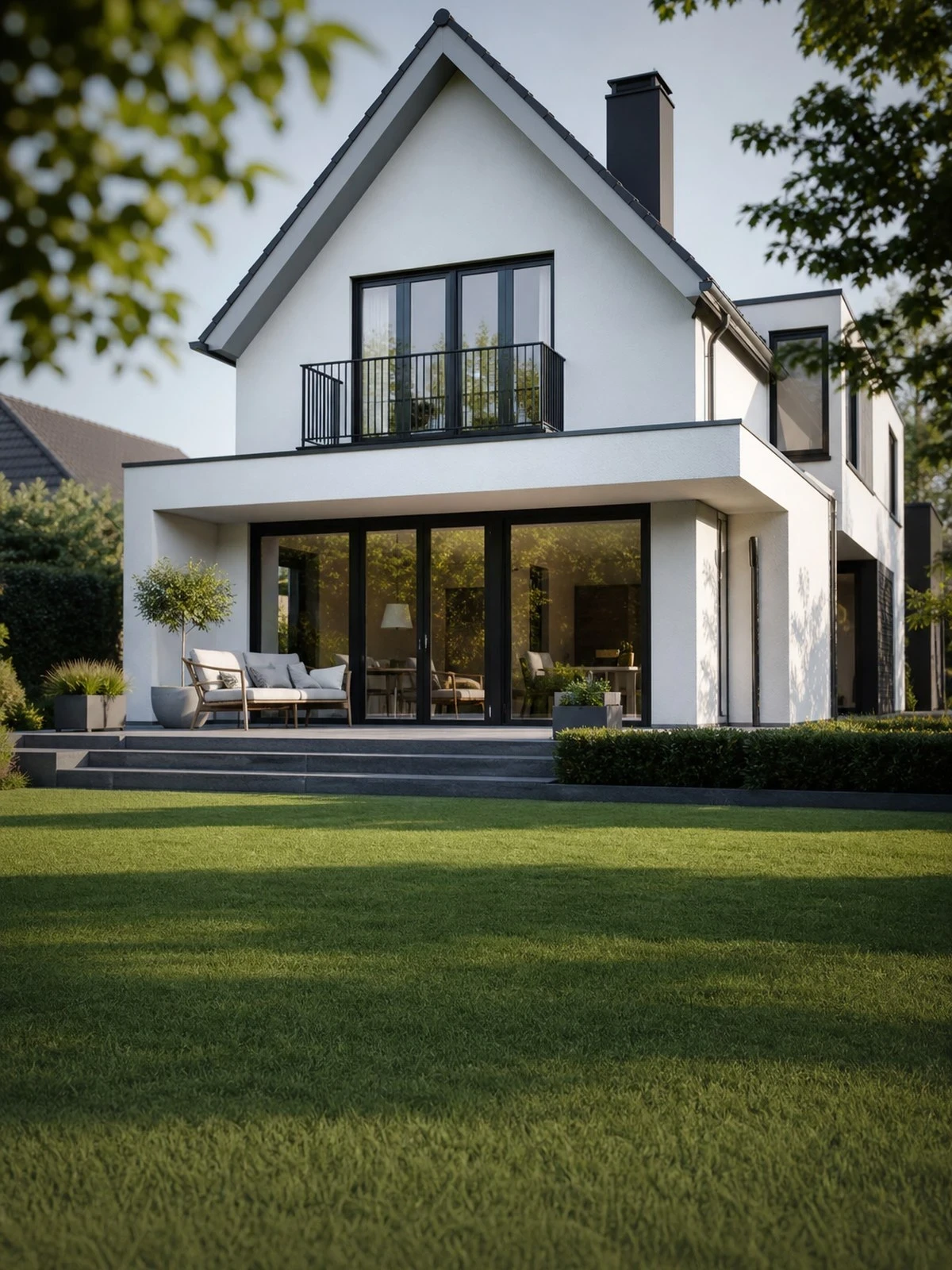 Buildings insurance
 Compare
 Get covered
What the association arranges and what remains with the individual owner.
The whole building insured in the association's name.
Injury or damage to residents, visitors and neighbours caused by the building.
Personal liability of board members for improper management.
What is covered
| Situation | VvE policy | The owner personally |
|---|---|---|
| Storm damage to the roof of the building | Yes | No |
| Injury caused by a defective staircase in the stairwell | Yes | No |
| Home contents and your own improvements in the flat | No | Yes |
| Liability when you let your flat | No | Yes |
| A personal claim against a board member | Provided that | No |
| Deferred maintenance to the building | No | No |
Which sums insured, exclusions and excess apply to you is set out in the policy conditions, the division regulations and the insurance card (verzekeringskaart).
Insurers weigh these details differently. That is where your saving is.
We look at the terms as well as the premium, and stay your point of contact when there is a claim.
We are not tied to one insurer and compare on the basis of an objective analysis of several companies.
You call or email someone who knows your file. No menu options, no changing call centres.
We cancel your old policy and align the start date, so you are never a day without cover.
We report the claim and monitor how it is handled. In urgent cases you can reach us on the emergency line.
Customers rate our service on four aspects: personal service, service delivery, availability and the outcome. The reviews are collected and published by NH1816 and come from customers who have actually taken out a policy with Finass Advies B.V. or reported a claim.
Where the division between association and owner pinches.
If you let your flat, the joint buildings insurance simply continues for the building, but your own position changes. Liability towards your tenant and their visitors falls outside the VvE policy and outside your personal liability insurance (AVP), which excludes let property. Report the letting to the VvE and to your own insurer. When taking out cover the duty of disclosure under Article 7:928 of the Dutch Civil Code applies and withholding information can cost you the payment (Article 7:930 of the Dutch Civil Code).
The sum insured on the joint buildings policy is based on the rebuild value of the whole building. If that sum has stood still for years while building costs rise, the VvE is underinsured and payment for a large loss is made in proportion. The shortfall lands on all the owners through an additional contribution. Have the rebuild value reviewed periodically. With unusual buildings a valuation under Article 7:960 of the Dutch Civil Code the value for a fixed period.
Damage resulting from deferred maintenance, wood rot or wear is excluded on the buildings policy. With liability it works the other way round: a neglected building is precisely what gives rise to liability under Article 6:174 of the Dutch Civil Code, and a board that ignores the long-term maintenance plan runs a personal risk. A well-filled maintenance reserve is therefore both a financial and an insurance matter.
Not covered are the home contents and the owner's own improvements in the private part, such as a more luxurious kitchen or an extended roof terrace: that is the owner's interest and the owner insures it themselves. On top of that, fines and penalty payments, environmental damage and clean-up costs and pure financial loss without damage to property or injury remain outside the cover. Intent and recklessness are excluded under Article 7:952 of the Dutch Civil Code.
This is what people ask us most.
No. The division regulations almost always require a single joint buildings insurance policy for the whole building, taken out by the VvE. A separate buildings policy per flat would lead to double cover and argument about the boundary. What the owner does insure themselves is the home contents and the owner's interest: the improvements they have made in the private part.
That depends on the source. If the leak comes from a communal pipe, it is a matter for the VvE policy. If it comes from a pipe or installation in a private part, the owner upstairs is the party concerned and their liability insurance comes into play. The division regulations determine which parts are communal. That document governs in this kind of discussion.
Even at a small VvE a board member can be held personally responsible, for example where maintenance has been neglected for years or the buildings insurance has not been renewed. Board members are often volunteers without a professional background, which does not make the risk smaller. Besides the loss, the insurance also covers the costs of defence, and with this type of claim that is often the largest item.
Usually yes: many division regulations set conditions for allowing third parties to use the property, including a user's declaration by which the tenant is bound by the regulations. Separately from that, you report the letting to your own insurers. Short-term letting through a platform is prohibited in many sets of regulations, and that feeds through into the cover and into your liability towards the association.
A dormant VvE is a risk for all the owners: no maintenance reserve, no up-to-date long-term maintenance plan and sometimes an expired buildings policy. When a loss occurs the costs then land directly on the owners and the board can be held personally responsible. Check whether the buildings policy is in force, whether the sum insured is up to date and whether the contributions are being collected.
Every situation is different. For these situations we have a separate page.
Request a quote without obligation. We compare buildings, liability and directors' and officers' cover for your association.
Prefer to call? 072 - 509 24 56, weekdays 09:00–17:00.
Claim on the road? Emergency line 06 - 55 20 40 72.
Finass Verzekert is a trading name of Finass Advies B.V. We advise on and arrange non-life insurance on the basis of an objective analysis of several insurers, and receive commission for this from the insurer, which is included in the premium. You pay no separate advice fee. Before you take out cover, we establish your wishes and needs.
You will find our licence, KvK and Kifid details and our complaints procedure at the foot of every page.
This page was compiled by Finass Verzekert (LinkedIn). Last updated on .
The information on this page is general in nature and is not personal advice.
Maandag- Vrijdag: 09:00- 17:00
We use cookies and similar technologies to improve your experience on our website.