

Allianz buildings insurance
With business premises the risk is not whether fire is covered, but what amount appears on the policy schedule. A rebuild value set incorrectly only comes to light after the loss.
- Several insurers compared objectively
- 9.5 customer rating for a new policy
- AFM licence 12016589
- Personal 072 - 509 24 56, weekdays 9–17
This page in another language: Nederlands
Work out for yourself what it would cost.
Enter your details; you will receive a proposal within one working day.
- We compare the offerings of several insurers
- An adviser checks whether the cover suits your activities
- We arrange the switch, including cancellation
A premium indication, not personal advice. Prefer to talk it through? Call 072 - 509 24 56.
- Independent advice
- Several insurers
- Switching arranged
- Help with claims
In brief
Buildings insurance pays for material damage to the premises from, among other things, fire, explosion, storm, lightning, burglary and water damage. For a production building or industrial unit the key question, however, is the basis of value: do you insure on rebuild value, on market value or on an agreed value? Anyone who does not want to, or cannot, rebuild will find that a total loss is settled differently from what they expected.
If the sum insured is too low, underinsurancefollows: the insurer pays proportionately, even on a small claim. If it is too high, that brings nothing extra, because Article 7:960 of the Dutch Civil Code prohibits a payment from putting you in a clearly better position. A valuation under Article 7:960 of the Dutch Civil Code combined with an index clause keeps the amount in line with building costs each year. Without those arrangements the figure stands still while building prices go on rising. See also what happens if you are underinsured.
Finass compares several insurers objectively and arranges Allianz buildings cover where it suits your risk. The choice follows from your cover requirements: the year of construction, the structure, the use of the building and the clauses you want. In practice we assess that cover together with business interruption insurance and business contents and goods insurance, because one fire hits all three at once.
This page deals with one situation. The full overview is on Compare commercial buildings insurance.
Independent, personal, sorted quickly
We compare your commercial buildings insurance across dozens of insurers, explain where the real differences lie, and arrange the switch from start to finish — without you having to chase it yourself.
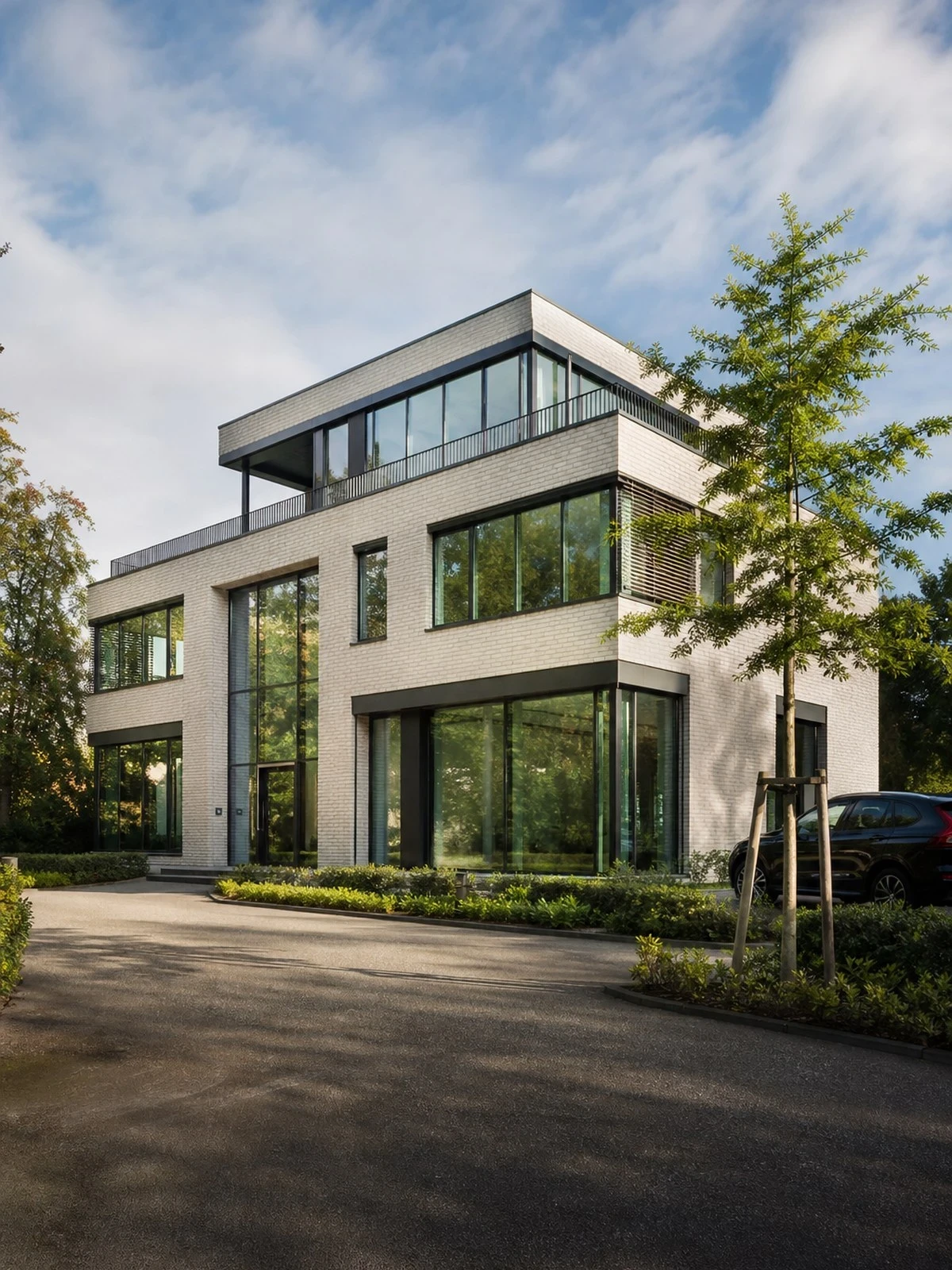 Commercial buildings insurance
 Compare
 Get covered
Why arrange it through Finass Verzekert?
We look at the terms as well as the premium, and stay your point of contact when there is a claim.
Independent
We are not tied to one insurer and compare on the basis of an objective analysis of several companies.
One fixed adviser
You call or email someone who knows your file. No menu options, no changing call centres.
Switching without hassle
We cancel your old policy and align the start date, so you are never a day without cover.
Help with claims
We report the claim and monitor how it is handled. In urgent cases you can reach us on the emergency line.
What to look out for
Four points that determine the outcome of a buildings claim.
Rebuild value is not book value
The rebuild value is what it costs to put the same building up again in the same place, including demolition, clearing debris, professional fees and tightened building regulations. That is separate from the book value in your accounts and from the WOZ value. A valuation by an expert fixes the amount for an agreed period and takes the argument about underinsurance out of the claim settlement.
What the policy treats as part of the building
Foundations, paved areas, boundary fences, external lighting and solar panels are not automatically included in the cover. Machinery fixed to the structure can be either building or contents. Go through the definition and record where the line is drawn, or part of your site will be uninsured in a storm. For panels on the roof there is a separate cover for solar panels.
Structure, maintenance and gradual action
Excluded as standard is damage from inherent defect, construction faults, deferred maintenance, subsidence and gradual ingress of damp. Groundwater rising through the floor and flooding from a primary flood defence also remain outside the cover. A leaking roof covering that has been put off for years therefore produces no payment, even if the first pool of water appears after a heavy downpour.
Building and conversion work falls outside
If the premises are extended or substantially converted, the risk changes. Damage to the works in progress belongs on Construction all risks (CAR) insurance, not on the buildings policy. Report conversion work in advance: an unreported change in the risk can have consequences for payment under Articles 7:928 and 7:930 of the Dutch Civil Code, and restrictive conditions often apply during the works.
What does your premium depend on?
- Rebuild value and basis of valuation: valued, indexed or by declaration
- Construction type and roof covering: masonry, steel with sandwich panels or combustible insulation
- Use of the premises: storage, production or office each carries a different fire risk
- Prevention and security: fire compartmentation, extinguishers, burglary protection
- Extent of cover chosen: fire and storm, extended or all risks
- Excess and claims history: per event, possibly set separately for storm
Insurers weigh these details differently. That is where your saving is.
What is covered on the building
| Situation | Extended | Comprehensive |
|---|---|---|
| A fire at the neighbouring building spreads to your facade and roof edge | Yes | Yes |
| An employee drives the forklift into the roller door and knocks the frame out of its runners | No | Yes |
| Sewage backs up through the drains onto the ground floor after a heavy downpour | No | Provided that |
| Theft of copper guttering and zinc cladding from your business premises | Provided that | Provided that |
| Soot deposits on the facade because a van burns out on your own site | Yes | Yes |
| A marten gnaws its way through the roof insulation above the office space | No | Provided that |
Comprehensive cover mainly adds your own mishaps and the sudden, unforeseen events that fall outside the list of perils on extended cover.
Frequently asked questions
This is what people ask us most.
What happens if my premises are insured for too little?
The insurer then pays proportionately. If the building is insured for three-quarters of its rebuild value, you receive three-quarters of the loss even on a small claim. A valuation report or a guarantee against underinsurance prevents that, provided you keep the details you have declared up to date and report conversion work.
Is business interruption after a fire included?
No. The buildings cover pays for repairing the bricks and mortar. Fixed costs, staff costs and lost gross profit during the shutdown are insured on a business interruption policy, with an indemnity period that matches the time rebuilding and restarting actually take. For a production building that period is almost always longer than businesses themselves estimate.
Does the policy always cover storm damage?
Storm cover usually applies from a wind speed stated in the conditions, with a separate excess. Damage to loose items on the site, to aerials or sun blinds, and damage that has arisen because maintenance was neglected, often falls outside it. Check as well whether the ingress of rain is only covered where storm damage to the building has occurred first.
Why does Finass choose Allianz in one case and not in another?
Because conditions differ between insurers on exactly the points that determine your risk: the types of construction accepted, the requirements for prevention, the way underinsurance is dealt with and the willingness to accept a valuation. We set those differences side by side and explain the choice. The offerings of more than thirty insurers are compared objectively.
Every situation is different. For these situations we have a separate page.
- Buildings insurance (opstalverzekering) and commercial buildings insurance (gebouwenverzekering): the same or not?The main page
- Buildings insurance for businessesRebuild value, what counts as part of the building, clearing-up costs
- Buildings insurance (opstalverzekering) for an industrial unitRebuild value, construction, prevention requirements
- a.s.r.'s buildings insurancePrevention, warranty clauses, fire safety
- Buildings and premises insurance for propertyRebuild value, loss of rent, glass
- Financing commercial property: we refer you onNote: borrowing money costs money, security, declaring letting