

Liability
- Collision and jetty damage
- No legal obligation
- Often required by the marina
A sloop sails little and lies still a lot, and it is precisely while lying still that things happen: water in the cockpit, a leaking skin fitting or a neighbouring boat breaking free.
This page in another language: Nederlands
Work out for yourself what it would cost.
Enter your details; you will receive a proposal within one working day.
A premium indication, not personal advice. Prefer to talk it through? Call 072 - 509 24 56.
Liability cover is not compulsory by law for a sloop, but almost every marina requires it as a condition for the mooring. That obligation therefore comes from the marina rules and not from the law. If you damage another boat or the jetty, the basis is Article 6:162 of the Dutch Civil Code and that section covers the claim the other party brings against you.
The own-damage cover protects the sloop itself, and that is where this type of craft has its own character. An open boat catches rain, leaves and snow. If the cockpit drain blocks or the bilge pump fails, the sloop settles on its own lines. Insurers then assess whether there was a sudden event or deferred maintenance on skin fittings, hose clips and the cover.
The second focal point is the outboard motor. It can be detached and is therefore the most frequently stolen component. Without the prescribed motor lock, theft is generally not covered. Also excluded are frost damage because the cooling water has not been drained, osmosis and wear. What else falls under a boat policy is set out at the pleasure craft insurance.
We compare your pleasure craft insurance across dozens of insurers, explain where the real differences lie, and arrange the switch from start to finish — without you having to chase it yourself.
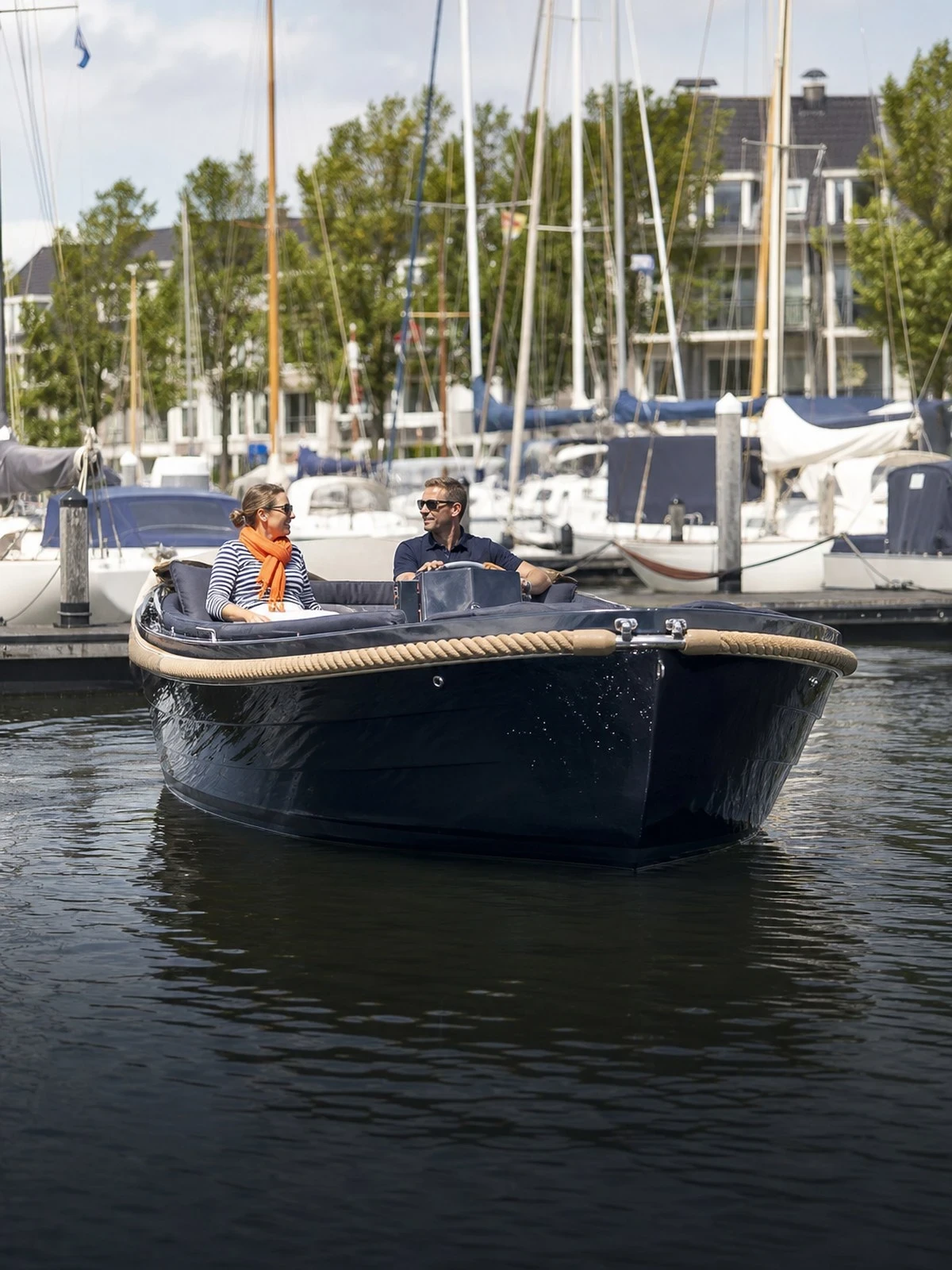 Pleasure craft insurance
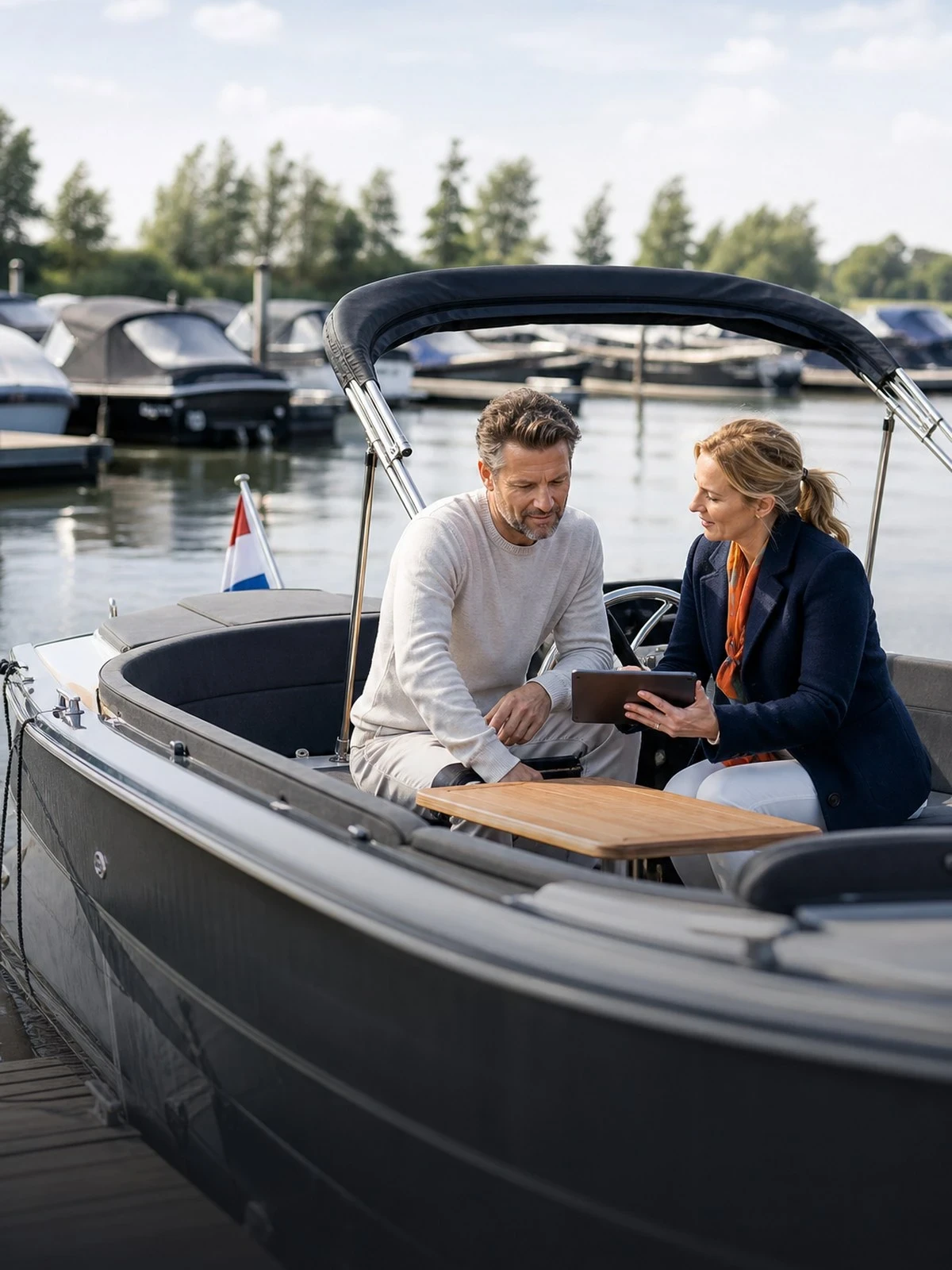 Compare
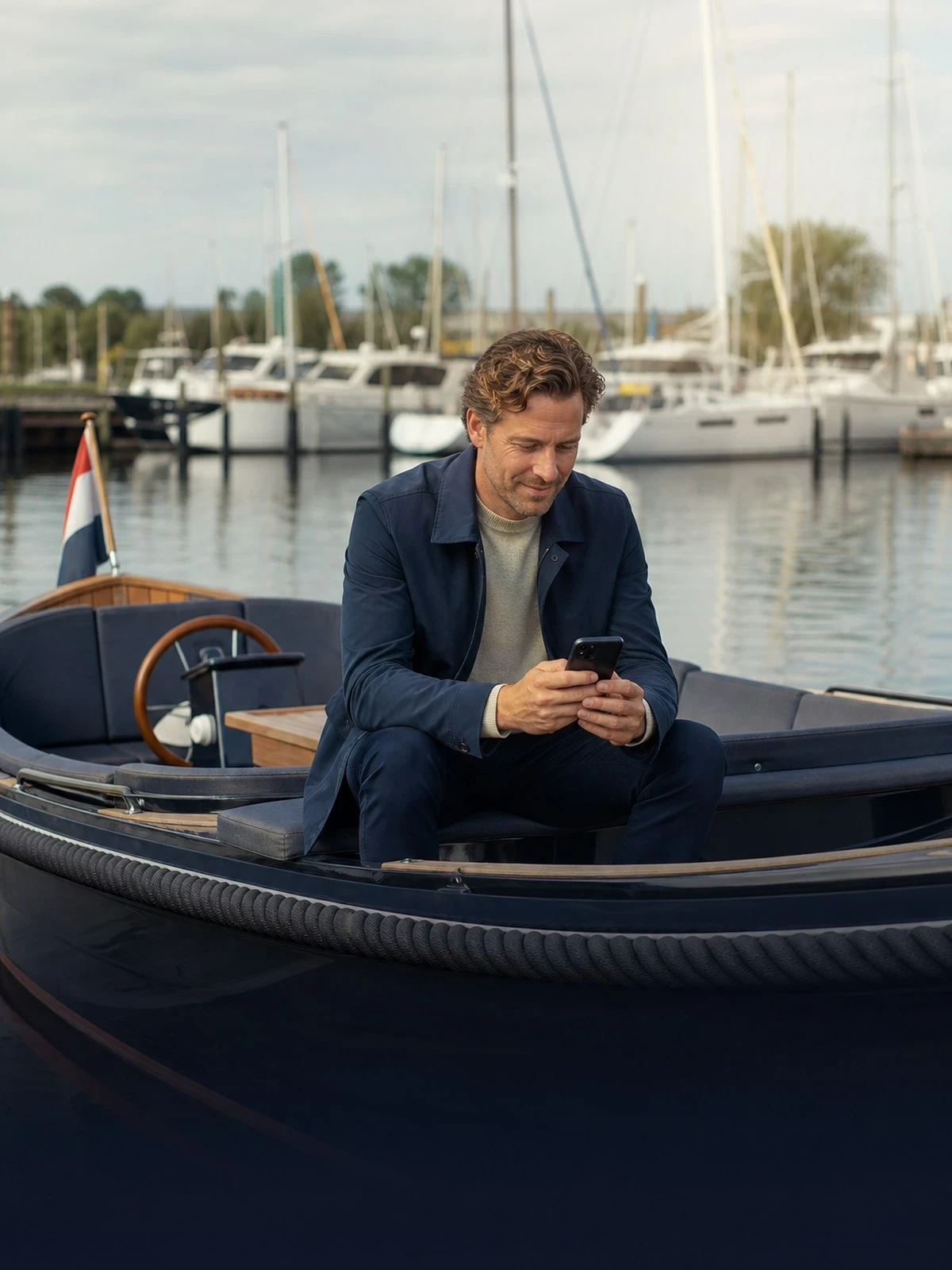 Get covered
The structure of the cover in three parts, with an overview per situation below.
Damage you cause to others with the vessel.
Damage to the boat, the engine and the fixed equipment.
What you add separately.
What is covered
| Situation | Liability | Own-damage cover |
|---|---|---|
| Damage to another vessel or a jetty | Yes | No |
| Theft of the boat or the outboard motor | No | Provided that |
| Fire and storm damage in the berth or ashore | No | Yes |
| Sinking through a leak or through rainwater | No | Provided that |
| Salvage and removal of the wreck | Provided that | Provided that |
| Osmosis, wear and deferred maintenance | No | No |
There is no statutory insurance requirement for pleasure craft. The WAM applies only to motor vehicles. Marinas, harbours and hire companies do generally require liability cover. Pay attention to the sailing area described and to the lay-up or winter storage period: outside the sailing area or during undeclared storage, cover may lapse.
This overview is general in nature and is not personal advice. What is actually covered, including exclusions, limits and the excess, is set out in the policy conditions and the insurance card (verzekeringskaart) of the insurer; you receive both before you take out cover. Taking out cover without advice? Then read what execution only means for you.
Insurers weigh these details differently. That is where your saving is.
We look at the terms as well as the premium, and stay your point of contact when there is a claim.
We are not tied to one insurer and compare on the basis of an objective analysis of several companies.
You call or email someone who knows your file. No menu options, no changing call centres.
We cancel your old policy and align the start date, so you are never a day without cover.
We report the claim and monitor how it is handled. In urgent cases you can reach us on the emergency line.
Customers rate our service on four aspects: personal service, service delivery, availability and the outcome. The reviews are collected and published by NH1816 and come from customers who have actually taken out a policy with Finass Advies B.V. or reported a claim.
Four points that make the difference between a policy that pays out and one that does not.
A sunken sloop is almost never a mystery. The surveyor looks at the cockpit drain, the hose clips on the skin fittings, the bilge pump battery and the cover. If a hose has split after years or the drain was full of leaves, the insurer speaks of deferred maintenance and the loss remains at your expense. If the boat fills after a sudden downpour while everything was in order, there is cover.
Declare not only the mooring but also where the sloop spends the winter: afloat, ashore, in a shed or at home on the trailer. Those are four different risks with their own conditions for theft and storm. Policies also require the engine's cooling system to have been drained in good time or filled with antifreeze. Freezing damage to the block or the pipework is excluded where that has not been done.
Note the serial number of the outboard motor and photograph the type plate, even if the motor is permanently mounted on a transom bracket. Insurers prescribe an approved lock and check for it after a theft. Keep the invoices for the lock and the motor together. If the motor is unbolted from the transom while no lock was fitted, that is a condition not met and no payment follows, however well secured the marina may otherwise be.
If a boat lying alongside breaks free during a storm and damages your sloop, that is in principle their liability under Article 6:162 of the Dutch Civil Code. If recovery fails, for example because the owner is unknown or uninsured, you fall back on your own hull cover. Photograph the situation before anything is detached and report the damage to the harbourmaster as well. Their log is later your most important witness.
Inland waters are a different matter from wider inland waters or coastal waters. If you sail outside them, cover lapses.
Inland waters, wide inland waters and coastal waters are separate categories with their own premiums. If you sail onto the IJsselmeer or the Wadden Sea with inland waters cover, you are not insured there, whatever the weather. For a one-off trip you apply for a temporary extension; that is usually a phone call.
This is what people ask us most.
Not by law. When it comes to it there is no getting round it, because almost every marina makes liability cover a condition for the mooring and asks for it when the rental agreement is signed. That requirement is contractual. Own-damage cover is compulsory nowhere, but without it you carry the risk of sinking, fire and theft of the motor yourself.
That depends on the cause. If the cockpit drain was blocked, the bilge pump faulty or the cover worn out, the insurer speaks of deferred maintenance and the loss remains at your expense. If the boat was well maintained and filled up through a sudden event, there is cover. Photographs of the situation before the boat is lifted are decisive here.
In principle the owner of that boat, through their liability cover. Report the damage to the harbourmaster and record which boat it was. If the owner is unknown or uninsured, you claim on your own hull cover. Your insurer then tries to recover the cost itself. Do that within the period your policy sets.
Only if you declare them as fittings. As standard a low maximum often applies to loose items on board, and on a sloop in particular the cushion set, the canopy cover and the teak trim represent a considerable amount. Declare them separately with their own sum insured. Theft of loose items from an open boat can also be subject to its own clause or a higher excess.
Every situation is different. For these situations we have a separate page.
Request a quote without obligation. We will look at which insurer best matches your activities and your risk.
Prefer to call? 072 - 509 24 56, weekdays 09:00–17:00.
Claim on the road? Emergency line 06 - 55 20 40 72.
Finass Verzekert is a trading name of Finass Advies B.V. We advise on and arrange non-life insurance on the basis of an objective analysis of several insurers, and receive commission for this from the insurer, which is included in the premium. You pay no separate advice fee. Before you take out cover, we establish your wishes and needs.
You will find our licence, KvK and Kifid details and our complaints procedure at the foot of every page.
This page was compiled by Finass Verzekert (LinkedIn). Last updated on .
The information on this page is general in nature and is not personal advice.
Maandag- Vrijdag: 09:00- 17:00
We use cookies and similar technologies to improve your experience on our website.