

Insuring mobile plant through Avéro Achmea
Self-propelled plant often does its work alongside or on the road. As a result the traffic risk cuts straight across the working risk, and that calls for a policy that names both.
- Several insurers compared objectively
- 9.5 customer rating for a new policy
- AFM licence 12016589
- Personal 072 - 509 24 56, weekdays 9–17
This page in another language: Nederlands
Work out for yourself what it would cost.
Enter your details; you will receive a proposal within one working day.
- We compare the offerings of several insurers
- An adviser checks whether the cover suits your activities
- We arrange the switch, including cancellation
A premium indication, not personal advice. Prefer to talk it through? Call 072 - 509 24 56.
- Independent advice
- Several insurers
- Switching arranged
- Help with claims
In brief
We compare more than thirty insurers and choose on the basis of the work you do. Avéro Achmea is something we apply for on behalf of farming businesses, agricultural contractors and landscaping firms with plant that travels on the road every day: tractors, mowing combinations, sweepers and self-propelled implements.
For self-propelled plant, liability cover is not optional. As soon as the machine is on the public road, the insurance obligation under Article 2 of the Dutch Motor Insurance Liability Act (WAM)applies. The real claims pattern in the landscaping sector, however, sits just outside that traffic cover: stones and branches thrown up while mowing and flailing alongside a road or car park. Windows, paintwork and facades are damaged, and whether that is treated as traffic risk or as working risk differs from policy to policy. Have that recorded expressly.
This work is also highly visible and therefore prone to claims: a damaged verge, a crushed driveway, a struck lamp post or a fence that has been driven into. For liability outside the motor vehicle risk you still need a public and employers' liability insurance. If you are unsure which machine falls under which heading, look at insuring self-propelled machines.
This page deals with one situation. The full overview is on Compare plant and machinery insurance.
Independent, personal, sorted quickly
We compare your plant and machinery insurance across dozens of insurers, explain where the real differences lie, and arrange the switch from start to finish — without you having to chase it yourself.
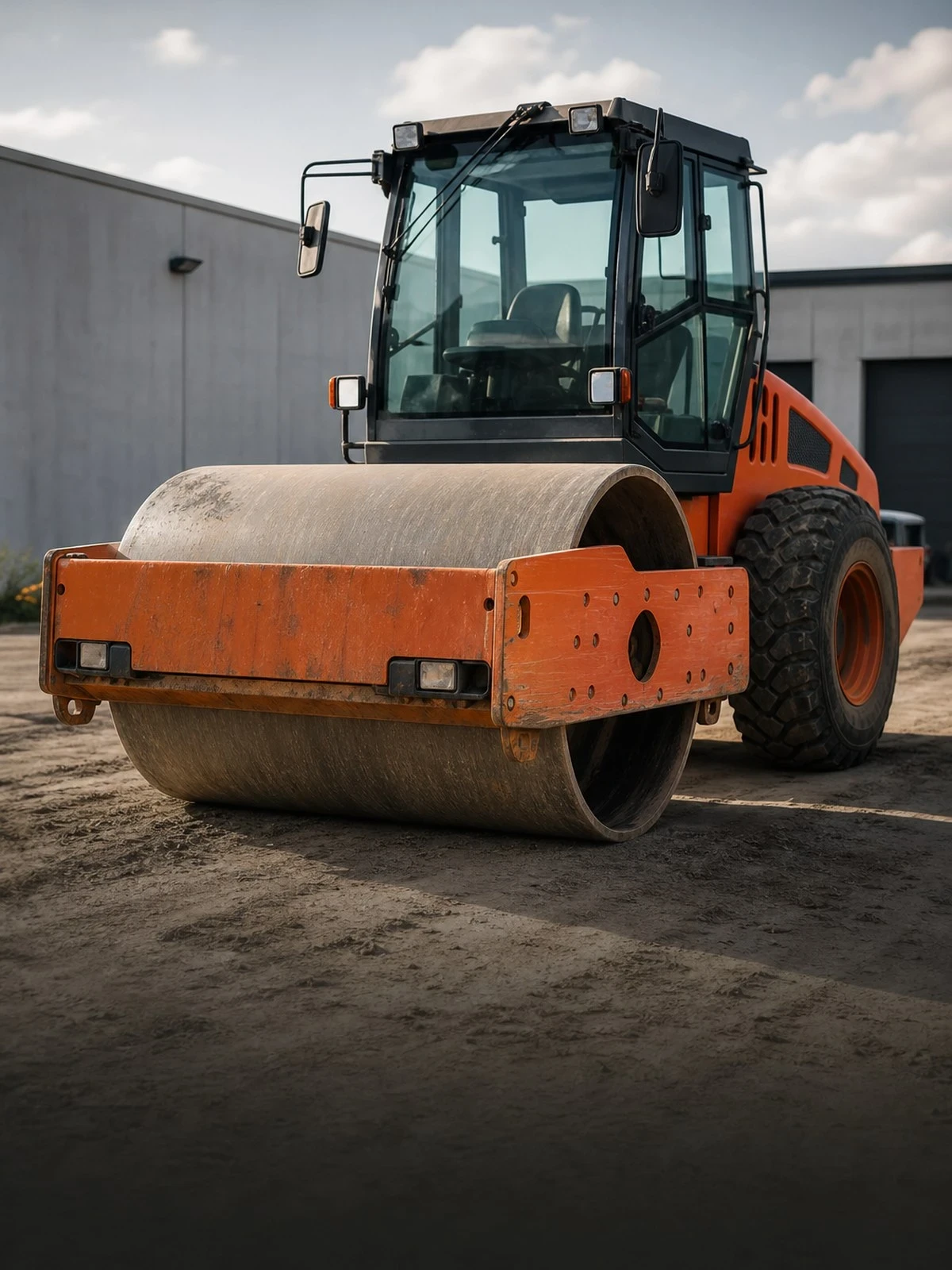 Plant and machinery insurance
 Compare
 Get covered
Why arrange it through Finass Verzekert?
We look at the terms as well as the premium, and stay your point of contact when there is a claim.
Independent
We are not tied to one insurer and compare on the basis of an objective analysis of several companies.
One fixed adviser
You call or email someone who knows your file. No menu options, no changing call centres.
Switching without hassle
We cancel your old policy and align the start date, so you are never a day without cover.
Help with claims
We report the claim and monitor how it is handled. In urgent cases you can reach us on the emergency line.
What to look out for
Four points that in the landscaping and agricultural sector make the difference between a settlement and none.
Objects thrown up during mowing
A flail mower that throws a stone against a passing car causes damage that technically arises from the implement rather than from the driving. Policies deal with this under the work risk, so that has to be insured. Prevention counts in the assessment: guards, a safe direction of travel and clearing litter beforehand. Without working risk cover, this common type of damage stays at your own expense.
The plot or verge you are maintaining
If you damage the planting, the paving or the cable duct in the area you are working on, the policy speaks of damage to property in your care, custody and control and that is excluded. This affects maintenance contracts with local authorities and estate managers directly. Have it recorded in the contract in advance what counts as completed area and what counts as working area. That boundary determines your real exposure.
Entitlement, lighting and inspection
For the road there are requirements on lighting, markings, width and maximum speed, and for the driver a valid category T driving licence. If plant travels without the required fittings or with an unauthorised driver, an own-damage claim may be rejected and the insurer may recover from you the amount paid to the other party. Check this before the season, not during a collision.
Injury to employees at the roadside
Working on the verge means working next to moving traffic. If an employee is injured, your duty of care under Article 7:658 of the Dutch Civil Code is tested: traffic measures, high-visibility clothing, instruction and supervision. For seasonal workers and hired-in labour that applies equally under subsection 4 of that article. Keep the safety instructions and the workplace assessment on file.
What does your premium depend on?
- Number of kilometres on the road: frequent travel increases the traffic risk
- Type of activities: mowing along roads weighs differently from work on your own yard
- Value and year of manufacture of the machine: the basis for the own-damage part
- Working risk cover included or not: the section that covers objects thrown up
- Number and experience of the drivers: seasonal workers count in the assessment
- Excess per event: a higher excess reduces the premium where there are many small claims
Insurers weigh these details differently. That is where your saving is.
What is covered on self-propelled plant
| Situation | Third-party liability | Comprehensive |
|---|---|---|
| You reverse the sweeper into a lamp post and knock it over | Yes | Yes |
| A branch shatters the side window of the cab while you are driving | No | Yes |
| The mowing combination is stolen from an unattended work site at the weekend | No | Provided that |
| A short circuit causes a fire in the tractor's engine compartment | No | Yes |
| The hydraulic pump fails through wear in the middle of the mowing season | No | No |
| Recovery and transport after the machine has overturned into a dry ditch | No | Provided that |
Third-party liability cover deals only with the damage you cause to others; everything that happens to the machine itself stands or falls with an own-damage section.
Frequently asked questions
This is what people ask us most.
When does damage fall under the traffic risk and when under the working risk?
Broadly: everything that arises because the machine is moving falls under the traffic risk; everything that arises because the implement is doing its work falls under the working risk. When it comes to it the two run into each other, for instance when mowing in the direction of travel. Have both sections insured, so that the argument about classification does not become a question of cover.
Is damage to a crop on a neighbouring plot insured?
Damage to a third party's property is insured damage to property if you are liable for it under Article 6:162 of the Dutch Civil Code. If, however, the plot falls within the job you are working on, the care, custody and control exclusion applies. With spraying or mowing work carried out for a third party it is therefore important that contract work for third parties was declared on the application.
What is not covered when clearing or unblocking ditches?
Soil and water contamination, for instance from a split hydraulic hose, is environmental damage and remains excluded on a plant and machinery policy. Damage caused by failing to comply with a permit condition or by an expired inspection certificate is also excluded as standard, as is damage caused intentionally or recklessly, which Article 7:952 of the Dutch Civil Code confirms.
Does a collision with an animal count?
If you hit an animal that has escaped, the keeper of that animal is liable under Article 6:179 of the Dutch Civil Code and you can in principle recover your own-damage loss from them. The reverse applies too: if livestock escapes through a fence you damaged during work, the consequential loss lands with you. Report such incidents at once, as Article 7:941 DCC requires.
Every situation is different. For these situations we have a separate page.
- Compare plant and machinery insuranceThe main page
- The cover provided by plant and machinery insuranceThird-party liability, own-damage, working risk
- Insuring an agricultural tractorRegistration, public road, implements
- A mower on the plant and machinery insuranceThrown debris, third parties, terrain
- Non-self-propelled plant and machinery insurance through Avéro Achmea
- Insuring a tractor as plant and machineryWAM obligation, own-damage, implements on the linkage
- Lorries in agricultural transport through Avéro AchmeaLivestock and bulk, lorry-mounted crane, unloading on the yard
- Goods in transit insurance for agricultural businesses through Avéro AchmeaHarvest, low-loader, heating and spoilage