

Agricultural tractor and implement insurance through Klaverblad
A tractor is a vehicle for one half of the day and a tool for the other half. The question of which cover pays sits exactly on that boundary.
- Several insurers compared objectively
- 9.5 customer rating for a new policy
- AFM licence 12016589
- Personal 072 - 509 24 56, weekdays 9–17
This page in another language: Nederlands
Work out for yourself what it would cost.
Enter your details; you will receive a proposal within one working day.
- We compare the offerings of several insurers
- An adviser checks whether the cover suits your activities
- We arrange the switch, including cancellation
A premium indication, not personal advice. Prefer to talk it through? Call 072 - 509 24 56.
- Independent advice
- Several insurers
- Switching arranged
- Help with claims
In brief
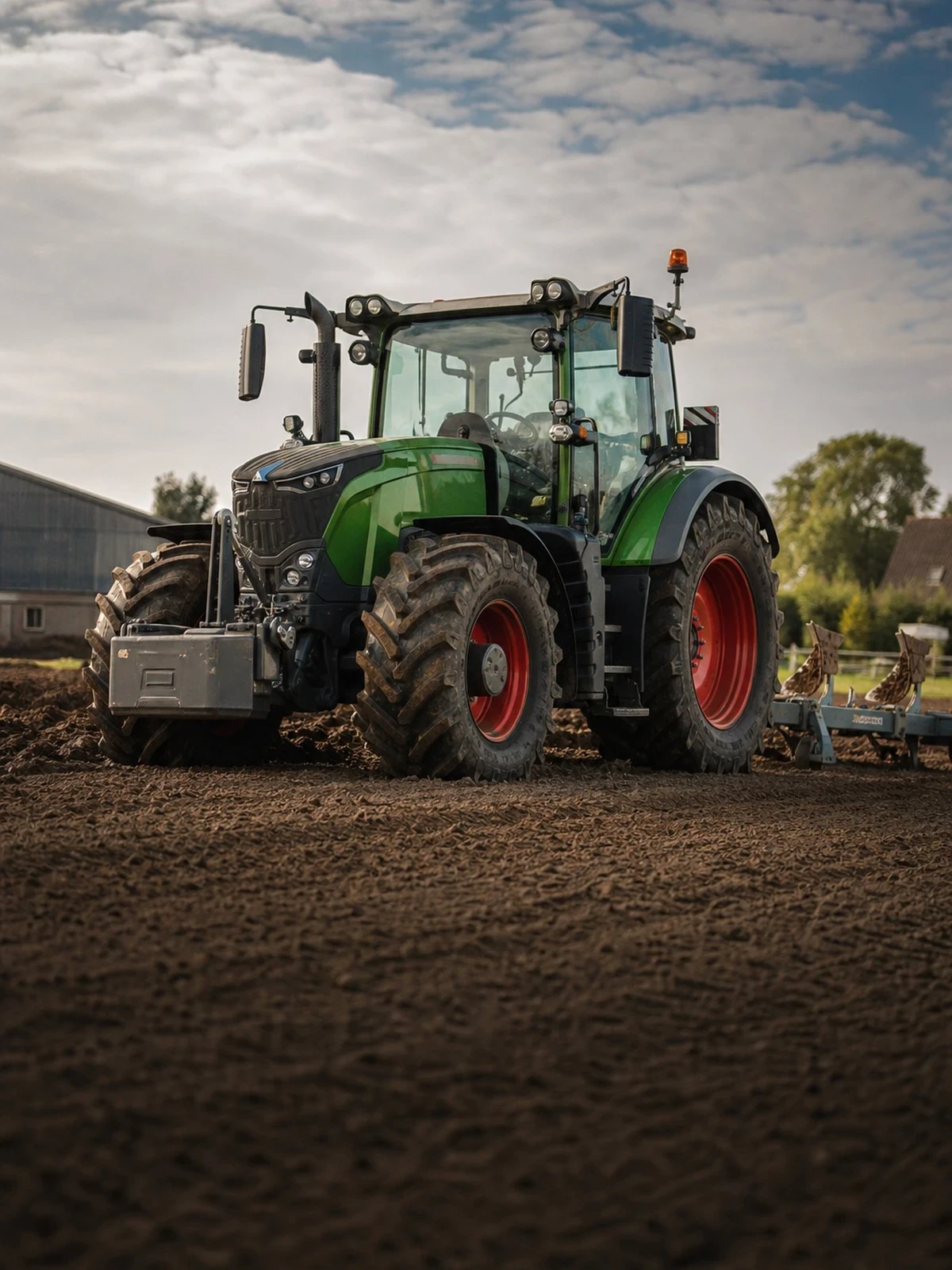
Finass acts as intermediary for Klaverblad's commercial range. We are not tied to this insurer and compare several insurers objectively. The make-up of your machine fleet determines which proposal fits best. For a tractor that goes onto the public road, the insurance obligation under Article 2 of the Dutch Motor Insurance Liability Act (WAM)applies. Since agricultural and forestry vehicles have been subject to registration, that registration is visible on the records as well. See also the tractor insurance for agriculture.
The distinction that carries the whole policy is the one between traffic risk and work risk. If you drive a tipping trailer to the field and hit a parked car, that is traffic. If you damage a pipe with the crane, or the forage harvester hits the wall of a barn where you are unloading, that is work. Many policies cover only the first; the working risk is an extension you apply for separately, comparable to a plant and machinery insurance.
The third area is the coupling. A towed implement shares in the liability cover of the tractor for as long as it is coupled; once it breaks loose or stands in the yard, that cover stops. The same applies to damage to the implement itself: that is an own-damage item in its own right. Trailers and livestock trailers also call for a separate assessment, see the trailer insurance.
This page deals with one situation. The full overview is on Compare car insurance.
Independent, personal, sorted quickly
We compare your plant and machinery insurance across dozens of insurers, explain where the real differences lie, and arrange the switch from start to finish — without you having to chase it yourself.
 Plant and machinery insurance
 Compare
 Get covered
Why arrange it through Finass Verzekert?
We look at the terms as well as the premium, and stay your point of contact when there is a claim.
Independent
We are not tied to one insurer and compare on the basis of an objective analysis of several companies.
One fixed adviser
You call or email someone who knows your file. No menu options, no changing call centres.
Switching without hassle
We cancel your old policy and align the start date, so you are never a day without cover.
Help with claims
We report the claim and monitor how it is handled. In urgent cases you can reach us on the emergency line.
What to look out for
Four subjects that with tractors and implements weigh more heavily than the level of the sum insured.
Damage to what you are working on or carrying
The field you are working, the clamp you drive into, the load you have in the tipping trailer and the machine you carry for someone else are all property in your have in your care. Damage to those falls under the care, custody and control exclusion and not under liability. For agricultural contractors an additional care, custody and control or processing cover is therefore the most important part of the conversation, see also the business liability insurance.
Entitlement to drive and the age of the driver
A tractor subject to registration requires a valid category T licence, with age limits of its own. If a school pupil, a trainee or a seasonal worker drives without the right entitlement, the own-damage cover lapses and the insurer can recover the third-party liability payment from you. Record a check of driving licences on joining and at the start of each season.
Faults, wear and machinery breakdown
Outside the cover are mechanical and electronic failure, wear, seizure through lack of maintenance and damage that arises from within. A burst hose, a burnt-out engine or defective controls is not an accident. If you do want to cover that, a machinery breakdown insurance is the instrument to use, with its own requirements as to maintenance and the age of the machine.
Theft, storage and security
Tractors, GPS receivers and mounted implements are in demand. Insurers therefore link the own-damage cover to storage conditions: a locked shed, an immobiliser, a tracker or removal of the GPS equipment after working hours. If the storage arrangements change, for instance because machines stay out at a field during the season, report that; otherwise Article 7:930 of the Dutch Civil Code comes into play at settlement.
What does your premium depend on?
- Number and type of machines: tractors, telehandlers, forage harvesters and towed implements
- Value and year of construction: replacement value as new, market value or agreed value
- Cover chosen: traffic risk only, or working risk and own-damage cover as well
- Work for third parties: contract work increases the care, custody and control and liability risk
- Security and storage: locked shed, tracker or immobiliser
- Excess per event: often different for theft and for working risk
Insurers weigh these details differently. That is where your saving is.
What is covered
| Situation | Traffic risk | Work risk |
|---|---|---|
| You hit a parked car with the tipping trailer on your way to the field | Yes | No |
| While unloading, the crane arm hits the wall of your client's barn | No | Yes |
| The cultivator strikes a gas pipe in a customer's field | No | Yes |
| An uncoupled slurry tanker rolls off the yard into the neighbour's fence | No | Provided that |
| The forage harvester's engine seizes through deferred maintenance | No | No |
| The tractor damages the load of maize you are carrying for someone else in the tipping trailer | No | No |
Property you are working on or carrying falls under care, custody and control and calls for additional processing cover.
Frequently asked questions
This is what people ask us most.
Is a mounted implement automatically insured?
For liability, usually yes for as long as it is coupled to the tractor, but not for damage to the implement itself. A cultivator, sprayer, slurry tanker or front loader has a value of its own and has to appear as such on the machine list. Check that list every year: purchases and part exchanges are the most common reason for a machine turning out to be missing when a claim arises.
What if I strike a cable or pipe with the crane?
That is working risk. Without an extension for working with the machine, that damage is not covered, even where the vehicle does have third-party liability cover. Always make an excavation notification in advance and keep the drawings; failing to do so can lead to culpability on top of the loss. Where a struck pipe causes contamination, environmental cover comes into play as well.
May I take part in tractor pulling or a demonstration with the tractor?
Not under the ordinary policy. Taking part in competitions, skills trials and speed events is excluded as standard, as is lending the machine for such purposes. If you want to take part in an event, arrange separate cover through the organiser or apply for a temporary extension. Hiring out to third parties also calls for an express agreement.
An employee of ours is injured while working with a machine. What now?
That is employer's liability. Under Article 7:658 of the Dutch Civil Code you have to show that you provided a safe working situation: guarding, instruction, maintenance and supervision. That claim runs not through the machinery policy but through the liability insurance, provided the employer's liability section is insured. Also report the accident to the Netherlands Labour Authority where that is required.
Every situation is different. For these situations we have a separate page.
- Compare plant and machinery insuranceThe main page
- Insuring an agricultural tractorRegistration, public road, implements
- Insuring a tractor as plant and machineryWAM obligation, own-damage, implements on the linkage
- Insuring soil cultivation machineryImplements, season, the soil
- Insuring a tractorRegistration, category T licence, implements
- Insuring a tractor as plant and machineryWAM obligation, own-damage cover, attachments