

Buildings insurance (opstalverzekering) through De Goudse
As soon as work, storage or letting takes place in or near the home, it is no longer an ordinary house to an insurer. That question comes first with this policy.
- Several insurers compared objectively
- 9.5 customer rating for a new policy
- AFM licence 12016589
- Personal 072 - 509 24 56, weekdays 9–17
This page in another language: Nederlands
Work out for yourself what it would cost.
Enter your details; you will receive a proposal within one working day.
- We compare the offerings of several insurers
- An adviser checks whether the cover suits your situation
- We arrange the switch, including cancellation
A premium indication, not personal advice. Prefer to talk it through? Call 072 - 509 24 56.
- Independent advice
- Several insurers
- Switching arranged
- Help with claims
In brief
We act as an independent broker and compare more than thirty companies. De Goudse comes into the picture for private individuals who are also business owners and for homes where living and working come together at one address. The final choice follows from what cover is needed and from the acceptance conditions.
An office at home is not a problem for most insurers. The picture changes as soon as stock is stored, there is a workshop, customers or patients come to the house, or work is done with equipment, oil or naked flames. That raises the fire risk and brings liability that does not belong on a private policy. So declare the use on your application: the duty of disclosure under Article 7:928 of the Dutch Civil Code covers everything you can reasonably understand to be relevant to the assessment, and Article 7:930 of the Dutch Civil Code governs what happens if that is not done. Business contents and stock are, moreover, never covered by private home contents insurance. For a practice at home, buildings insurance for consulting rooms the right starting point.
The second subject is everything standing outside the house. A shed, garden house, carport, fence, paving and planting are often included, but with a more limited number of covered events than the main building: sometimes only fire, storm and impact by a vehicle. Glass is a story of its own: whether glass in an outbuilding is included and whether double glazing with a failed seal falls under it differs from policy to policy. If you want wider cover for glass, look at glass insurance.
This page deals with one situation. The full overview is on Compare buildings insurance (opstalverzekering).
Independent, personal, sorted quickly
We compare your buildings insurance across dozens of insurers, explain where the real differences lie, and arrange the switch from start to finish — without you having to chase it yourself.
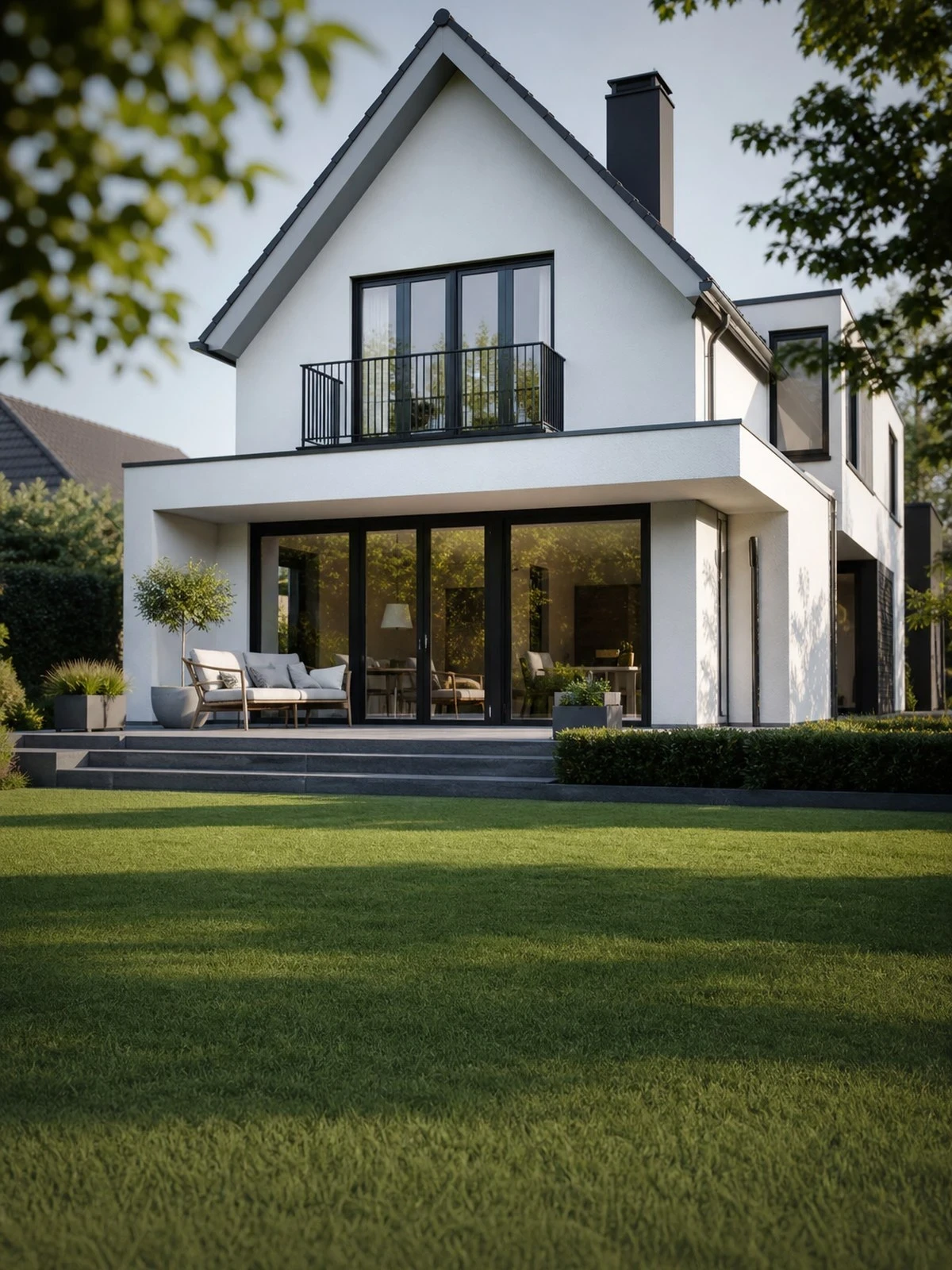 Buildings insurance
 Compare
 Get covered
Why arrange it through Finass Verzekert?
We look at the terms as well as the premium, and stay your point of contact when there is a claim.
Independent
We are not tied to one insurer and compare on the basis of an objective analysis of several companies.
One fixed adviser
You call or email someone who knows your file. No menu options, no changing call centres.
Switching without hassle
We cancel your old policy and align the start date, so you are never a day without cover.
Help with claims
We report the claim and monitor how it is handled. In urgent cases you can reach us on the emergency line.
What to look out for
Four situations in which cover is narrower than expected.
Vacancy and refurbishment restrict cover
If the home stands empty for a longer period or major work is carried out, many policies scale cover back to a limited number of events: usually fire, storm and burglary with signs of forced entry. Water damage and vandalism then drop out. Report vacancy in advance and ask for written confirmation of what applies during that period; see also buildings insurance for an unoccupied home.
Storm has a threshold and an excess
The conditions name a wind speed above which there is said to be a storm, force 7. Below that there is no storm cover, however hard the wind seemed to blow. Storm damage often carries a separate, higher excess. Particular items such as aerials, sun blinds, roof windows and solar panels also have limitations or a maximum of their own.
What is structurally outside the cover
Never covered are vermin, mould and dry rot, root growth in the drains, wear and tear and deferred maintenance, construction and design faults and gradual subsidence. Also groundwater rising through the floor and flooding from a primary flood defence also remain outside. These are not sudden events but consequences of use, ground conditions or construction.
The mortgage lender is at the table
If there is a mortgage on the home, the lender usually has a right of pledge over the insurance payment. On a large claim, payment is not simply made to you: arrangements are made about the repairs, or the payment is set off against the loan. Take that into account when planning repairs, and report a claim immediately as Article 7:941 of the Dutch Civil Code requires.
What does your premium depend on?
- Rebuild value: the amount on which the policy is based
- Construction type and roof covering: timber and thatch lead to additional requirements
- Use of the home: entirely private or partly business
- Outbuildings and garden features: shed, carport and boundary fencing
- Prevention: smoke alarms, fire extinguishers and burglary protection
- Excess: general and separately for storm
Insurers weigh these details differently. That is where your saving is.
What is covered
| Situation | Extended | Comprehensive |
|---|---|---|
| Burglars force the back door and the frame and the lock are wrecked | Yes | Yes |
| A burst pipe in the crawl space soaks the floor insulation | Yes | Yes |
| While painting, you drop a tin of paint over the fixed staircase | No | Yes |
| Your child kicks a ball through the conservatory window | Provided that | Yes |
| The solar panels on the roof work loose during an autumn storm | Provided that | Provided that |
| After twenty years the thatched roof has decayed and has to be replaced | No | No |
All-risks mainly adds your own accidents; anything to do with time or maintenance remains outside cover in both forms.
Frequently asked questions
This is what people ask us most.
Can I insure my home while also working there?
Usually yes, provided you declare the use. Administrative work at home is normally not a problem. Storing goods, a workshop, a kitchen used for preparation or visits from customers changes the risk and can lead to additional conditions, a higher premium or advice to place the business side on a commercial policy.
Is my shed or garden house included?
Often yes, but with a more limited number of covered events than the home itself and sometimes up to a share of the sum insured stated in the conditions. A structure that is not permanent or that can be moved regularly falls outside altogether. Check this if you keep valuable items in the outbuilding. Those also fall under the contents and not under the buildings cover.
When does an insurer speak of a storm?
When the wind speed reaches the limit stated in the conditions, force 7. Insurers check this against measurements from the nearest weather station. If the measured value is below it, the damage is assessed under another section or rejected. Keep photographs of the damage and of the surroundings taken immediately after the event.
Who receives the payment if there is a mortgage on the house?
The lender usually has a right of pledge over the payment. For smaller claims the insurer will usually simply pay you. For a large claim the bank is involved and the payment goes towards repairs or towards redemption of the loan. So agree repair plans before you instruct a builder.
Every situation is different. For these situations we have a separate page.
- Compare buildings insurance (opstalverzekering)The main page
- Buildings insurance (opstalverzekering) through a.s.r.Rebuild value, underinsurance, gradual damage
- Comparing buildings insurance (opstalverzekering) by policy sectionBasis of valuation, storm, foundations
- Comparing buildings insurance (opstalverzekering) on more than a test scoreTest score, conditions, your property
- De Vereende's buildings insurance (opstalverzekering)Unusual risks, vacancy, clauses
- What does buildings insurance (opstalverzekering) cover?Permanently attached, outbuildings, exclusions
- What is buildings insurance (opstalverzekering)?Rebuild value, mortgage requirement, building versus contents
- Buildings insurance (opstalverzekering) for a second homeStanding empty, frost, declaring
- Buildings insurance (opstalverzekering): what is it and what does it cover?Rebuild value, building, exclusions