

Own goods in transit insurance through Nationale-Nederlanden
As soon as more than two vehicles are on the road, the question shifts from the individual journey to the system: on what basis is the premium calculated and what may be carried in which vehicle.
- Several insurers compared objectively
- 9.5 customer rating for a new policy
- AFM licence 12016589
- Personal 072 - 509 24 56, weekdays 9–17
This page in another language: Nederlands
Work out for yourself what it would cost.
Enter your details; you will receive a proposal within one working day.
- We compare the offerings of several insurers
- An adviser checks whether the cover suits your activities
- We arrange the switch, including cancellation
A premium indication, not personal advice. Prefer to talk it through? Call 072 - 509 24 56.
- Independent advice
- Several insurers
- Switching arranged
- Help with claims
In brief
Own goods in transit insurance covers the goods you move with your own vehicles and that are your property or at your risk. Finass brokers with Nationale-Nederlanden and compares the conditions objectively with those of more than thirty other insurers. For companies with several vehicles the choice is mainly about the basis: a fixed sum insured per vehicle, or open cover settled afterwards on the number of journeys or the value carried.
A fixed sum per vehicle is simple, but it pinches as soon as one journey is out of the ordinary: the day a complete kitchen installation or an expensive machine goes in. An open contract with declarations absorbs those peaks, but calls for accurate administration. If you forget to declare an exceptional journey, that journey is uninsured. For companies that also drive for third parties, a carriers' liability insurance is a separate product with a limit system of its own.
For installation and construction firms, watch the moment of transition. Materials you bring in are cargo; as soon as they have been unloaded and installed at the workplace, they come under a Construction all risks (CAR) insurance or a erection all risks insurance. If materials lie on the building site for days before being fitted, that is neither carriage nor installation, unless the storage period is expressly included. When it comes to it that is where the gap lies.
This page deals with one situation. The full overview is on Compare goods in transit insurance.
Independent, personal, sorted quickly
We compare your goods-in-transit insurance across dozens of insurers, explain where the real differences lie, and arrange the switch from start to finish — without you having to chase it yourself.
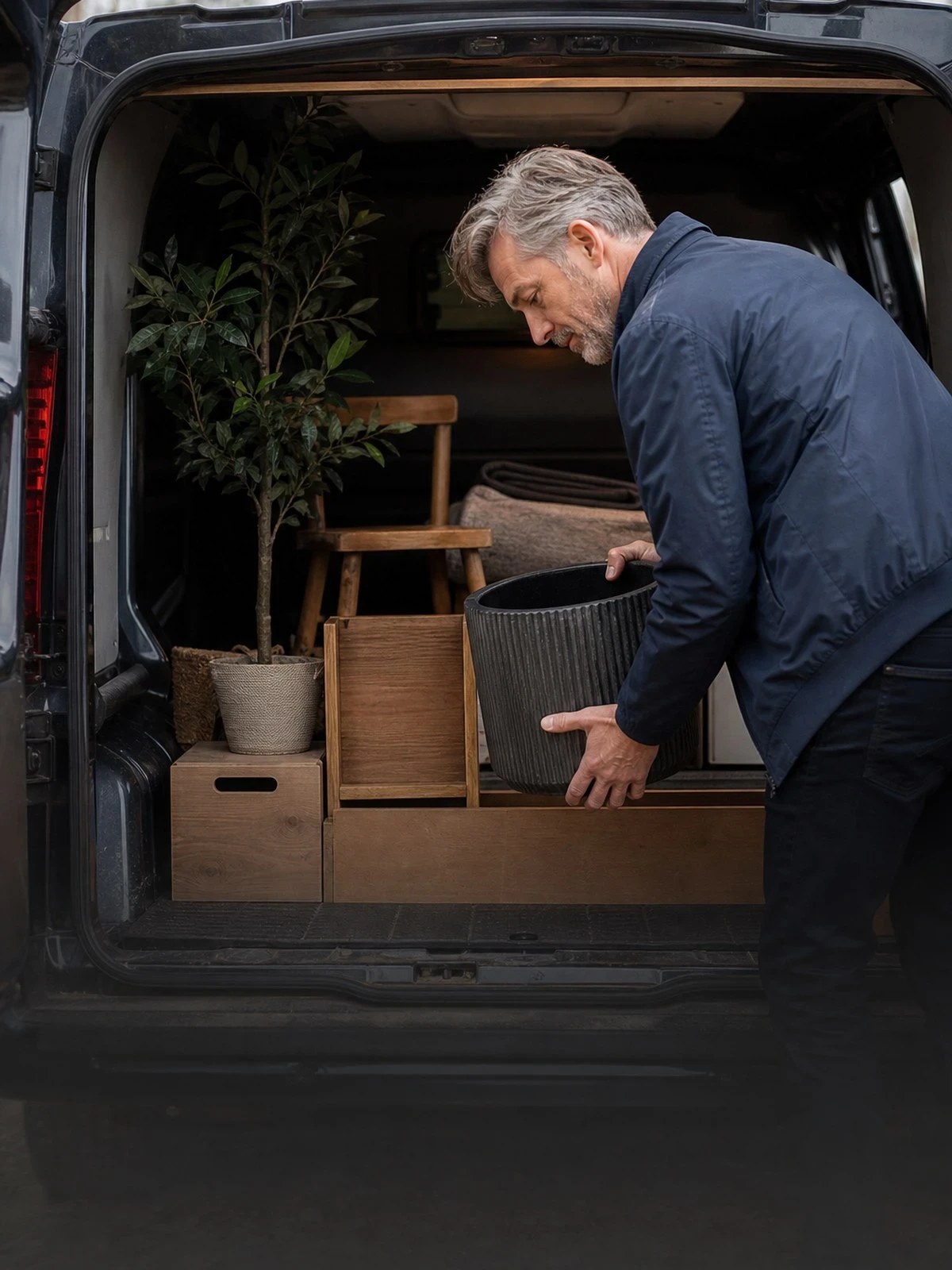 Goods-in-transit insurance
 Compare
 Get covered
Why arrange it through Finass Verzekert?
We look at the terms as well as the premium, and stay your point of contact when there is a claim.
Independent
We are not tied to one insurer and compare on the basis of an objective analysis of several companies.
One fixed adviser
You call or email someone who knows your file. No menu options, no changing call centres.
Switching without hassle
We cancel your old policy and align the start date, so you are never a day without cover.
Help with claims
We report the claim and monitor how it is handled. In urgent cases you can reach us on the emergency line.
What to look out for
Four subjects that work out differently for a company with several vehicles than for a single van.
Dangerous goods have to be declared
Carriage of flammable, corrosive or otherwise dangerous substances falls outside the cover unless declared, even in small quantities such as gas cylinders, adhesives or batteries. If you do not comply with the carriage rules that apply to them, the insurer can refuse payment. What is involved here is set out on the page about carriage of dangerous goods.
What does not count as goods
Money, securities, precious metals, live animals and drivers' personal belongings are excluded as standard on own goods in transit cover. The same applies to documents and records. If you regularly carry items in those categories, separate insurance is needed for them; including them on the transit policy rarely works.
Driver conduct and the condition of the vehicle
Damage arising because the vehicle was overloaded, not technically sound or driven without a valid licence does not qualify for payment. With a fleet that is an organisational question: inspections, load weights and licence checks have to be demonstrably arranged, not merely agreed.
Work in progress is not cargo
As soon as materials are incorporated into a structure or installation, transit cover ends. Damage after that belongs on construction or erection cover. If materials lie on the building site in the meantime, declare that storage on site separately. A misjudged transition leads to two insurers pointing at each other.
What does your premium depend on?
- Chosen basis: a fixed sum per vehicle or a declaration per journey
- Size of the fleet: number of vehicles and type of body
- Value per journey: the maximum load determines the limit
- Type of goods: building materials, installation parts or equipment
- Area and routes driven: domestic, border traffic or wider Europe
- Prevention within the organisation: storage policy, key management and tracking systems
Insurers weigh these details differently. That is where your saving is.
What is covered
| Situation | Extended | Comprehensive |
|---|---|---|
| In a collision on the motorway the installation materials shift in the van and are damaged | Yes | Yes |
| The van is broken into overnight and the equipment carried in it disappears | Provided that | Provided that |
| A tool case falls over while driving and the contents are damaged | No | Yes |
| A machine topples off the tail lift while being unloaded at the customer | No | Yes |
| Rain gets in through a leaking roof edge and affects a consignment of plasterboard | No | Provided that |
| The refrigeration in your van fails and the products being carried spoil | No | Provided that |
An extended form covers named events such as collision, fire and theft; anything that goes wrong on the way without an identifiable cause calls for the all risks form.
Frequently asked questions
This is what people ask us most.
When is open cover worthwhile?
As soon as the value per journey varies widely or the number of journeys is large. You then do not insure each vehicle for a fixed amount, but declare periodically what has been carried. That fits reality better and prevents you being consistently over- or under-insured. It does call for records from which that declaration can be traced.
Are materials lying on the building site included?
Usually not. Transit cover ends on delivery. What happens after that comes under construction or erection insurance, or under separate cover for storage on site. Have it recorded how long materials remain covered after unloading and who counts as the insured during that period, certainly where the client has a CAR policy of its own.
What if a driver fails to secure the load properly?
Damage from insufficient securing or stowage is excluded, because this lies within your sphere of influence. The insurer looks at the instructions you gave and at the equipment present in the vehicle. Set out working instructions for loading and securing in writing and repeat them. With a fleet that matters for your liability towards third parties as well.
Do I have to declare exceptional journeys separately?
Yes, as soon as the value or the nature differs from what was declared on the application. A one-off journey with an expensive machine, a journey to a country outside the area of cover or the carriage of dangerous goods otherwise falls outside the policy. Declare it in advance; declaring it afterwards does not help, and Article 7:941 of the Dutch Civil Code obliges you to give immediate and complete information when you claim.
Every situation is different. For these situations we have a separate page.
- Compare goods in transit insuranceThe main page
- Goods in transit insurance for agricultural businesses through Avéro AchmeaHarvest, low-loader, heating and spoilage
- Goods in transit insurance through Avéro AchmeaMoving house, packing it yourself, storage period
- Own goods in transit insurance through a.s.r.Your own property, overnight clause, loading and unloading
- Goods in transit insurance through a.s.r.Delivery terms, open cover, recovery