

Moped insurance through Klaverblad
Moped policies differ hardly at all in the names of their cover. They differ in the clauses about who rides and what the vehicle looks like.
- Several insurers compared objectively
- 9.5 customer rating for a new policy
- AFM licence 12016589
- Personal 072 - 509 24 56, weekdays 9–17
This page in another language: Nederlands
Work out for yourself what it would cost.
Enter your details; you will receive a proposal within one working day.
- We compare the offerings of several insurers
- An adviser checks whether the cover suits your situation
- We arrange the switch, including cancellation
A premium indication, not personal advice. Prefer to talk it through? Call 072 - 509 24 56.
- Independent advice
- Several insurers
- Switching arranged
- Help with claims
In brief
Klaverblad is one of the companies with which Finass places two-wheeler policies. We are not tied to it and we set its range alongside that of more than thirty other companies. This company's private range is set out at the overview page, and for a light four-wheeled vehicle there is the light quadricycle version. The general explanation of the cover is at the cover under scooter insurance.
The provision that costs most on a moped policy is the one about the construction. A derestricted vehicle exceeds the permitted design speed and is therefore, in law, no longer the vehicle on the registration document. The result: no own-damage cover after a loss, and where someone else is injured the insurer does pay the victim, because the WAM requires it, but it can recover that amount from the insured under Article 15 of the Dutch Motor Insurance Liability Act (WAM). That applies too where someone else modified your moped.
Almost every policy schedule also carries a driver provision: a minimum age, sometimes a named regular rider, and always the requirement of a valid AM or B licence. If someone other than the person declared rides it on a structural basis, for instance a younger family member, the basis of the premium is wrong and you come up against the duty of disclosure under Article 7:928 of the Dutch Civil Code. Reporting it costs nothing; putting it right after a loss is impossible.
This page deals with one situation. The full overview is on Compare scooter insurance.
Independent, personal, sorted quickly
We compare your moped insurance across dozens of insurers, explain where the real differences lie, and arrange the switch from start to finish — without you having to chase it yourself.
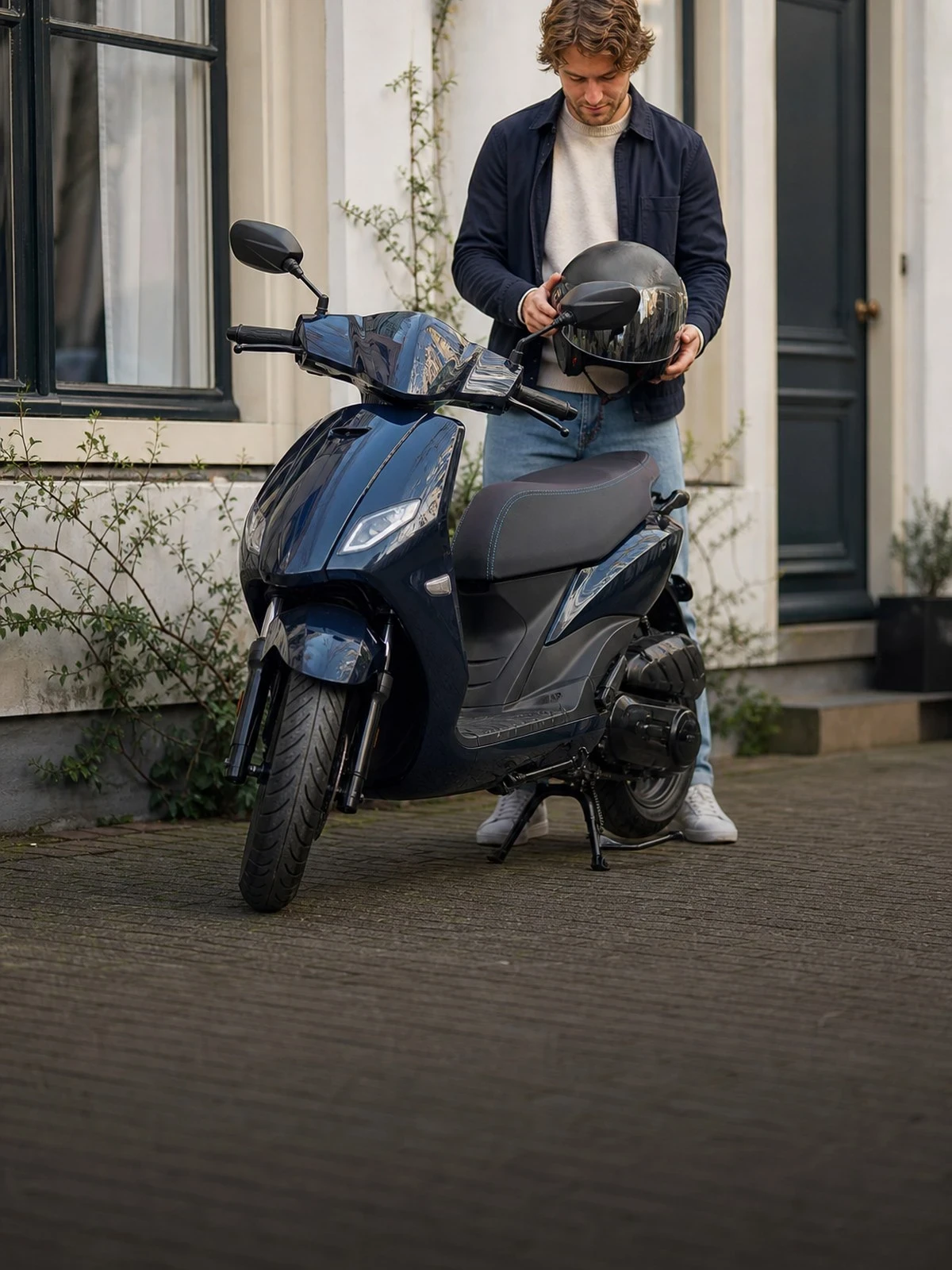 Moped insurance
 Compare
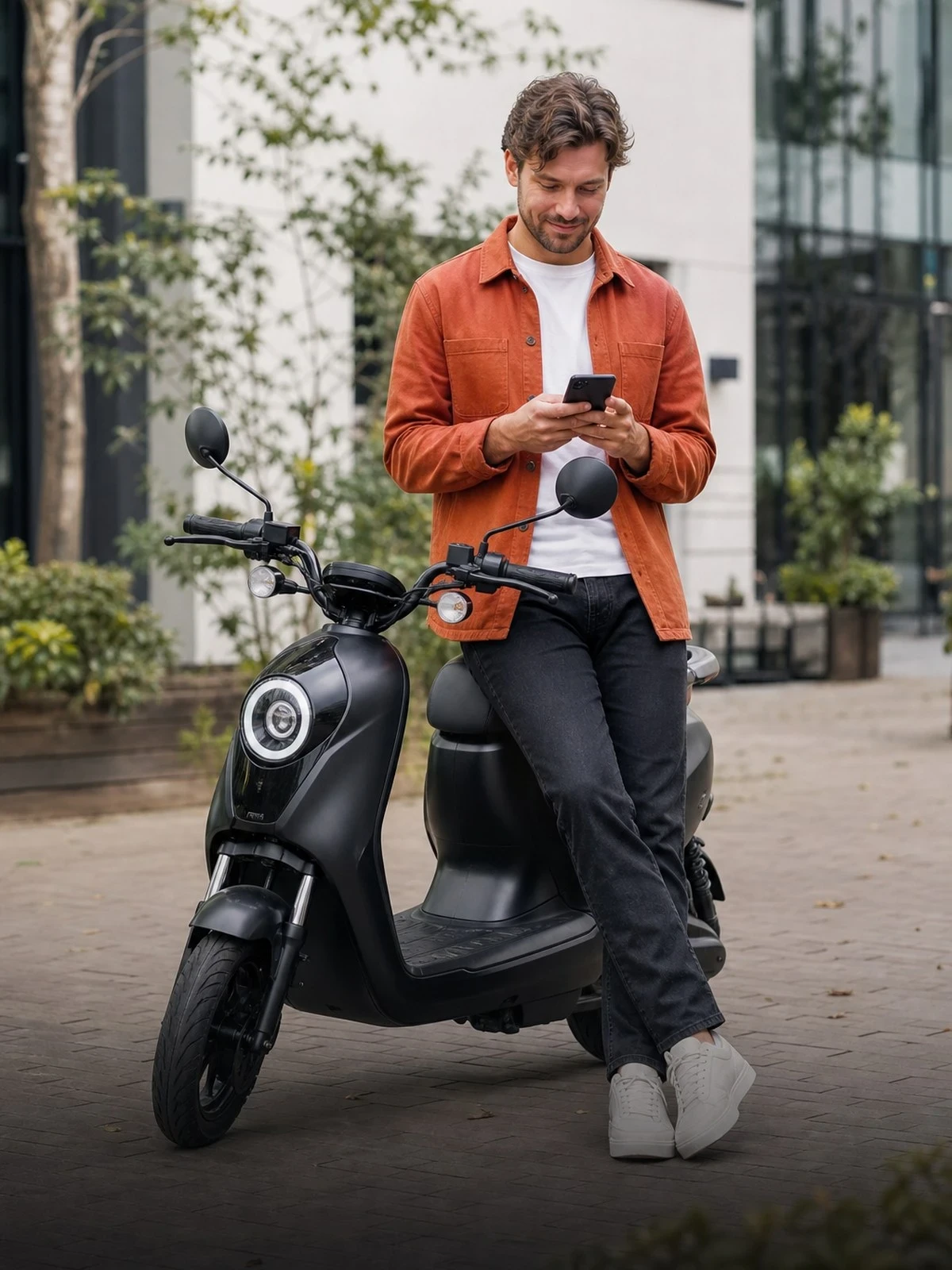 Get covered
Why arrange it through Finass Verzekert?
We look at the terms as well as the premium, and stay your point of contact when there is a claim.
Independent
We are not tied to one insurer and compare on the basis of an objective analysis of several companies.
One fixed adviser
You call or email someone who knows your file. No menu options, no changing call centres.
Switching without hassle
We cancel your old policy and align the start date, so you are never a day without cover.
Help with claims
We report the claim and monitor how it is handled. In urgent cases you can reach us on the emergency line.
What to look out for
Four provisions that decide matters on a moped policy more often than the premium does.
Derestricting and the rolling road
Where there is doubt about the speed, an insurer or the police has the vehicle tested on a rolling road. A different variator, a modified exhaust system or a removed restrictor can be shown that way. Remove a previous owner's modifications before you start using the moped. The cover attaches to the condition of the vehicle, not to the question of who made the modification.
The purchase price scheme and what comes after it
On a new moped there is often a period in which the purchase price is paid, after which payment moves to market value or to a monthly depreciation. Ask how long that first period runs and at what percentage depreciation is applied afterwards. Two policies with the same premium can differ widely on this point.
Accessories, helmet and clothing
A top box, a windscreen, an alarm or fitted navigation is an accessory with a limit of its own and does not automatically count towards the insured value. On most two-wheeler policies, a helmet and riding clothing are covered only if they have been included separately, and then usually only for damage connected with a covered collision.
What falls outside the cover
Alongside derestricting and riding without a valid licence, three situations are excluded as standard: hiring out or commercial delivery work without this being declared, taking part in races and skill trials, and damage caused by intent or recklessness, which ties in with Article 7:952 of the Dutch Civil Code. Riding under the influence leads with practically every insurer to loss of cover and to recovery.
What does your premium depend on?
- Type of cover: third-party liability, third-party, fire and theft, or comprehensive cover
- Age of the regular driver: young riders weigh the most heavily
- Postcode of the address where the vehicle is kept: theft figures differ widely by area
- Make, model and replacement value as new: sought-after models are stolen more often
- No-claims years: built up on this policy, not always transferable from a car
- Excess on own-damage cover: raising it voluntarily brings the premium down
Insurers weigh these details differently. That is where your saving is.
What is covered
| Situation | Third-party liability | Comprehensive |
|---|---|---|
| You catch the mirror of a parked car as you pull away | Yes | Yes |
| Your pillion passenger is injured because you brake too late for a speed bump | Yes | Yes |
| Your scooter blows over against a post and the fairing cracks | No | Yes |
| The moped disappears from the locked shed where it stood, itself locked | No | Yes |
| You break your wrist in a single-vehicle fall and are off work for weeks | No | No |
| The variator and drive belt are worn and have to be replaced | No | No |
Your own injury falls outside both columns and calls for personal accident cover for riders.
Frequently asked questions
This is what people ask us most.
May my son ride the moped that is registered in my name?
Only if he meets the age and licence requirements in the conditions, and if he is not in fact the regular rider without this being declared. If he mainly uses the moped, declare him as the regular rider. That raises the premium, but it prevents a claim being reduced because of an incorrect statement.
Is wearing a helmet a condition of cover?
The helmet requirement is a traffic rule and applies to mopeds and light mopeds. For third-party liability cover it changes nothing: the victim is paid. For your own injury under personal accident or rider cover it can count, because Article 6:101 of the Dutch Civil Code allows part of the loss to be attributed to a person who has been careless themselves.
Is own-damage cover still worth it on an older moped?
Work it out with the market value and the excess alongside. On a vehicle a few years old, little is often left after depreciation and the excess, while the own-damage premium continues. Third party, fire and theft can still pay off because of theft and fire, which are the largest losses on a moped. Comprehensive cover is mainly worthwhile in the first years.
Do I take my no-claims years from the car with me?
Usually not. No-claims years are built up and recorded per vehicle type. A moped policy generally starts on the entry step. Some companies give a starting discount for a claim-free record on another vehicle. Ask about that when you apply, and also ask how many steps you drop after a single claim, because that varies widely.
Every situation is different. For these situations we have a separate page.
- Insuring a moped & comparing premiumsThe main page
- Insuring a scooter mopedYellow plate, pillion passenger, market value
- The cover provided by scooter insuranceThird-party, third-party, fire and theft, comprehensive
- Insuring a low-speed scooterBlue plate, cycle path, battery
- Insuring a scooterThird-party liability compulsory, theft, derestricting
- Insuring a classic mopedEstablishing the value, originality, storage