

Personal liability
- Improper performance of duties, Article 2:9 of the Dutch Civil Code
- Deficit in the estate after bankruptcy, Article 2:248 of the Dutch Civil Code
- Tort towards third parties
- Joint and several liability with several directors
A director of a property company takes decisions on purchase, financing, letting and maintenance. If things go wrong, he can be held liable for it with his own assets.
This page in another language: Nederlands
Work out for yourself what it would cost.
Enter your details; you will receive a proposal within one working day.
A premium indication, not personal advice. Prefer to talk it through? Call 072 - 509 24 56.
Directors' and officers' liability insurance does not insure the company, but the persons who manage it: directors, supervisory board members and supervisors, and often de facto policymakers as well. At its heart is the duty of proper performance of duties in Article 2:9 of the Dutch Civil Code. Personal liability only arises once a director can be serious blame; a decision that turns out badly with hindsight is not enough.
In property practice, claims come mainly from a few directions. A purchase where the investigation into soil, asbestos, leases or permits fell short. A refinancing the company could not carry. Distributions to shareholders while the company could no longer meet its debts as they fell due. Or, after a bankruptcy, an insolvency administrator recovering the deficit in the estate under Article 2:248 of the Dutch Civil Code for manifestly improper management.
The policy pays for the loss for which the director is liable and, often more importantly, the costs of defence. Even a claim that ultimately turns out to have no basis costs years and a great deal of money. Without a policy the director pays that bill himself. Also look at the liability for the building itself, which covers an entirely different risk.
We compare your directors' and officers' liability insurance across dozens of insurers, explain where the real differences lie, and arrange the switch from start to finish — without you having to chase it yourself.
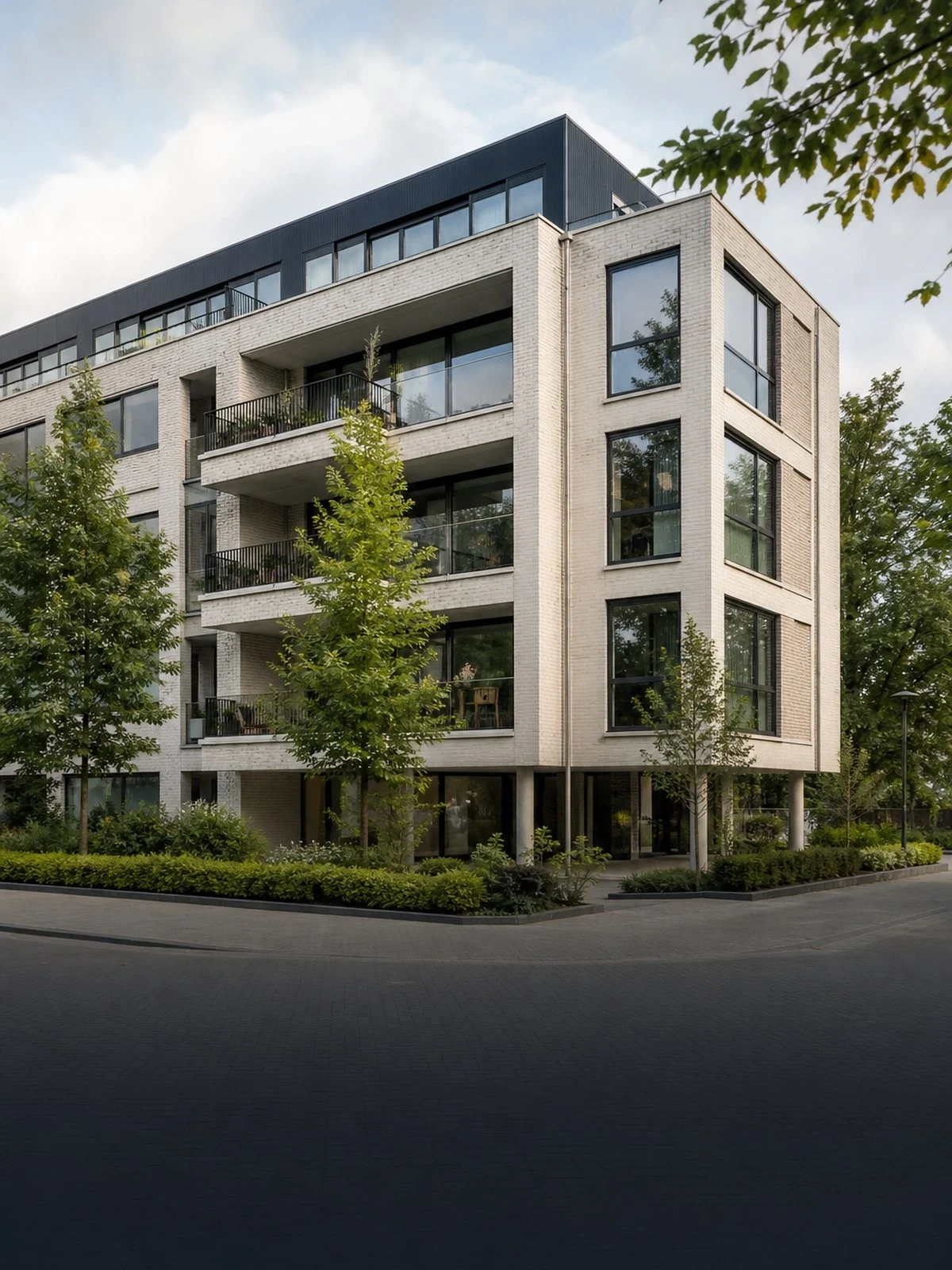 Directors' and officers' liability insurance
 Compare
 Get covered
The cover consists of the liability itself, the cost of defence and the group of insured persons.
Loss for which a director is held liable in a private capacity.
Everything needed to fend off or limit the claim.
More people than just today's statutory director.
What is covered
| Situation | Basic | Extended |
|---|---|---|
| A purchase without proper investigation. The company suffers a loss | Yes | Yes |
| The insolvency administrator recovers the deficit in the estate from the board | Yes | Yes |
| The cost of defence against an unfounded claim | Yes | Yes |
| A claim against a supervisory board member or supervisor | Provided that | Yes |
| A claim under foreign law | No | Provided that |
| Intentional prejudice to creditors | No | No |
What is actually covered, including the exclusions, the sum insured, the retroactive date and the run-off period, is set out in the policy conditions and the insurance card (verzekeringskaart) that you receive before you take out the policy.
Insurers weigh these details differently. That is where your saving is.
We look at the terms as well as the premium, and stay your point of contact when there is a claim.
We are not tied to one insurer and compare on the basis of an objective analysis of several companies.
You call or email someone who knows your file. No menu options, no changing call centres.
We cancel your old policy and align the start date, so you are never a day without cover.
We report the claim and monitor how it is handled. In urgent cases you can reach us on the emergency line.
Customers rate our service on four aspects: personal service, service delivery, availability and the outcome. The reviews are collected and published by NH1816 and come from customers who have actually taken out a policy with Finass Advies B.V. or reported a claim.
Four points that make the difference between cover and no cover in a property structure.
Article 2:248 of the Dutch Civil Code links two hard obligations to an evidential presumption. If the board does not keep proper accounts or the annual accounts are published late, improper performance of duties is established and it is presumed that this was an important cause of the bankruptcy. The director must then make it plausible himself that the bankruptcy had a different main cause. With property companies that mainly exist on paper, this is the most common route into a claim.
A portfolio is often spread over a holding company, several property companies and sometimes a foundation or a management BV. Cover exists only for the entities on the policy. New or acquired companies must be registered; some policies automatically include newly incorporated subsidiaries, but with conditions as to size and activities. Check this on every transaction, because an acquired company also brings the history of its former board with it.
The following, among others, are outside the cover: deliberate prejudice of creditors, fraud, bribery and favouring yourself at the company's expense; intent and wilful recklessness under Article 7:952 of the Dutch Civil Code; fines, penalty payments and punitive damages, which under Dutch law are generally uninsurable; and claims arising from facts predating the period of cover or from circumstances already known when the policy was taken out. Nor do injury and property damage and environmental damage belong on this policy. The liability and environmental damage insurance for the property apply to those.
The application covers the financial position, current disputes and earlier claims. What you enter there falls under the duty of disclosure in Article 7:928 of the Dutch Civil Code. If it emerges when a claim is made that you did not report a current conflict or a looming liquidity problem, the insurer can reduce or refuse the payout under Article 7:930 of the Dutch Civil Code. Also report any circumstance that may lead to a claim immediately; Article 7:941 of the Dutch Civil Code requires you to do so and with claims-made cover that is often decisive.
This is what people ask us most.
Only where you can be said to be seriously at fault. The court looks at what a reasonably acting director would have done in the same circumstances, and weighs the information you had or ought to have had. An investment that disappoints is business risk; decisions taken without investigation, contrary to the articles or with a clear conflict of interest are not.
Usually the company takes out the policy and pays the premium, while the directors and supervisory board members are the insured persons. That is customary and practical: the sum insured then applies to the whole board together. Do note that the company can cancel the policy. In a conflict between the board and the shareholders that is a real point to watch.
The existing policy often ends or passes to the new owner, while you as the departing director remain answerable for years. So agree a run-off period as part of the transaction, recorded in the sale agreement. Without that arrangement, a claim coming in after the transfer about your own period as a director is no longer covered.
Only if the tenant holds you personally liable as a director, for example because you knew the company could not meet its obligations. An ordinary tenancy dispute is a matter for the company and belongs with legal expenses insurance (rechtsbijstandverzekering). Damage to the tenant caused by a defect in the building falls under the liability insurance for real estate.
That varies from policy to policy. Dutch law is the standard; claims under foreign law are sometimes insured as well, sometimes with a separate limit, and claims under US or Canadian law are often excluded. If you have property or companies across the border, have this expressly recorded before the policy starts.
Every situation is different. For these situations we have a separate page.
Request a quote without obligation. We map out your structure and assess which entities and periods belong on the policy.
Prefer to call? 072 - 509 24 56, weekdays 09:00–17:00.
Claim on the road? Emergency line 06 - 55 20 40 72.
Finass Verzekert is a trading name of Finass Advies B.V. We advise on and arrange non-life insurance on the basis of an objective analysis of several insurers, and receive commission for this from the insurer, which is included in the premium. You pay no separate advice fee. Before you take out cover, we establish your wishes and needs.
You will find our licence, KvK and Kifid details and our complaints procedure at the foot of every page.
This page was compiled by Finass Verzekert (LinkedIn). Last updated on .
The information on this page is general in nature and is not personal advice.
Maandag- Vrijdag: 09:00- 17:00
We use cookies and similar technologies to improve your experience on our website.