

Usage details are equally important in commercial truck cover. Insurers want to know whether the vehicle is used for own goods, contracted haulage, refrigerated transport, hazardous materials, construction support, or seasonal peaks. These details influence exclusions, policy wording, and premium level.
Accurate usage descriptions reduce the chance of underinsurance, claim disputes, and avoidable premium surprises
A clear risk profile helps brokers compare suitable markets faster and secure cover that reflects the reality of the business rather than a vague estimate.

What Documents Support a Faster Truck Insurance Quote?
Getting a fast and accurate truck insurance quote depends on preparation. When key documents are ready, an adviser or insurer can assess risk quickly, avoid follow-up delays, and present realistic options sooner. This is especially useful for owner-operators, growing fleets, and businesses replacing vehicles on short notice.
The most helpful documents usually include registration details, vehicle specifications, prior insurance history, claims records, driver licence information, and a summary of business operations. If the truck is financed or leased, financiers may also require specific wording before cover can be bound. Having this paperwork organised can shorten the quoting process significantly.
Vehicle registration and VIN details
Driver lists with licence classes and ages
Claims history for the past three to five years
Current or previous policy schedule
Description of cargo, routes, and annual mileage
Business registration details and operating address
Clean, consistent information improves quote quality. If the declared usage on one document conflicts with another, underwriters may pause the file for clarification. For many businesses, the fastest path to dependable commercial truck cover is not rushing the process, but preparing the file properly from the start.
Which Claims Happen Most Often with Commercial Trucks?
Many of the most frequent truck insurance claims are not dramatic highway crashes. In practice, a large share of losses comes from routine operating risks: reversing into fixed objects, mirror strikes, low-speed collisions in yards, load shift incidents, theft, vandalism, windscreen damage, and minor impact claims during urban delivery work.
Commercial trucks spend a lot of time in tight spaces. Depots, loading bays, roundabouts, service stations, and customer premises create repeated opportunities for damage. Even experienced drivers can face incidents when schedules are tight or visibility is limited. Weather also contributes, especially when rain, ice, or crosswinds affect stopping distances and trailer stability.
Cargo-related losses are another common issue. If freight is poorly secured, temperature-sensitive goods spoil, or water enters a load area, the cost can fall outside basic vehicle damage cover unless the policy addresses it properly. That is why operators often need both vehicle protection and carefully structured cargo liability cover.
Frequent claims are often ordinary operational losses, which is why prevention habits can influence long-term premium performance
Driver training, route planning, camera systems, maintenance checks, and load security procedures all help reduce claim frequency and improve insurability over time.
Cargo and Liability Limits Should Align
One of the biggest blind spots in commercial truck cover is assuming that vehicle insurance automatically matches cargo exposure. It often does not. A truck may be insured for physical damage, but the value of goods carried and the business’s legal responsibility for those goods can exceed the policy’s built-in protections.
Cargo liability should reflect the actual value, type, and contractual responsibility of the load. If a transporter regularly carries electronics, pharmaceuticals, building materials, or high-value machinery, a low limit can leave a serious financial gap after theft, collision, fire, or spoilage. The same applies when customers require proof of higher limits before awarding work.
Liability alignment also matters beyond cargo. Third-party property damage, injury claims, cleanup costs, and legal defence can all escalate quickly after a major road incident. Businesses should review whether limits still match present-day contracts, inflation, route expansion, and larger consignments.
Check maximum cargo value per trip
Review customer contract requirements
Compare goods-in-transit exposure with policy limits
Consider cross-border or specialist freight obligations
A smarter truck insurance quote is not just about price. It should reveal whether the policy limits actually fit the operational risk the business carries every day.
How Does Fleet Size Change Premium Structure?
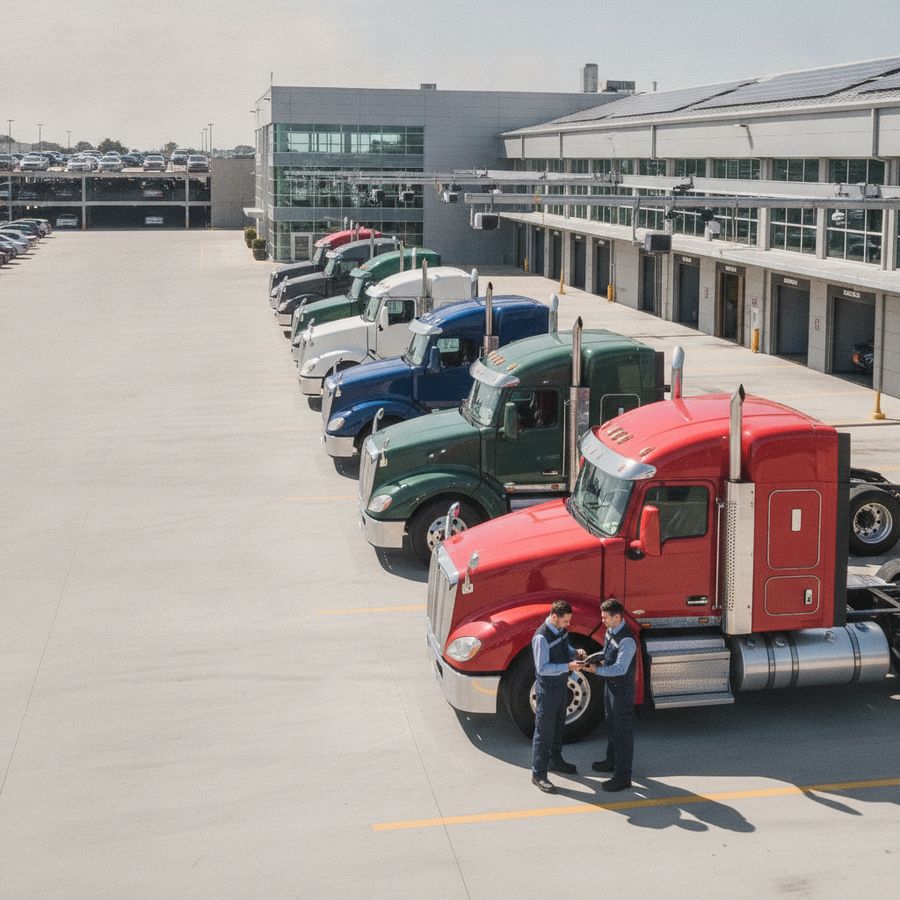
As a business adds vehicles, insurance pricing often shifts from a single-unit approach to a broader risk model. With one or two vehicles, underwriters may focus closely on each truck, each driver, and each use case. With larger operations, fleet insurance can introduce different rating logic based on spread of risk, claims performance, management controls, and combined exposure.
A bigger fleet does not automatically mean cheaper cover per vehicle, but it can create efficiency. Insurers may offer administrative simplicity, common renewal dates, flexible driver arrangements, and pricing structures tied to the overall loss ratio. That can benefit well-managed fleets with strong maintenance records and formal safety procedures.
However, growth also brings new risks. More vehicles mean more drivers, more routes, more parking locations, and more opportunities for inconsistent reporting. If the business scales faster than its controls, premiums can rise despite fleet size. Underwriters often examine telematics use, driver onboarding, incident response, and workshop routines before shaping terms.
Fleet pricing rewards consistency, not just volume
For businesses evaluating truck insurance options, the goal is to pair expansion with disciplined risk management so the premium structure improves alongside operational growth rather than working against it.
Driver History Remains Central to Policy Pricing
No matter how advanced the vehicle or how competitive the market, driver history remains one of the strongest rating factors in truck insurance. Underwriters know that past behaviour often signals future exposure. Licence class, years of experience, prior claims, motoring convictions, gaps in employment, and the type of vehicles previously operated can all affect pricing.
A clean record usually supports better terms, but context still matters. A single minor incident may be less important than repeated low-speed losses, fatigue-related events, or a pattern of traffic offences. Insurers also look at who is behind the wheel: named drivers, rotating staff, subcontractors, or newly hired operators can each alter how risk is viewed.
For employers, this means policy pricing is tied not only to recruitment, but to supervision and training. Driver file reviews, induction processes, licence checks, and regular coaching can strengthen submissions for both individual vehicles and fleet insurance. Good habits become commercially valuable when renewal time arrives.
Verify licences and endorsements regularly
Track incidents, near misses, and retraining
Use clear fatigue and mobile phone policies
Document disciplinary and safety procedures
When seeking a truck insurance quote, having a robust driver profile can significantly influence the difference between standard options and truly competitive, sustainable coverage.
FAQs
What factors most affect a truck insurance quote?
The main factors are payload weight, route type, annual mileage, cargo type, vehicle use, driver history, claims record, and whether the truck operates as a single unit or part of a fleet. Insurers use these details to estimate accident frequency, loss severity, and policy fit.
Which documents help speed up a truck insurance quote?
The most useful documents are vehicle registration and VIN details, driver lists with licence classes, prior policy schedules, claims history, business registration details, and a clear summary of cargo, routes, and mileage. Accurate and consistent paperwork reduces underwriting delays.
Why is cargo liability separate from basic truck insurance?
Basic truck insurance may protect the vehicle itself, but it does not always provide enough protection for the value of goods being transported or the operator's legal responsibility for them. Cargo liability limits should match the type, value, and contractual exposure of the loads carried.
What truck insurance claims happen most often?
Common claims often involve routine operating losses such as reversing damage, mirror strikes, low-speed yard collisions, windscreen damage, theft, vandalism, and load-related incidents. These are frequent because trucks regularly operate in tight spaces, busy delivery areas, and changing weather conditions.
How does fleet size change commercial truck cover pricing?
As fleets grow, insurers often move from rating each truck individually to assessing overall claims performance, management controls, driver procedures, and spread of risk. Larger fleets can gain administrative and pricing efficiencies, but weak controls can still lead to higher premiums.