

Environmental damage insurance exists to insure your own clean-up costs, not just your legal liability to others.
For landlords, investors, and commercial owners, this is especially important. A leaking tank, burst pipe, or firewater runoff can leave the land polluted even if no neighbour sues. Without environmental damage insurance, the largest expense may remain uninsured. That is why many real estate owners treat it as a specialist layer of real estate insurance rather than assuming general liability protection is enough.
Own Site Versus Third-party Site Explained
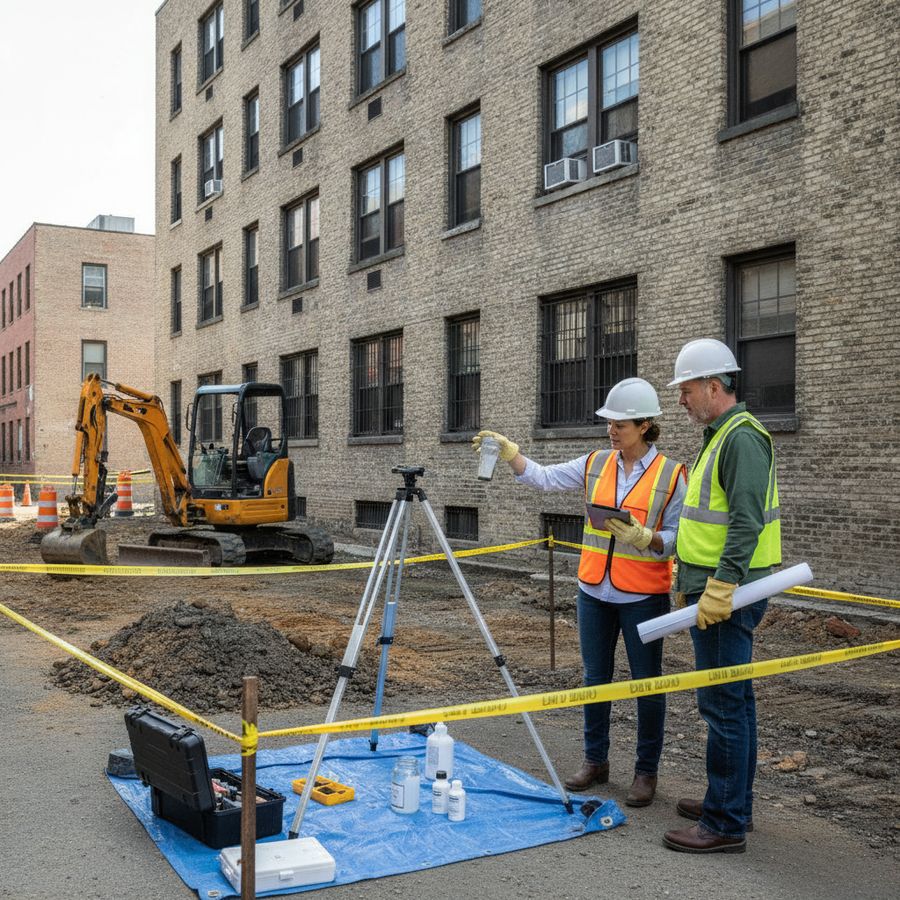
One of the most important concepts in environmental damage insurance is the difference between contamination on your own site and contamination that spreads to a third-party site. Insurers separate these because the financial and legal consequences can be very different. On your own plot, the issue is usually the cost of investigation and remediation. On another party’s land, there may also be recovery claims, neighbour disputes, and liability allegations.
For property owners, own-site cover is often the real value. If oil seeps into the ground beneath a rental property, you may face soil testing, excavation, and restoration even if the pollution never crosses the boundary. That expense belongs to you as owner or user of the location. Third-party site cover becomes relevant when contamination migrates through soil, drains, ditches, or groundwater onto adjoining land.
Own site: clean-up and reinstatement on the insured property
Third-party site: pollution that spreads beyond your boundary
Related claims: defence costs or recovery demands from neighbours or authorities
When comparing policies, check whether both areas are covered. Some forms of property owners insurance include strong protection for the insured address but apply tighter terms when contamination escapes to nearby land or water.
Sudden Leaks and Gradual Contamination Compared
Insurers often divide pollution losses into two categories: sudden leaks and gradual contamination. This difference can decide whether a claim is paid in full, restricted, or declined. A sudden event is something abrupt and unexpected, such as a tank rupture, a vehicle impact on pipework, or a fire that releases pollutants into the ground. These are usually easier to identify, date, and link to a single incident.
Gradual contamination develops over time. Think of a slow underground pipe leak, a damaged seal around a storage area, or years of seepage from poorly maintained equipment. These cases are harder because the start date is unclear and the contamination may only be discovered during renovation, sale, or environmental inspection. Basic cover in environmental damage insurance often focuses on sudden events, while broader policies may extend to gradual pollution subject to conditions.
The line between sudden and gradual is one of the most decisive details in real estate insurance for pollution risks.
Property owners should never assume all pollution incidents are treated the same. If your risk profile includes older tanks, buried pipework, or long-term tenancy use, gradual contamination cover may be essential. It can be the difference between an insured incident and a six-figure clean-up cost funded entirely by the building owner.
Which Clean-up Costs Are Usually Insured
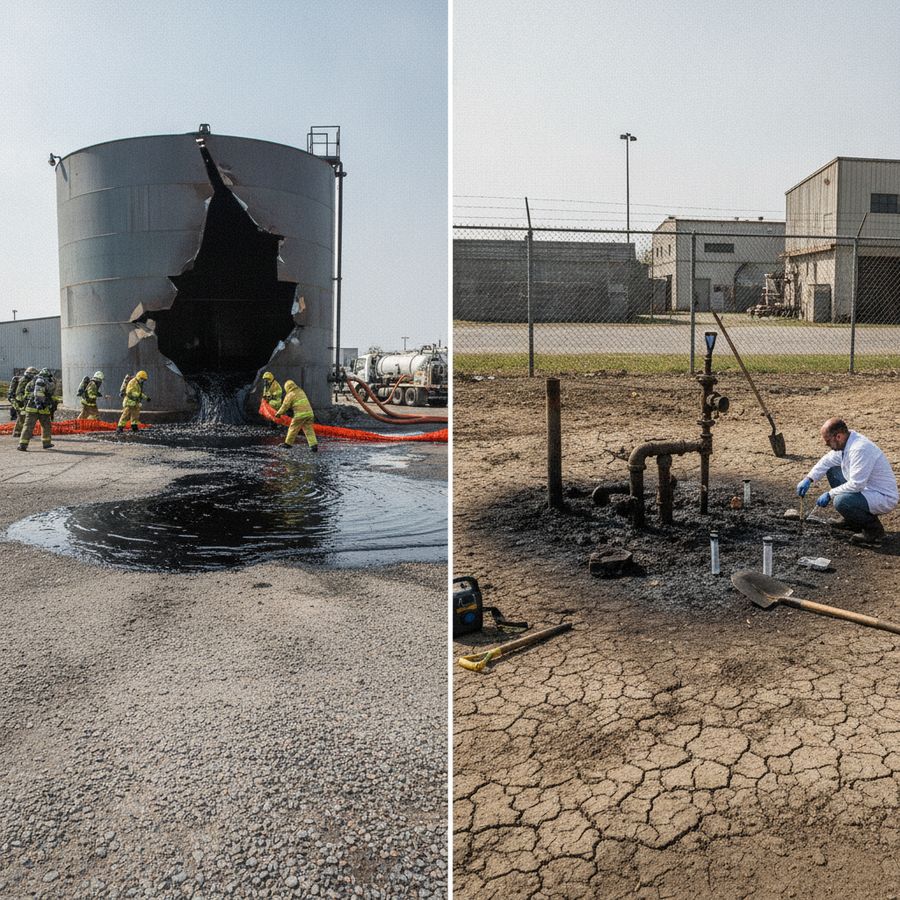
A well-structured environmental damage insurance policy usually covers more than simply digging up polluted earth. In many cases, the insured loss starts with investigation. Before any remediation begins, experts may need to test soil, sample groundwater, define the spread of contamination, and produce reports for regulators. Those early stages can be expensive, and they are often part of the insured clean-up costs.
After that, cover may extend to physical remediation and site restoration. The exact scope depends on the insurer and policy wording, but property owners commonly look for cover that includes:
soil investigation and environmental sampling
excavation, removal, and safe disposal of contaminated material
groundwater treatment or purification
backfilling and surface reinstatement
clean-up after fire, smoke residue, or firefighting water
Some policies also pay reasonable costs to prevent the situation from getting worse, which can be crucial when quick action limits the spread of soil contamination. However, not every related expense is automatically covered. Business interruption, permanent loss of land value, or rebuilding delays may require separate sections within broader real estate insurance.
Because policies vary, owners should read the schedule carefully. The most useful protection is not the broadest marketing claim, but the wording that clearly matches the site, installations, and pollution risks at each insured address.
Key Exclusions Property Owners Often Miss
Even comprehensive-looking policies contain exclusions that can surprise landlords and investors. One of the biggest is pre-existing contamination. If pollution was already present before the policy started, or before the property was purchased, insurers normally treat it as an existing problem rather than an insured event. That is why a baseline environmental survey can be so valuable when arranging property owners insurance for higher-risk locations.
Another commonly missed exclusion is loss in market value after remediation. A site may be professionally cleaned, yet still become harder to sell or refinance because of its environmental history. Many policies pay the direct clean-up costs but not the reduced value of the asset afterward.
Property owners should also watch for exclusions around:
asbestos and asbestos removal
deliberate non-compliance with permits or enforcement notices
fines, penalties, and punitive charges
intentional or reckless acts
normal permitted emissions rather than accidental pollution
The most expensive uninsured loss is often not the spill itself, but the excluded cost discovered after the claim is submitted.
In real estate insurance, wording matters more than assumptions. Owners who understand exclusions in advance can address gaps through better maintenance, surveys, tenancy controls, and, where available, broader environmental extensions.
When Tenants Can Trigger Your Claim
Many pollution incidents affecting rental property are not caused directly by the owner. A tenant may store oil improperly, damage underground services, fail to maintain equipment, or operate in a way that leads to leaking substances entering the ground. Even so, the property owner is often the party first approached when soil contamination is discovered. That is one reason environmental damage insurance is so relevant for landlords.
Consider a few common scenarios: a tenant’s heating installation leaks over time, a workshop occupant spills chemicals into drains, or a fire in a let unit pushes polluted firefighting water into the soil. The owner may still face investigation orders and immediate clean-up costs, regardless of whether those costs can later be recovered from the tenant.
Recovery is not always simple. It depends on lease wording, evidence, the tenant’s financial strength, and whether the responsible party can be clearly identified. For that reason, owners should take a layered approach:
define environmental responsibilities clearly in the lease
require maintenance records for tanks and installations
consider naming tenants where policy structure allows
verify whether tenant activities increase environmental risk
Good real estate insurance planning assumes tenant behaviour can create owner exposure. The best time to manage that risk is before a leak, not after regulators or neighbours become involved.
How Insurers Assess Real Estate Risk
When pricing environmental damage insurance, insurers consider more than just the building itself. They evaluate the entire environmental profile of the location. For instance, a modern office free of hazardous substances carries a very different risk compared to an older mixed-use site with underground tanks, workshop activities, or complex drainage systems. This is why two properties with similar values can have significantly different premiums under the same property owners insurance strategy. To learn more about how these factors affect your insurance, visit Finass Verzekert.Underwriters usually focus on the factors most likely to drive contamination severity, detection delay, and remediation cost. Typical assessment points include:
type of property and how it is used
presence of above-ground or underground tanks
age and condition of pipework, floors, and drainage
storage of hazardous or soil-threatening substances
nearby water, groundwater sensitivity, and surrounding land use
past claims, surveys, and maintenance standards
They also review who occupies the premises. Certain tenant profiles create higher pollution exposure than standard residential use. Vacancy, poor upkeep, and incomplete documentation can raise concerns as well. In some cases, insurers may ask for a recent site survey or detailed declaration before offering terms.
For owners, the lesson is simple: better information often leads to better outcomes. Accurate disclosures, evidence of maintenance, and a clear picture of site conditions can improve acceptance, strengthen coverage, and reduce surprises when a clean-up cost claim arises.