

Car insurance through Assicuro
What sets a car policy through Assicuro apart is not the liability cover, since that is prescribed by law, but the way an own-damage claim is settled.
- Several insurers compared objectively
- 9.5 customer rating for a new policy
- AFM licence 12016589
- Personal 072 - 509 24 56, weekdays 9–17
This page in another language: Nederlands
Work out for yourself what it would cost.
Enter your details; you will receive a proposal within one working day.
- We compare the offerings of several insurers
- An adviser checks whether the cover suits your situation
- We arrange the switch, including cancellation
A premium indication, not personal advice. Prefer to talk it through? Call 072 - 509 24 56.
- Independent advice
- Several insurers
- Switching arranged
- Help with claims
In brief
Liability cover is not optional. Article 2 of the Dutch Motor Insurance Liability Act (WAM) requires every registered keeper to hold insurance against damage caused to others with the vehicle, even when the car is parked. If you are not driving for a while, suspending the registration with the RDW (the Dutch vehicle authority) is the only proper way to end that duty. Anyone who hits a cyclist or pedestrian also has to deal with Article 185 of the Dutch Road Traffic Act (WVW), which places the burden of proof largely on the driver of the motor vehicle.
Above that you choose for yourself. Third-party, fire and theft picks up the events you can do nothing about: fire, storm, theft, broken glass and collision with an animal. Fully comprehensive or all risks adds the damage you cause yourself. On a car of higher or hard-to-establish value that choice counts for more, because there is no residual value to fall back on.
With this policy, pay particular attention to the repair provisions. Some conditions require you to use an approved repairer, or reduce the excess if you do. On cars for which parts are scarce, you want room for a marque specialist and for original parts. Have any such agreement recorded on the policy schedule. A verbal assurance when you take out the policy will not help you when the damage happens.
This page deals with one situation. The full overview is on Compare car insurance.
Independent, personal, sorted quickly
We compare your car insurance across dozens of insurers, explain where the real differences lie, and arrange the switch from start to finish — without you having to chase it yourself.
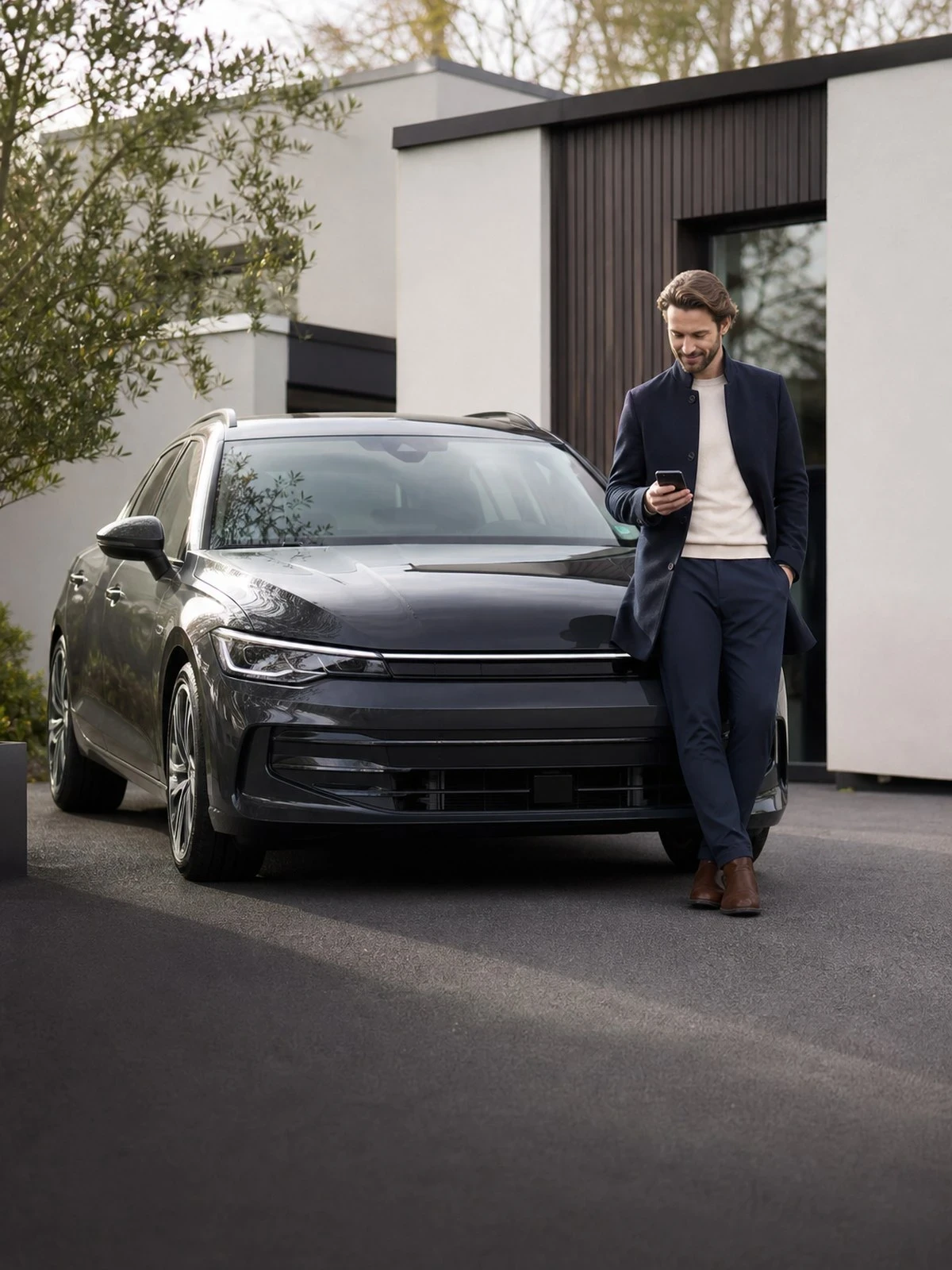 Car insurance
 Compare
 Get covered
Why arrange it through Finass Verzekert?
We look at the terms as well as the premium, and stay your point of contact when there is a claim.
Independent
We are not tied to one insurer and compare on the basis of an objective analysis of several companies.
One fixed adviser
You call or email someone who knows your file. No menu options, no changing call centres.
Switching without hassle
We cancel your old policy and align the start date, so you are never a day without cover.
Help with claims
We report the claim and monitor how it is handled. In urgent cases you can reach us on the emergency line.
What to look out for
Four points that lead to more discussion on this policy than the premium.
Total loss: who decides the amount
On a total loss the insurer pays the value immediately before the accident, less the salvage value of the wreck. If a valued amount is stated on the policy, that argument does not arise. If it is not, a loss adjuster sets the market value and the reference market decides. Also check whether a purchase price or replacement value as new rule applies and how long it runs.
Who may drive
Policies often have a regular driver and sometimes an age clause or a limited group of drivers. If someone other than the person declared drives the car regularly, the basis on which the premium was set is wrong and the insurer can rely on Article 7:930 of the Dutch Civil Code. A young driver who occasionally uses the car should be declared too.
No-claims years and the drop back after a claim
Your no-claims years are registered with Roy-data and move with you when you switch. One at-fault claim puts you back several steps on the bonus-malus ladder. A no-claims protector prevents that drop but not always the premium increase; read exactly what the clause protects and after how many claims it lapses.
What is not included
Outside the cover are, among other things: driving without a valid driving licence or under the influence of alcohol or drugs, taking part in speed trials and track days, and hire or paid passenger transport. Also wear, mechanical and electronic failures are not damage from an external cause. Damage caused deliberately is excluded under Article 7:952 of the Dutch Civil Code.
What does your premium depend on?
- Make, specification and value: decisive for repair costs and how prone it is to theft
- No-claims years: the heaviest factor in almost every rate
- Age of the regular driver: younger drivers consistently pay more
- Postcode where the car is kept: theft and damage figures differ by area
- Annual mileage: more kilometres means a greater chance of a claim
- Cover and excess chosen: the step from third-party, fire and theft to comprehensive costs the most
Insurers weigh these details differently. That is where your saving is.
What is covered
| Situation | Third-party liability | Comprehensive |
|---|---|---|
| You hit a bollard while parking and damage only your own bumper | No | Yes |
| A stone from a lorry damages your bonnet and the driver responsible drives on | No | Yes |
| A marten bites through the cabling under the bonnet | No | Provided that |
| Your nineteen-year-old son regularly uses the car but has not been declared as a driver | Provided that | No |
| The gearbox fails after a hundred and eighty thousand kilometres | No | No |
| You hit the barrier during a tuition day on a closed circuit | No | No |
Third-party, fire and theft sits between these two columns and picks up fire, storm, theft, broken glass and collision with an animal.
Frequently asked questions
This is what people ask us most.
Do I have to stay insured while the car is not being used?
Yes, as long as the registration is in your name and has not been suspended. The duty to insure under Article 2 WAM attaches to the vehicle registration, not to use. A car that stands in the garage for months must therefore still be insured. Suspending the registration through the RDW puts the duty on hold, but you may not then use public roads.
What happens with glass damage?
Broken glass is already covered under third-party, fire and theft. If you have the glass repaired rather than replaced, many insurers waive the excess. Repair has no effect on your no-claims years; usually replacement does not either, but check that in the conditions. Report the damage before the repair is carried out, certainly if you want to go outside an approved repairer.
Am I covered for damage abroad?
Third-party cover applies within the countries shown on the green card. The same area of cover applies to own damage, but settlement works differently: keep repair invoices, photographs and a police report. Go through the notification procedure in your conditions before you authorise an expensive repair on the spot, because unauthorised repair can lead to a lower settlement.
Why does the insurer ask about earlier refusals?
Because that information determines the risk. Article 7:928 of the Dutch Civil Code requires you to disclose all facts you understand the insurer wants to know, including earlier cancellations, refused applications and past claims. If you conceal something and it comes to light later, the insurer can reduce the payout or cancel the contract.
Every situation is different. For these situations we have a separate page.
- Compare car insuranceThe main page
- Car insurance for new driversInsurance obligation, no-claims scale, clauses
- Is comprehensive cover worth it?Market value, excess, no-claims years
- What you need to know about car insurance in the NetherlandsRegistration requirement, liability, reporting a claim
- Which insurance is compulsory?Registration, Article 2 WAM, health insurance
- What is covered by car insurance?Insured persons, insured property, territorial limits