

Insuring a lorry for business use
Anyone driving commercially needs not one insurance but a chain: the vehicle, the load, the driver and liability towards the client.
- Several insurers compared objectively
- 9.5 customer rating for a new policy
- AFM licence 12016589
- Personal 072 - 509 24 56, weekdays 9–17
This page in another language: Nederlands
Work out for yourself what it would cost.
Enter your details; you will receive a proposal within one working day.
- We compare the offerings of several insurers
- An adviser checks whether the cover suits your activities
- We arrange the switch, including cancellation
A premium indication, not personal advice. Prefer to talk it through? Call 072 - 509 24 56.
- Independent advice
- Several insurers
- Switching arranged
- Help with claims
In brief
The truck policy covers the vehicle and liability under Article 2 of the Dutch Motor Insurance Liability Act (WAM). That is the first layer. The second layer is cargo: as a carrier you are liable towards your client under the AVC conditions for domestic transport and under the CMR Convention for international road transport, each with its own liability limit per kilogram and a short limitation period. That claim never ends up on the motor policy. See goods in transit insurance and own goods in transit insurance for the difference between carriage for third parties and own-account transport.
The third layer is the driver. The vehicle's liability cover pays nothing to the driver who caused the accident, while you as the employer are held liable. Article 7:658 of the Dutch Civil Code imposes a duty of care on you for safe working and Article 7:611 of the Dutch Civil Code requires you to arrange proper insurance for staff who take part in traffic in the course of their work. You arrange that with separate cover. You can read about the difference between the variants under WEGAS and WEGAM.
The fourth layer is your own operations. A truck standing idle for three weeks costs you journeys. A replacement vehicle is rarely standard with heavy vehicles and rarely available immediately. If the loss feeds through into your results, that belongs on the business interruption insurance for transport firms. The forms of cover under the policy itself are set out on business lorry insurance.
This page deals with one situation. The full overview is on Compare van insurance.
Independent, personal, sorted quickly
We compare your truck insurance across dozens of insurers, explain where the real differences lie, and arrange the switch from start to finish — without you having to chase it yourself.
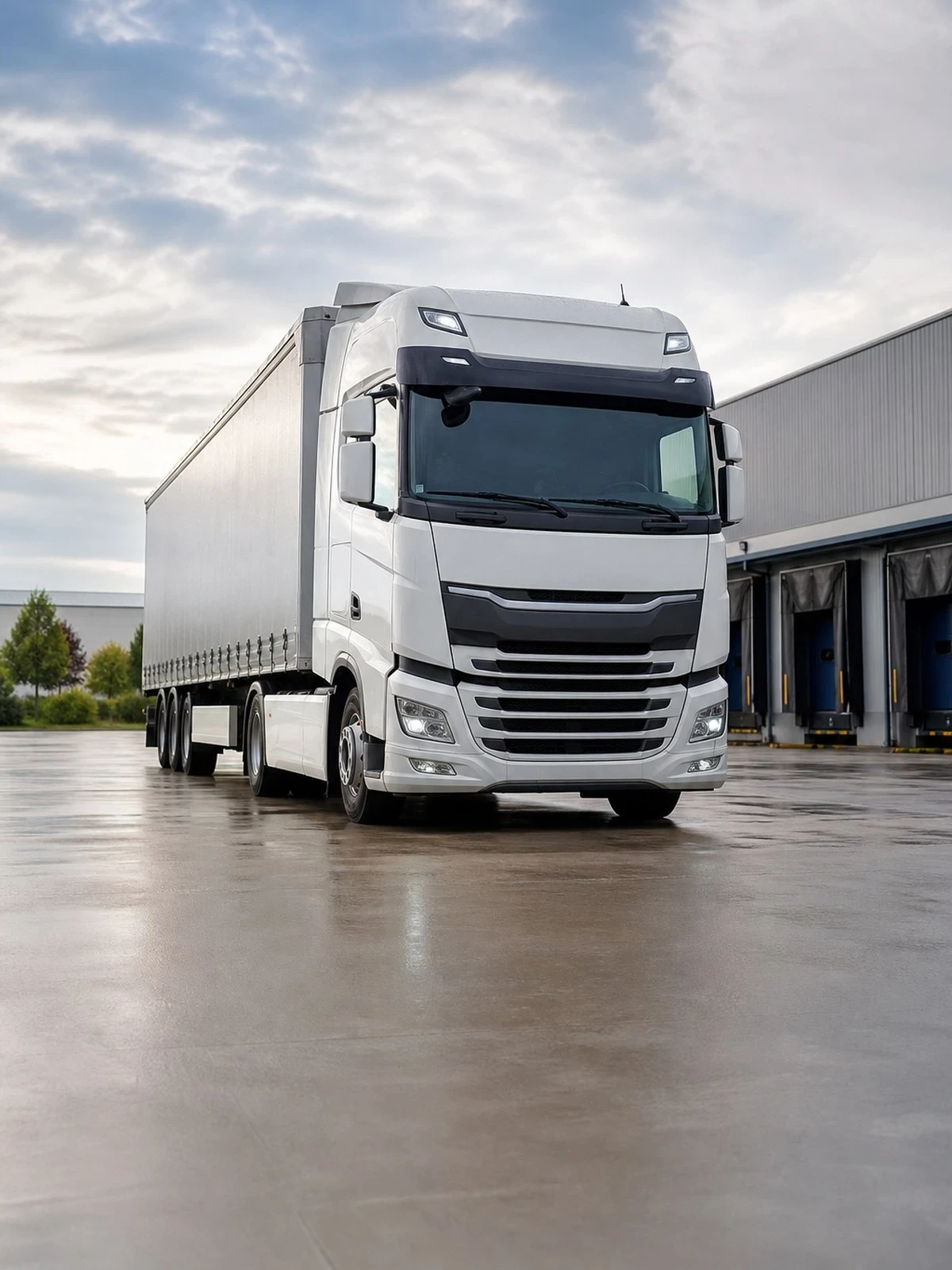 Truck insurance
 Compare
 Get covered
Why arrange it through Finass Verzekert?
We look at the terms as well as the premium, and stay your point of contact when there is a claim.
Independent
We are not tied to one insurer and compare on the basis of an objective analysis of several companies.
One fixed adviser
You call or email someone who knows your file. No menu options, no changing call centres.
Switching without hassle
We cancel your old policy and align the start date, so you are never a day without cover.
Help with claims
We report the claim and monitor how it is handled. In urgent cases you can reach us on the emergency line.
What to look out for
Four subjects that make the difference between a covered and an unpaid claim in carriage for hire and reward.
Licence and entitlement to drive
For commercial carriage of goods above 500 kilograms payload you need a Community licence and your drivers need a valid code 95. If someone drives without that entitlement, the own-damage claim is not covered and the insurer recovers what it paid the other party. Set a fixed moment for checking on recruitment and at renewal.
Fines are never insured
Breaches of driving and rest times, tachograph manipulation, overloading and cabotage offences result in administrative fines. Those are excluded on every insurance, because they are a punishment and not compensation for loss. Only the costs of legal assistance can be placed with a business legal expenses insurance with a traffic module.
Damage during loading and unloading
If you damage the floor of a distribution centre with a forklift truck or break an overhead door, that is liability and not motor damage. Such a claim runs through the public and employers' liability insurance. Watch out there for the care, custody and control exclusion: property that was in your care at the time of the damage is excluded as standard.
Theft and the security clause
In a load theft the insurer looks at the clause: parking in a secure place, an active tracking system, high-security locks or a second driver for certain goods. A driver who spends the night beside the motorway while the clause prescribes a guarded truck stop costs you the payment. Give instructions in writing and check compliance.
What does your premium depend on?
- Number and type of vehicles: tractor units, rigid lorries, semi-trailers and trailers
- Goods carried: building materials, foodstuffs, electronics or dangerous goods
- Area of operation: regional distribution or international transport
- Number of drivers and staff turnover: a stable team counts more favourably than structural hiring-in
- Claims record over several years: determines the rate and the excess at renewal
- Preventive measures: tracking systems, camera surveillance and driving style recording
Insurers weigh these details differently. That is where your saving is.
Which policy pays
| Situation | Lorry policy | Separate cover |
|---|---|---|
| Your tractor unit overturns in the verge and the cab is a total loss | Yes | No |
| A pallet of electronics is soaked because the tarpaulin tore during the journey | No | Yes |
| Your driver causes the accident themselves and is left with permanent injury | No | Yes |
| The truck is in the workshop for three weeks and you have to cancel journeys | No | Yes |
| The driver's personal belongings are lost in a cab fire | No | No |
| Theft of the tractor unit from your own fenced site | Yes | No |
The motor policy stops at the vehicle. The load, the driver and downtime each call for their own cover.
Frequently asked questions
This is what people ask us most.
Is my client's load covered by the truck policy?
No. The truck insurance covers only the vehicle. For damage to or loss of goods carried you are the carrier and the AVC conditions or CMR apply, with liability limits per kilogram. You cover that with carrier's liability insurance. The goods themselves are insured by the interested party under a goods-in-transit insurance.
What if I do lifting or groundwork alongside transport?
As soon as the vehicle is operating as a piece of equipment, for instance with a lorry-mounted crane or a concrete pump, damage arising in the process falls outside the WAM cover. That is a plant and machinery risk and calls for separate cover or an extension. Report these activities with your application. Afterwards the argument is hard to win.
When should I move to a fleet arrangement?
Above a certain number of vehicles the no-claims scale per registration disappears and the premium is determined by your own claims burden over a series of years. Every company sets that threshold at a different number of vehicles. The arrangement makes changes easier and makes prevention financially visible, but one serious injury claim then feeds through into your rate for years.
Must I report every claim, even a small one?
Article 7:941 of the Dutch Civil Code requires you to report an event as soon as you are reasonably aware of it, and to provide all the information needed for its assessment. In transport that is particularly important, because a minor collision can later become an injury claim. Reporting does not oblige you to claim: you can still bear the loss yourself.
Every situation is different. For these situations we have a separate page.
- Insuring a lorryThe main page
- Lorry insurance through De GoudseTractor unit and semi-trailer, load, body
- Lorry insurance for business useLoad, trailer, body
- Truck insurance through Vereende
- Compare business lorry insuranceTractor unit and semi-trailer, the load separately, drivers
- Truck insurance through Turien & Co
- Types of lorry insurance: which categories are there?Vehicle cover, load cover, liability
- Truck insurance for self-employed professionalsOwn-account transport or charter work, load risk, downtime