

Professional indemnity – Physiotherapy practice
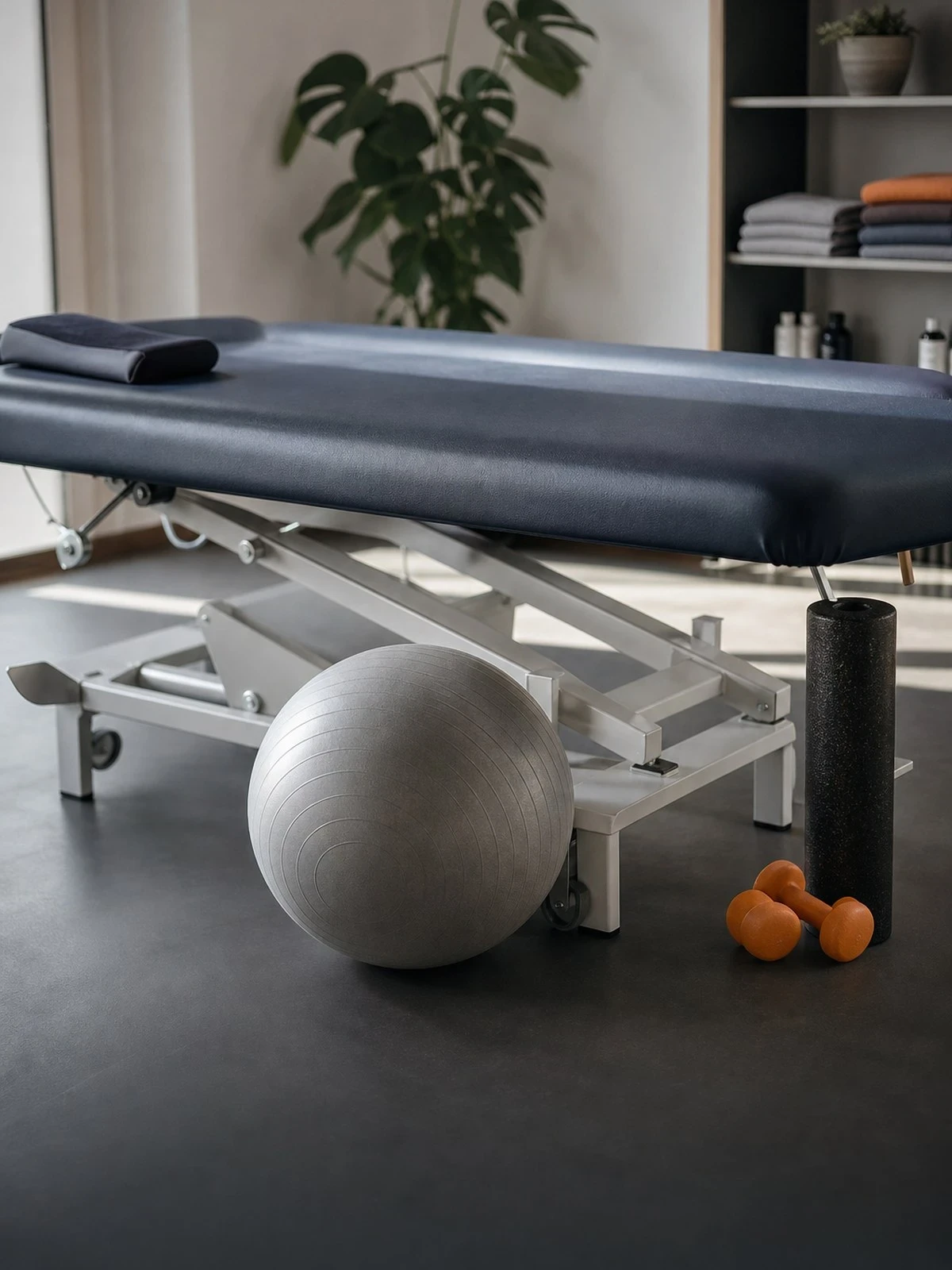
A practice with several practitioners carries not only the risk of its own mistakes, but also that of everyone who treats under its name and of the equipment in the exercise room.
- Several insurers compared objectively
- 9.5 customer rating for a new policy
- AFM licence 12016589
- Personal 072 - 509 24 56, weekdays 9–17
This page in another language: Nederlands
Work out for yourself what it would cost.
Enter your details; you will receive a proposal within one working day.
- We compare the offerings of several insurers
- An adviser checks whether the cover suits your activities
- We arrange the switch, including cancellation
A premium indication, not personal advice. Prefer to talk it through? Call 072 - 509 24 56.
- Independent advice
- Several insurers
- Switching arranged
- Help with claims
In brief
As the owner of the practice you are liable for mistakes by your therapists on the payroll under Article 6:170 of the Dutch Civil Code. If a self-employed professional treats under the banner of your practice, Article 6:171 of the Dutch Civil Code can also make you liable to the patient for that non-subordinate contractor. The patient chooses who to claim against, and that is usually the party whose name is on the door.
The second layer is the premises themselves. A treadmill that jams, a cable on a weights machine that snaps or a torn mat make you liable for a defective movable object under Article 6:173 of the Dutch Civil Code; for the building, Article 6:174 of the Dutch Civil Codeapplies. These claims are not professional errors but business liability and belong on the AVB. A practice therefore needs two policies that fit together, with no gap between them.
You also carry the organisational obligations under the Wkkgz (the Dutch healthcare quality, complaints and disputes act): a complaints officer, membership of a recognised disputes body and a duty to verify when taking on staff. A disputes body can award compensation. Report such proceedings to your insurer as soon as they are under way and not only when the decision comes. The comparison of policy forms is on the hub page.
This page deals with one situation. The full overview is on Compare professional indemnity insurance (BAV).
Independent, personal, sorted quickly
We compare your professional indemnity insurance (BAV) across dozens of insurers, explain where the real differences lie, and arrange the switch from start to finish — without you having to chase it yourself.
 Professional indemnity insurance (BAV)
 Compare
 Get covered
Why arrange it through Finass Verzekert?
We look at the terms as well as the premium, and stay your point of contact when there is a claim.
Independent
We are not tied to one insurer and compare on the basis of an objective analysis of several companies.
One fixed adviser
You call or email someone who knows your file. No menu options, no changing call centres.
Switching without hassle
We cancel your old policy and align the start date, so you are never a day without cover.
Help with claims
We report the claim and monitor how it is handled. In urgent cases you can reach us on the emergency line.
Where a practice comes unstuck
Four points on which practice policies differ from one another the most.
Who is named as the insured on the policy
Employees on the payroll are usually included, but locums, self-employed therapists, interns and volunteers often are not. If the description is missing, the insurer can reject a claim about a treatment by a hired-in colleague while the patient claims against you. Have the class of insured persons set out word for word and review it with every new collaboration.
Equipment in the exercise room
For injury caused by training equipment, the strict liability in Article 6:173 of the Dutch Civil Codeapplies: the fact that you knew nothing of the defect does not help you. Keep maintenance logs and record inspections. Also check the cover for the equipment itself: leased or borrowed machines fall under the care, custody and control exclusion and not under the liability policy.
Physical strain on your own team
Back and shoulder complaints among therapists doing manual work are the most common staff claim. Under Article 7:658 of the Dutch Civil Code you must show that you set the workplace up safely and gave instruction. If you cannot, you are in principle liable. Paragraph 4 of that article extends that duty of care to hired-in workers and interns.
Three exclusions to read in advance
The following fall outside the cover as standard: fines and disciplinary measures, damage caused by intent or wilful recklessness under Article 7:952 of the Dutch Civil Code, and liability you have taken on by contract in a framework agreement with a health insurer or local authority. Refunding or waiving your own fees after a complaint is not an insured loss either.
What does your premium depend on?
- Practice turnover: the usual basis for professional liability
- Number and type of practitioners: employees, locums and self-employed professionals are counted separately
- Specialisms in-house: manual therapy, paediatric physiotherapy and needle techniques are taken into account
- Size of the exercise and training area: more equipment means more business liability
- Sum insured and excess: per claim and per insurance year
- Claims record and prevention policy: maintenance records and complaints handling are taken into account
Insurers weigh these details differently. That is where your saving is.
What is covered
| Situation | AVB | BAV |
|---|---|---|
| A therapist on the payroll causes a fracture in an elderly patient during exercise therapy | No | Yes |
| The disputes body awards a patient compensation after a complaint about a treatment | No | Provided that |
| The cable on a weights machine in the exercise room snaps and a patient is injured | Yes | No |
| A therapist reports shoulder complaints after years of manual work and holds you liable | Provided that | No |
| A health insurer reclaims fees billed by your practice after a material review | No | No |
| An intern leaves a bag containing patient records on the train | No | No |
Exactly who is named as an insured person on the practice policy determines whether a treatment by a hired-in colleague is included.
Frequently asked questions
This is what people ask us most.
A patient is injured on the treadmill. Which policy pays?
That is not a professional error but injury caused by a defective object, and therefore a claim for public and employers' liability insurance. If the cause lies in an exercise load set incorrectly or a lack of supervision, it shifts to professional practice. Because the dividing line moves from case to case, it is sensible to have both policies placed with one insurer or arranged through one adviser.
We are taking on a therapist from another practice. What do we arrange?
Two things. Add the practitioner to the class of insured persons before their first day of treating patients, and agree who carries claims about treatments at the previous employer. Because the cover runs on a claims-made basis, the moment of notification is decisive; earlier work belongs with the old policy or with a retroactive period on the new one.
Is a decision of the disputes body covered?
Compensation awarded can fall within the cover, provided you notified the matter in time and the insurer was able to steer the handling of the dispute. So report when the first letter arrives, not when the decision comes. If you report too late and the insurer is put in a worse position as a result, it can limit payment under Article 7:941 of the Dutch Civil Code.
What if the practice is at a standstill for weeks after a fire or a system failure?
That is not liability but lost turnover. You cover continuing costs and lost turnover with business interruption insurance for allied health practices. You insure the equipment and fittings themselves on a business contents policy. The liability policies do nothing here.
Every situation is different. For these situations we have a separate page.
- Compare professional indemnity insurance (BAV)The main page
- Professional indemnity – GP practiceTriage, managing test results, practice organisation
- Professional indemnity – Skin therapy practiceLimits of competence, equipment management, retail
- Professional indemnity insurance (BAV) for an acupuncture practiceSeveral practitioners, hygiene, locum cover
- Professional indemnity insurance (BAV) for an osteopathy practiceClass of insured persons, locums, transferring the practice
- Professional indemnity insurance (BAV) for a chiropractic practiceInformed consent, contraindications, record keeping
- Professional indemnity insurance (BAV) for a psychotherapy practiceSupervision, the lead practitioner, managing records
- Professional indemnity insurance (BAV) for a speech therapy practiceSwallowing assessments, red flags, locums
- Professional indemnity – PhysiotherapistLocum work, manual techniques, disciplinary complaints