

Professional indemnity insurance (BAV) for a chiropractic practice
In a chiropractic practice the claim is not a financial dispute but an injury claim. The question is then whether you discussed the risk beforehand and whether it is in the file.
- Several insurers compared objectively
- 9.5 customer rating for a new policy
- AFM licence 12016589
- Personal 072 - 509 24 56, weekdays 9–17
This page in another language: Nederlands
Work out for yourself what it would cost.
Enter your details; you will receive a proposal within one working day.
- We compare the offerings of several insurers
- An adviser checks whether the cover suits your activities
- We arrange the switch, including cancellation
A premium indication, not personal advice. Prefer to talk it through? Call 072 - 509 24 56.
- Independent advice
- Several insurers
- Switching arranged
- Help with claims
In brief
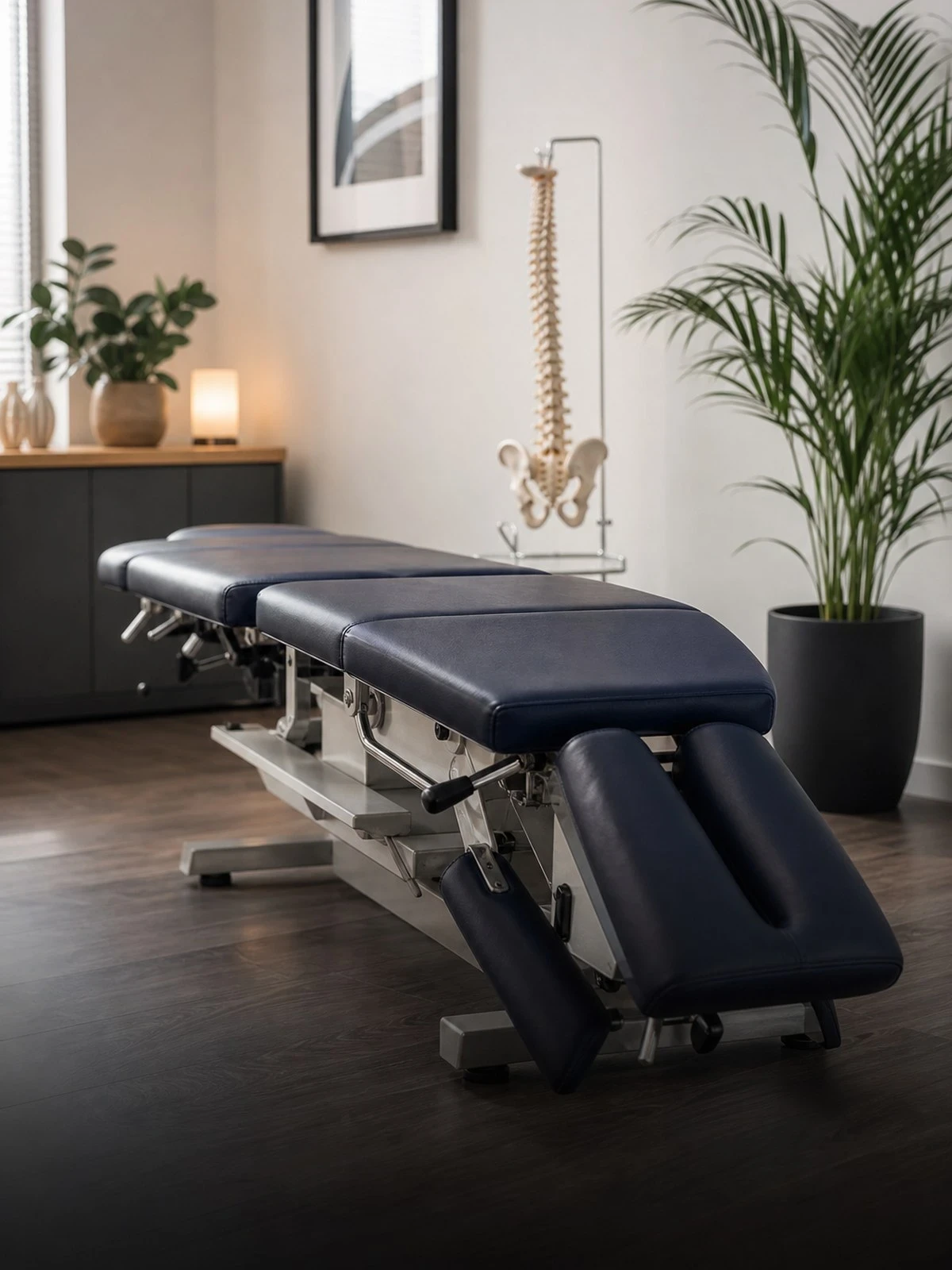
For most advisory professions, professional liability is about financial detriment. In a chiropractic practice it is different: here it concerns injury arising from the treatment itself. A manipulation on a patient with osteoporosis, a contraindication not recognised in someone taking anticoagulants, a missed referral where there were red flags such as radiating weakness or bladder symptoms, or a cervical technique whose risks were not discussed. So expressly choose a policy for medical and paramedical professions, in which personal injury arising from professional practice is included; the general structure is set out on the hub page on the BAV.
The legal standard comes from the treatment agreement. Article 7:453 of the Dutch Civil Code requires you to provide the care of a good care provider, Article 7:448 of the Dutch Civil Code requires you to inform the patient about the nature, the risks and the alternatives of a treatment, and Article 7:450 of the Dutch Civil Code requires consent. With manipulation techniques that is no formality: anyone who says afterwards that he was never told about the possibility of neurological symptoms wins that argument if the file is silent. Article 7:454 of the Dutch Civil Code requires you to keep and retain records. In a claim that file is your only evidence.
Chiropractic does not fall under the Wet BIG (the Dutch act on healthcare professions), so there is no disciplinary law filling in the standard. The Wkkgz (the Dutch healthcare quality, complaints and disputes act)does apply, with a complaints officer and membership of a recognised disputes body. Insurers also look at your training and registration with a professional body. If you treat beyond the level for which you are trained, or apply techniques not stated in your application, that falls outside the described insured capacity and therefore outside the cover.
This page deals with one situation. The full overview is on Compare professional indemnity insurance (BAV).
Independent, personal, sorted quickly
We compare your professional indemnity insurance (BAV) across dozens of insurers, explain where the real differences lie, and arrange the switch from start to finish — without you having to chase it yourself.
 Professional indemnity insurance (BAV)
 Compare
 Get covered
Why arrange it through Finass Verzekert?
We look at the terms as well as the premium, and stay your point of contact when there is a claim.
Independent
We are not tied to one insurer and compare on the basis of an objective analysis of several companies.
One fixed adviser
You call or email someone who knows your file. No menu options, no changing call centres.
Switching without hassle
We cancel your old policy and align the start date, so you are never a day without cover.
Help with claims
We report the claim and monitor how it is handled. In urgent cases you can reach us on the emergency line.
What to look out for
Four points that determine in a chiropractic practice whether an injury claim is covered.
Recording the history and contraindications
The vast majority of claims concern a risk that was identifiable in advance: bone loss, a malignancy in the medical history, recent trauma, anticoagulation, or symptoms pointing to something other than a mechanical problem. Note what you asked, what the patient answered and why you do or do not manipulate. A written assessment carries more weight in an expert investigation than your recollection.
Treatment or building: two policies
Injury arising from your treatment belongs on the professional indemnity insurance. If a patient trips over a loose mat or a treatment table collapses, that is loss caused by defective property within the meaning of Article 6:173 of the Dutch Civil Code and belongs on the public and employers' liability insurance. Practices that insure only one of the two discover the difference at the first notification.
Staff, locums and self-employed professionals
If assistants, a second chiropractor or a locum work at the practice, they must be named as insured persons on the policy. You are liable for mistakes by staff under Article 6:170 of the Dutch Civil Code. If you let a room to a self-employed practitioner, require them to hold their own policy and ask for the evidence of insurance; otherwise you are still first in line when a claim arises.
What is not covered
Not covered are: treatments outside the described insured capacity, including unrecognised, experimental or undeclared techniques; intent and wilful recklessness under Article 7:952 of the Dutch Civil Code; and fines and measures imposed by regulators, such as a direction under the Wkkgz. If you sell supplements or devices, note the separate rules on product liability.
What does your premium depend on?
- Number of practitioners: every practitioner adds their own exposure
- Techniques used: cervical manipulation is assessed differently from mobilisation or exercise therapy
- Patient groups: treating infants, older people or athletes has its own risk profile
- Training and registration: membership of a professional body and continuing training
- Sum insured and excess: injury claims run on longer than a financial dispute
- Retroactive and run-off cover: complaints after a treatment sometimes only surface years later
Insurers weigh these details differently. That is where your saving is.
What is covered
| Situation | AVB | BAV |
|---|---|---|
| A manipulation on a patient with osteoporosis causes a vertebral fracture | No | Yes |
| A practitioner on the payroll continues treatment while red flags called for referral | No | Yes |
| A self-employed practitioner renting a room from you makes a mistake with their own patient | No | Provided that |
| A patient trips in the waiting area over a raised floor edge | Yes | No |
| A supplement you sell at the practice causes an allergic reaction | Provided that | No |
| A patient demands the cost of a course of treatment back because the symptoms persisted | No | No |
A policy for advisory professions leaves the whole left-hand half of this table open: injury arising from treatment is only covered on a form with healthcare cover.
Frequently asked questions
This is what people ask us most.
Is a chiropractic practice required to be insured?
There is no statutory duty to insure as there is for BIG-registered professions, but professional bodies almost always make liability insurance a condition of membership, and the Wkkgz requires you to have a complaints and disputes procedure. Without cover you bear the compensation as well as the cost of expert investigation and defence yourself, and injury claims run on for years.
The patient signed for the treatment. Am I then protected?
A signature is no free pass. The duty to inform in Article 7:448 of the Dutch Civil Code requires you to discuss the risks in understandable terms and to match what this patient needs to know in order to choose. A standard form without a note of the conversation is not convincing. What does help: a note in the file about which risks and which alternatives you discussed with this patient.
When should I have referred the patient on?
As soon as the symptoms do not fit a mechanical cause or do not respond as expected. Red flags not recognised are a recurring allegation in injury cases. Being a good care provider under Article 7:453 of the Dutch Civil Code means knowing your own limits and referring to the GP or a specialist in good time. Record the referral and its date; failure to refer is more often the allegation than the treatment itself.
How long can a patient still hold me liable?
Under Article 3:310 of the Dutch Civil Code, injury claims only become time-barred five years after the injured party becomes aware of the loss and of the party liable, with a long-stop period alongside that. Because the policy works on a claims made basis, the moment of notification counts. If you close or sell the practice, arrange run-off cover before you cancel; afterwards it is virtually unobtainable.
Every situation is different. For these situations we have a separate page.
- Compare professional indemnity insurance (BAV)The main page
- Professional indemnity insurance (BAV) for a chiropractorManipulation, informed consent, contraindications
- Professional indemnity insurance (BAV) for an acupuncturistNeedle incidents, personal injury ·. The working methods you declare
- Professional indemnity insurance (BAV) for a speech therapy practiceSwallowing assessments, red flags, locums
- Professional indemnity – PhysiotherapistLocum work, manual techniques, disciplinary complaints
- Professional indemnity insurance (BAV) for a dental hygiene practicePeriodontal care, anaesthesia and X-rays, spotting the signs
- Professional indemnity – DentistExtractions, endodontics, nerve damage
- Professional indemnity insurance (BAV) for a self-employed osteopathManipulation, red flags, outside the Wet BIG
- Professional indemnity – GP practiceTriage, managing test results, practice organisation